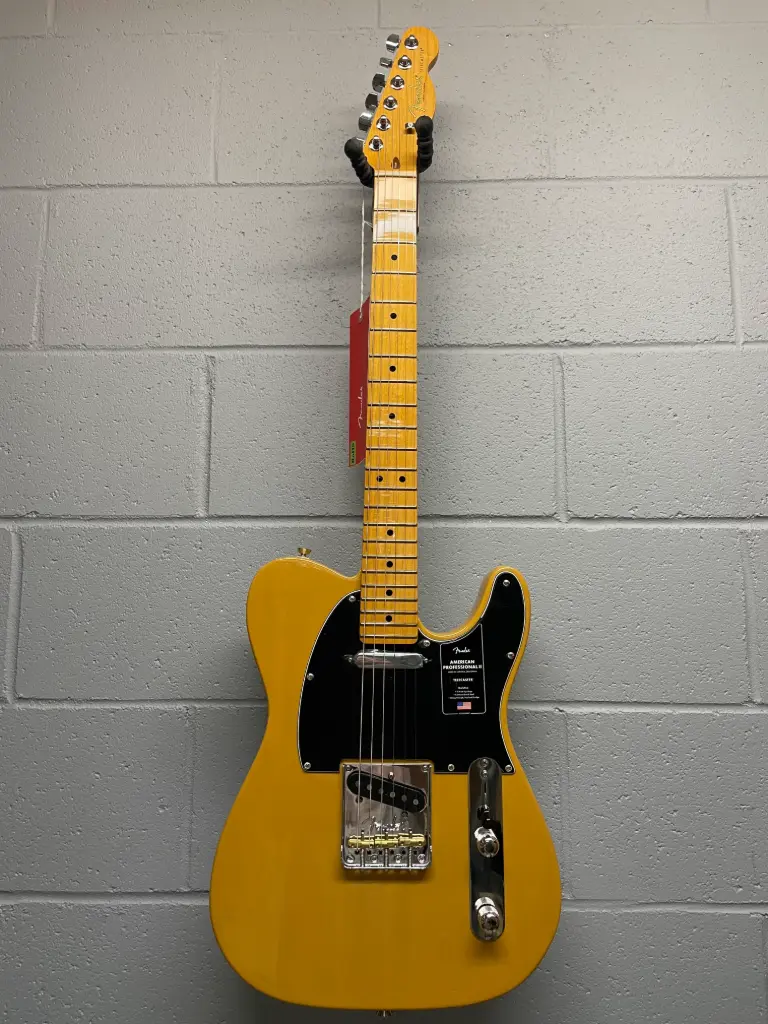
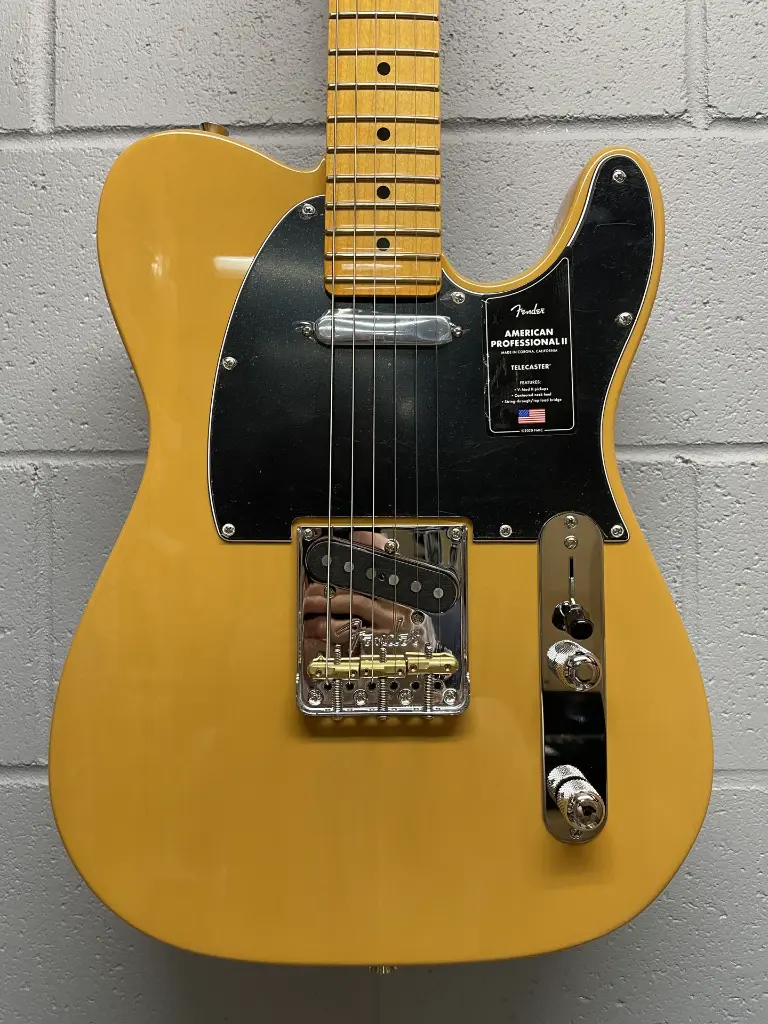
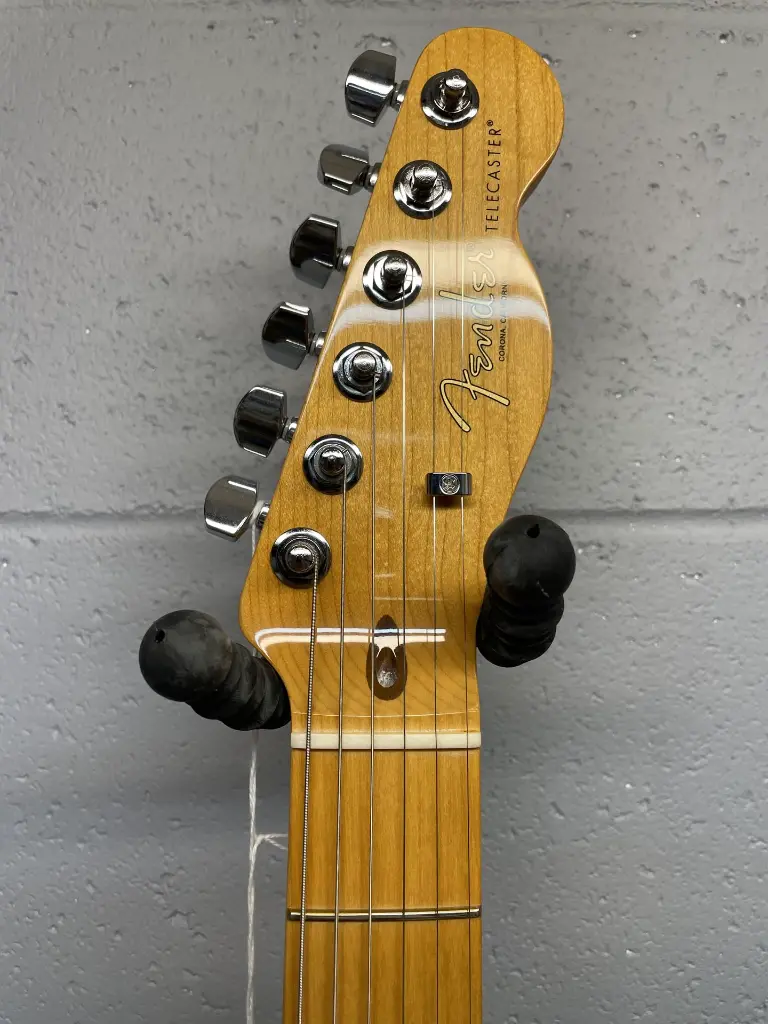
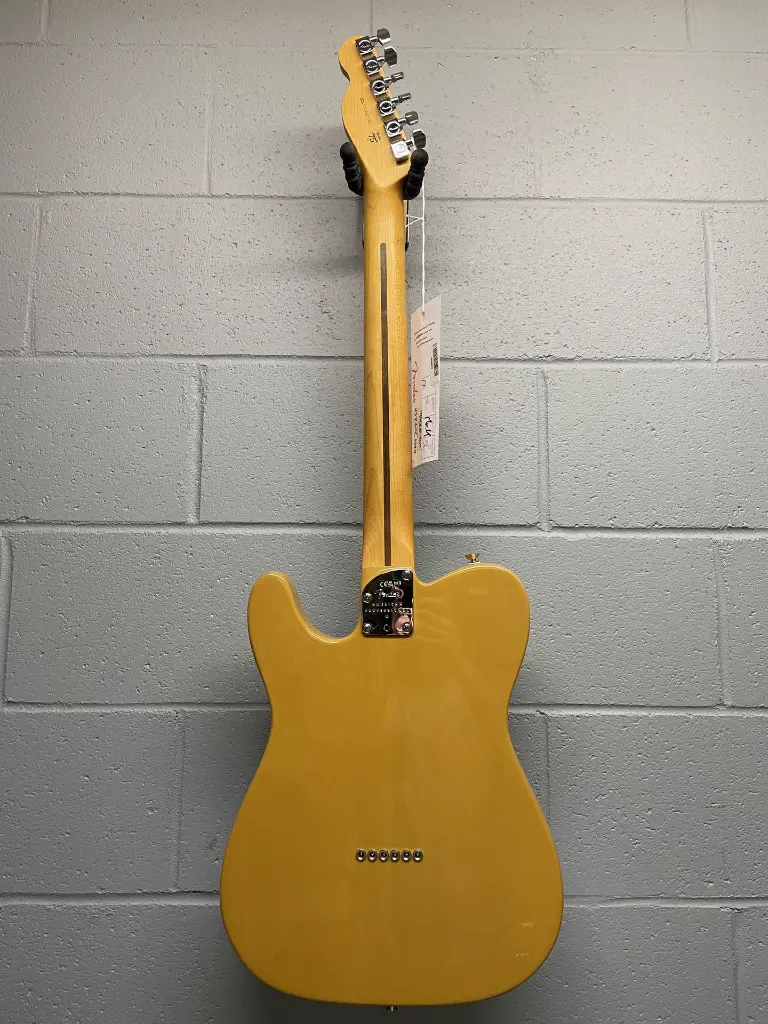
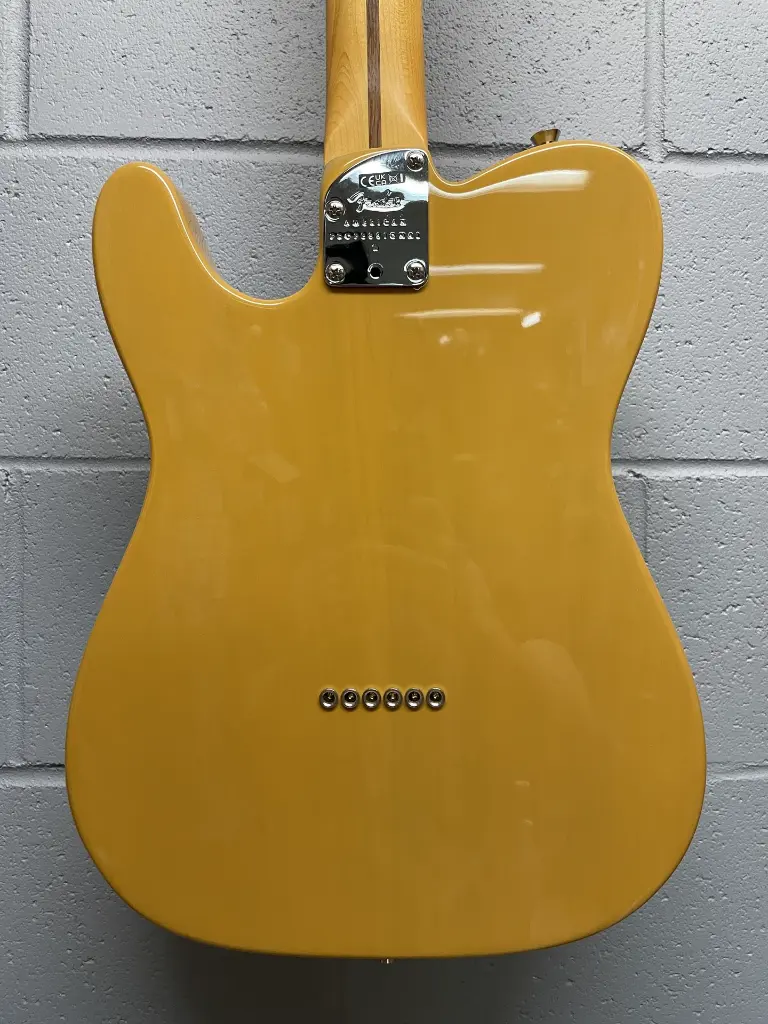
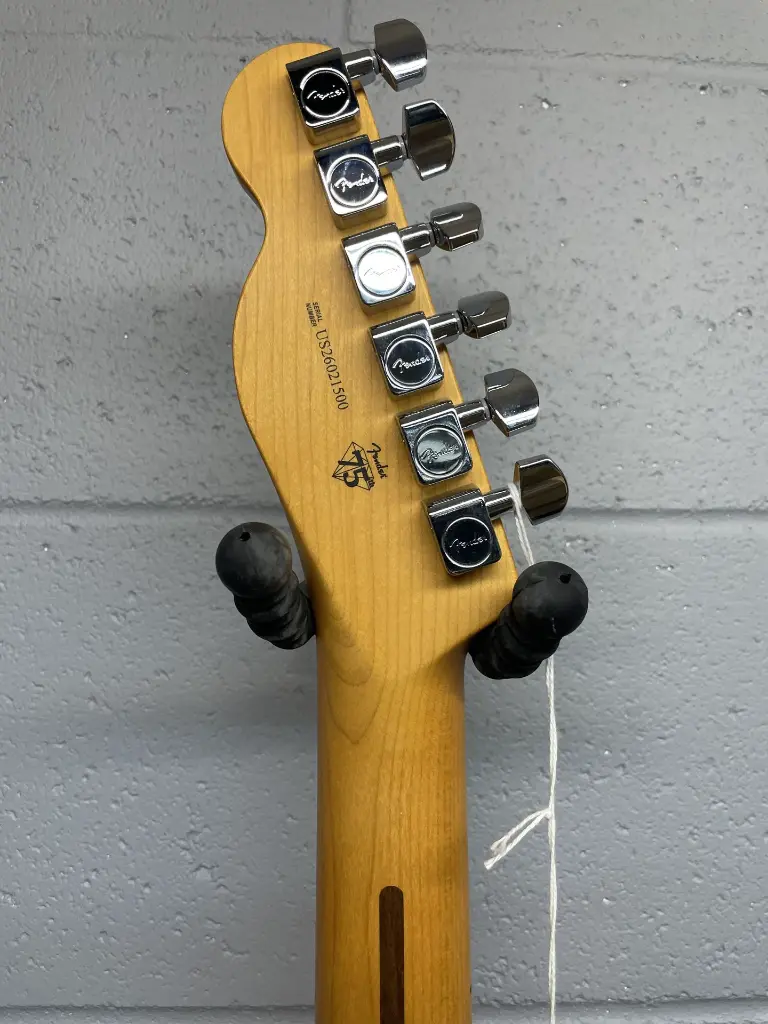
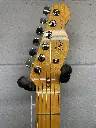
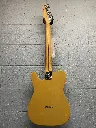
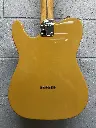
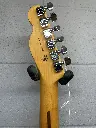
Fender American Pro II Telecaster - Electric Guitar - Butterscotch Blonde
The ultimate working instrument, perfected for the modern musician.
The Fender American Professional II Telecaster® draws on over seventy years of innovation to meet the demands of studio and stage guitarists. Featuring the new "Deep C" neck profile with rounded fingerboard edges and a sculpted neck heel, it offers unparalleled playing comfort. Its V-Mod II pickups deliver the iconic Tele snap with unprecedented articulation and warmth, making this guitar the undisputed leader in the Fender catalog at Garage à Musique.
This content will be shared across all product pages.
The Authority of Twang: Why is the American Professional II redefining the standard?
The Telecaster is the guitar that started it all, and the American Professional II series is its most refined form. It addresses the instrument's historical shortcomings: the new top-load/string-through bridge with bullet brass saddles allows for surgically precise tension and intonation adjustments, while the electronics incorporate a treble bleed circuit to maintain clarity, even at low volumes. Whether you play country, rock, or jazz, this Telecaster offers a tonal versatility that adapts to the demands of the profession.
Full Technical Specifications
Body & Construction
| Characteristic | Details |
| Series | American Professional II |
| Body material | Alder or Roasted Pine depending on the finish |
| Body finish | Glossy polyurethane (Gloss Urethane) |
| Body shape | Telecaster® |
| Configuration | SS (Double Single-Coil) |
Neck & Fingerboard
| Characteristic | Details |
| Handle material | Maple |
| Construction | 4 screws with sculpted heel (4-Bolt) |
| Handle finish | Satin "Super-Natural" (back), Glossy (head) |
| Handle profile | Deep "C" |
| Tuning fork | 25.5" (648 mm) |
| Touch | Maple or Rosewood |
| Touchdown radius | 9.5" (241 mm) |
| Number of frets | 22 |
| Type of frets | Narrow Tall |
| Nut | Bone |
| Nut width | 1.685" (42.8 mm) |
| Inlays | Black or white spots |
| Adjustment rod | Standard |
Electronics & Marine Hardware
| Characteristic | Details |
| Bridge Microphone | V-Mod II Single-Coil Tele® |
| Micro Neck | V-Mod II Single-Coil Tele® |
| Controls | Master Volume (with Treble Bleed), Master Tone |
| Selector | 3 positions (Blade) |
| Special Electronics | Push-push on the Tone button (Activates Serial mode in position 2) |
| Easel | 3 Top-Load/String-Through saddles with brass "Bullet" saddles |
| Mechanics | Fender® Standard Cast/Sealed Staggered |
| Pickguard | 3-Ply (Mint Green, Black or Tortoiseshell depending on the model) |
| Buttons | Knurled Flat-Top (Moletés) |
| Hardware Finish | Nickel/Chrome |
Dimensions & Accessories
| Characteristic | Details |
| Ropes | Fender® USA 250L NPS (.009-.042 Gauges) |
| Case included | Deluxe Molded Hard Case |
| Origin | USA (Corona, California) |
Comparative Analysis
Based on consensus from Sound on Sound, MusicRadar and Gearspace.
| Alternative Product | Market Segment | Comparative Analysis | Available at Garage à Musique |
| Fender American Ultra Tele | Modern / High Performance | Noiseless pickups and compensated radius, but less "vintage" character. | Available here |
| Suhr Classic T | Boutique / Custom Shop Style | Impeccable finish and stainless steel frets, but double the price compared to the Pro II. | Product not listed |
| Fender American Vintage II '51 | Historical Reissue | Pure 1951 sound, but very thick neck and 7.25" radius less comfortable. | Available here |
| G&L ASAT Classic (USA) | Leo Fender's Evolution | More powerful MFD pickups, but aesthetics that deviate from the original. | Product not listed |
| Nash T-52 | Relic / Vintage Vibe | Beautifully worn look, but less modern electronic versatility. | Product not listed |
| Fender Player II Telecaster | Mid-range | Excellent value for money, but without the sculpted heel or V-Mod pickups. | Available here |
| Yamaha Mike Stern Pacifica | Signature Jazz/Fusion | Humbucker pickups, very stable, but doesn't have the classic Fender "twang". | Available here |
| Ibanez AZS Series | Modern Hybrid | Very ergonomic, but sounds more like a modern studio guitar. | Available here |
| Schecter PT USA | Rock / Performance | Designed for distortion, lacks finesse in clean sound compared to Pro II. | Product not listed |
| Fender American Performer Tele | Entry-level USA | Useful Greasebucket circuit, but less robust hardware. | Available here |
History & Evolution
Born as the Broadcaster in 1950, the Telecaster was the first mass-produced, solid-body electric guitar. It has survived seven decades without any radical changes to its silhouette, proving the perfection of its original design. The American Professional II series introduces refinements long awaited by purists: a "Push-Push" tone control that puts both pickups in series, offering a fatter, humbucker-like sound, and the "Super-Natural" finish that eliminates the sticky feel of traditional varnishes.
Cultural References & Artists
Bruce Springsteen - Born to Run (1975) : L'emblème du rock américain sur Telecaster.
Keith Richards (Rolling Stones) - "Brown Sugar" (1971) : Le maître de l'Open G sur Tele.
Jimmy Page (Led Zeppelin) - Led Zeppelin I (1969) : Utilisée pour l'intégralité du premier album.
Jeff Buckley - Grace (1994) : Un son clair cristallin devenu légendaire.
Joe Strummer (The Clash) - London Calling (1979) : La Telecaster punk par excellence.
Danny Gatton - 88 Elmira St. (1991) : "The Telemaster", virtuose du country/jazz.
Prince - Purple Rain (1984) : Jouait une version Hohner style Telecaster iconique.
Muddy Waters - Hard Again (1977) : Le pilier du Chicago Blues sur Tele rouge.
Andy Summers (The Police) - Outlandos d'Amour (1978) : Créateur de textures avec des effets.
George Harrison (The Beatles) - Let It Be (1970) : La célèbre Telecaster en palissandre.
Albert Collins - Ice Pickin' (1978) : "The Master of the Telecaster" et son son tranchant.
James Burton - Elvis Presley's TCB Band : The king of "Chicken Pickin".
Graham Coxon (Blur) - Parklife (1994) : L'inventivité du Britpop.
Tom Morello - Rage Against The Machine : Utilise une Tele pour les morceaux en Drop D.
Julian Lage - Squint (2021) : Démontre la polyvalence incroyable de la Tele en jazz moderne.
FAQ (Frequently Asked Questions)
What is the purpose of the "Push-Push" button on the tone?
This switch allows you to activate both pickups in series (in position 2 of the selector). Unlike standard parallel wiring, this increases gain and low-midrange presence, giving you a more powerful sound for solos .
What is the "Super-Natural" finish on the handle?
It's an ultra-thin satin finish designed by Fender to offer the feel of raw wood. It prevents your hands from sticking during intense sessions, ensuring optimal speed and precision for demanding guitarists.
Why are the bridges made of brass on this model?
Brass is known for providing warmth and sustain while retaining the characteristic "twang" of the Telecaster. The new rounded "Bullet" saddles improve comfort under the right hand during palm muting.
Is the V-Mod II microphone more powerful than a vintage microphone?
It's better balanced. Each microphone uses a specific blend of Alnico magnets for its position. The result is exceptional clarity without harsh highs, ideal for cutting through the mix without creating RF interference.
What is the "Treble Bleed" circuit?
It's an electronic circuit that prevents the loss of high frequencies when you lower the volume. Your sound remains bright and defined, regardless of the output level—a pro feature we recommend at Garage à Musique.
Does the guitar come with a case?
Yes, it includes Fender's Deluxe molded case. It's designed for maximum protection with air-transport certified locks, protecting your instrument from shocks and climatic variations.
What is the advantage of the sculpted sleeve heel?
The slimmed-down heel and asymmetrical neck plate allow your hand to access all 22 frets without the usual obstruction. This greatly facilitates playing in the upper register, eliminating a common technical barrier.
Can the strings be mounted from the top of the bridge?
Yes, this new bridge allows for "Top-load" (strings attached to the bridge) or "String-through" (strings passing through the body) mounting. Top-loading reduces tension for easier bends.
Is the roasted pine body fragile?
On the contrary. Roasting removes moisture and impurities from the wood, making it more stable, lighter, and more resonant. This is a major innovation for the instrument's durability.
Does this guitar require phantom power?
No, the American Pro II Telecaster is a passive instrument. It requires no batteries, which guarantees total reliability and zero processing latency , true to the pure spirit of Garage à Musique.
The Authority of Twang: Why is the American Professional II redefining the standard?
The Telecaster is the guitar that started it all, and the American Professional II series is its most refined form. It addresses the instrument's historical shortcomings: the new top-load/string-through bridge with bullet brass saddles allows for surgically precise tension and intonation adjustments, while the electronics incorporate a treble bleed circuit to maintain clarity, even at low volumes. Whether you play country, rock, or jazz, this Telecaster offers a tonal versatility that adapts to the demands of the profession.
Full Technical Specifications
Body & Construction
| Characteristic | Details |
| Series | American Professional II |
| Body material | Alder or Roasted Pine depending on the finish |
| Body finish | Glossy polyurethane (Gloss Urethane) |
| Body shape | Telecaster® |
| Configuration | SS (Double Single-Coil) |
Neck & Fingerboard
| Characteristic | Details |
| Handle material | Maple |
| Construction | 4 screws with sculpted heel (4-Bolt) |
| Handle finish | Satin "Super-Natural" (back), Glossy (head) |
| Handle profile | Deep "C" |
| Tuning fork | 25.5" (648 mm) |
| Touch | Maple or Rosewood |
| Touchdown radius | 9.5" (241 mm) |
| Number of frets | 22 |
| Type of frets | Narrow Tall |
| Nut | Bone |
| Nut width | 1.685" (42.8 mm) |
| Inlays | Black or white spots |
| Adjustment rod | Standard |
Electronics & Marine Hardware
| Characteristic | Details |
| Bridge Microphone | V-Mod II Single-Coil Tele® |
| Micro Neck | V-Mod II Single-Coil Tele® |
| Controls | Master Volume (with Treble Bleed), Master Tone |
| Selector | 3 positions (Blade) |
| Special Electronics | Push-push on the Tone button (Activates Serial mode in position 2) |
| Easel | 3 Top-Load/String-Through saddles with brass "Bullet" saddles |
| Mechanics | Fender® Standard Cast/Sealed Staggered |
| Pickguard | 3-Ply (Mint Green, Black or Tortoiseshell depending on the model) |
| Buttons | Knurled Flat-Top (Moletés) |
| Hardware Finish | Nickel/Chrome |
Dimensions & Accessories
| Characteristic | Details |
| Ropes | Fender® USA 250L NPS (.009-.042 Gauges) |
| Case included | Deluxe Molded Hard Case |
| Origin | USA (Corona, California) |
Comparative Analysis
Based on consensus from Sound on Sound, MusicRadar and Gearspace.
| Alternative Product | Market Segment | Comparative Analysis | Available at Garage à Musique |
| Fender American Ultra Tele | Modern / High Performance | Noiseless pickups and compensated radius, but less "vintage" character. | Available here |
| Suhr Classic T | Boutique / Custom Shop Style | Impeccable finish and stainless steel frets, but double the price compared to the Pro II. | Product not listed |
| Fender American Vintage II '51 | Historical Reissue | Pure 1951 sound, but very thick neck and 7.25" radius less comfortable. | Available here |
| G&L ASAT Classic (USA) | Leo Fender's Evolution | More powerful MFD pickups, but aesthetics that deviate from the original. | Product not listed |
| Nash T-52 | Relic / Vintage Vibe | Beautifully worn look, but less modern electronic versatility. | Product not listed |
| Fender Player II Telecaster | Mid-range | Excellent value for money, but without the sculpted heel or V-Mod pickups. | Available here |
| Yamaha Mike Stern Pacifica | Signature Jazz/Fusion | Humbucker pickups, very stable, but doesn't have the classic Fender "twang". | Available here |
| Ibanez AZS Series | Modern Hybrid | Very ergonomic, but sounds more like a modern studio guitar. | Available here |
| Schecter PT USA | Rock / Performance | Designed for distortion, lacks finesse in clean sound compared to Pro II. | Product not listed |
| Fender American Performer Tele | Entry-level USA | Useful Greasebucket circuit, but less robust hardware. | Available here |
History & Evolution
Born as the Broadcaster in 1950, the Telecaster was the first mass-produced, solid-body electric guitar. It has survived seven decades without any radical changes to its silhouette, proving the perfection of its original design. The American Professional II series introduces refinements long awaited by purists: a "Push-Push" tone control that puts both pickups in series, offering a fatter, humbucker-like sound, and the "Super-Natural" finish that eliminates the sticky feel of traditional varnishes.
Cultural References & Artists
Bruce Springsteen - Born to Run (1975) : L'emblème du rock américain sur Telecaster.
Keith Richards (Rolling Stones) - "Brown Sugar" (1971) : Le maître de l'Open G sur Tele.
Jimmy Page (Led Zeppelin) - Led Zeppelin I (1969) : Utilisée pour l'intégralité du premier album.
Jeff Buckley - Grace (1994) : Un son clair cristallin devenu légendaire.
Joe Strummer (The Clash) - London Calling (1979) : La Telecaster punk par excellence.
Danny Gatton - 88 Elmira St. (1991) : "The Telemaster", virtuose du country/jazz.
Prince - Purple Rain (1984) : Jouait une version Hohner style Telecaster iconique.
Muddy Waters - Hard Again (1977) : Le pilier du Chicago Blues sur Tele rouge.
Andy Summers (The Police) - Outlandos d'Amour (1978) : Créateur de textures avec des effets.
George Harrison (The Beatles) - Let It Be (1970) : La célèbre Telecaster en palissandre.
Albert Collins - Ice Pickin' (1978) : "The Master of the Telecaster" et son son tranchant.
James Burton - Elvis Presley's TCB Band : The king of "Chicken Pickin".
Graham Coxon (Blur) - Parklife (1994) : L'inventivité du Britpop.
Tom Morello - Rage Against The Machine : Utilise une Tele pour les morceaux en Drop D.
Julian Lage - Squint (2021) : Démontre la polyvalence incroyable de la Tele en jazz moderne.
FAQ (Frequently Asked Questions)
What is the purpose of the "Push-Push" button on the tone?
This switch allows you to activate both pickups in series (in position 2 of the selector). Unlike standard parallel wiring, this increases gain and low-midrange presence, giving you a more powerful sound for solos .
What is the "Super-Natural" finish on the handle?
It's an ultra-thin satin finish designed by Fender to offer the feel of raw wood. It prevents your hands from sticking during intense sessions, ensuring optimal speed and precision for demanding guitarists.
Why are the bridges made of brass on this model?
Brass is known for providing warmth and sustain while retaining the characteristic "twang" of the Telecaster. The new rounded "Bullet" saddles improve comfort under the right hand during palm muting.
Is the V-Mod II microphone more powerful than a vintage microphone?
It's better balanced. Each microphone uses a specific blend of Alnico magnets for its position. The result is exceptional clarity without harsh highs, ideal for cutting through the mix without creating RF interference.
What is the "Treble Bleed" circuit?
It's an electronic circuit that prevents the loss of high frequencies when you lower the volume. Your sound remains bright and defined, regardless of the output level—a pro feature we recommend at Garage à Musique.
Does the guitar come with a case?
Yes, it includes Fender's Deluxe molded case. It's designed for maximum protection with air-transport certified locks, protecting your instrument from shocks and climatic variations.
What is the advantage of the sculpted sleeve heel?
The slimmed-down heel and asymmetrical neck plate allow your hand to access all 22 frets without the usual obstruction. This greatly facilitates playing in the upper register, eliminating a common technical barrier.
Can the strings be mounted from the top of the bridge?
Yes, this new bridge allows for "Top-load" (strings attached to the bridge) or "String-through" (strings passing through the body) mounting. Top-loading reduces tension for easier bends.
Is the roasted pine body fragile?
On the contrary. Roasting removes moisture and impurities from the wood, making it more stable, lighter, and more resonant. This is a major innovation for the instrument's durability.
Does this guitar require phantom power?
No, the American Pro II Telecaster is a passive instrument. It requires no batteries, which guarantees total reliability and zero processing latency , true to the pure spirit of Garage à Musique.
Avis clients
Aucun avis pour le moment. Soyez le premier à partager votre expérience après votre achat.