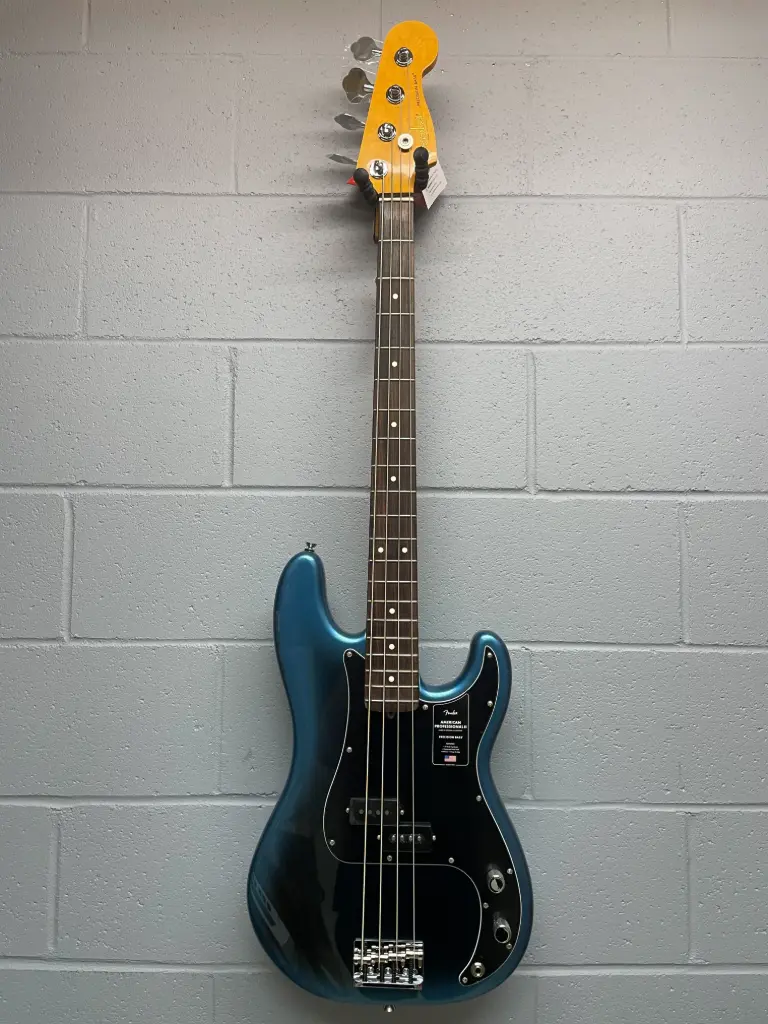
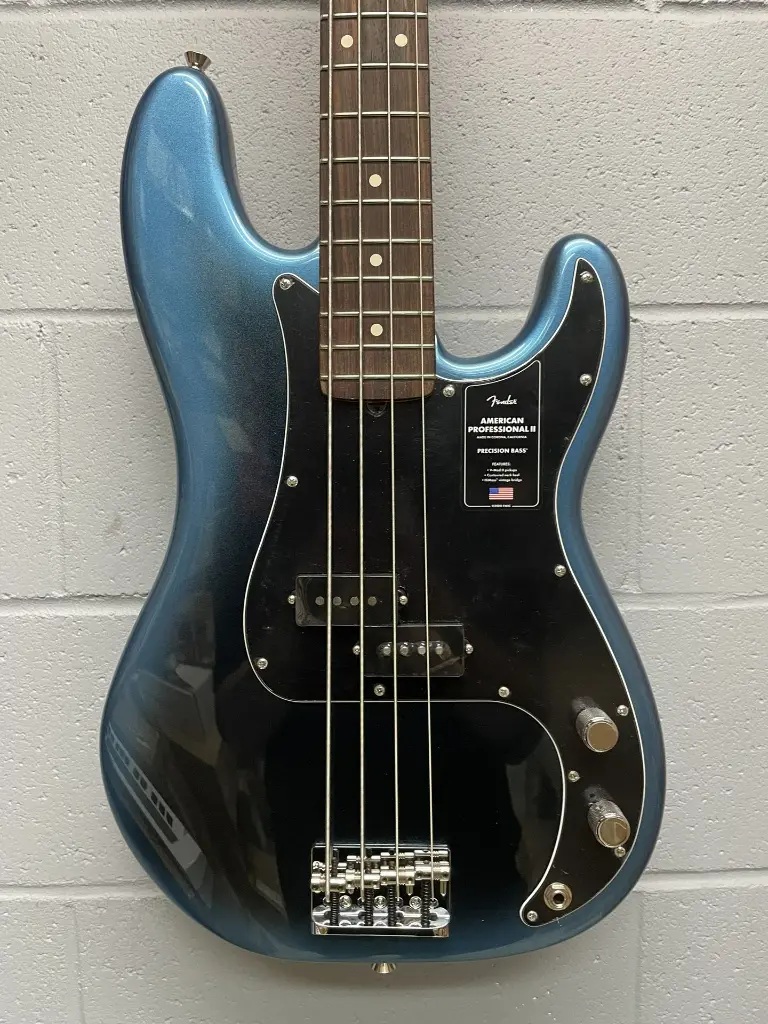
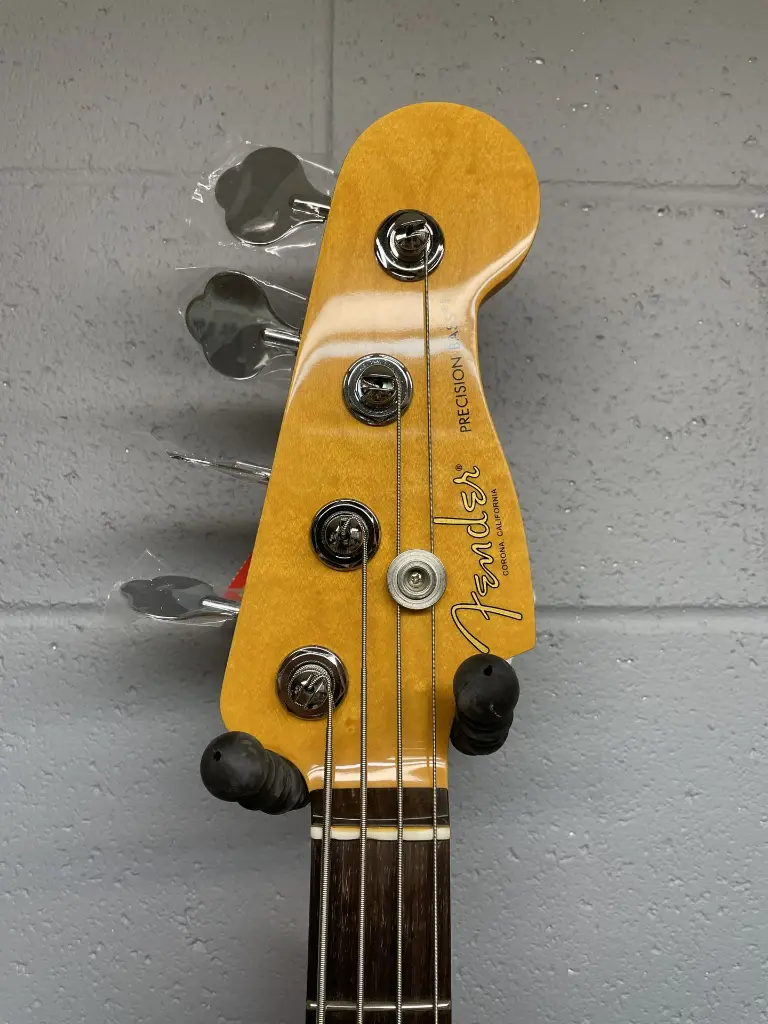
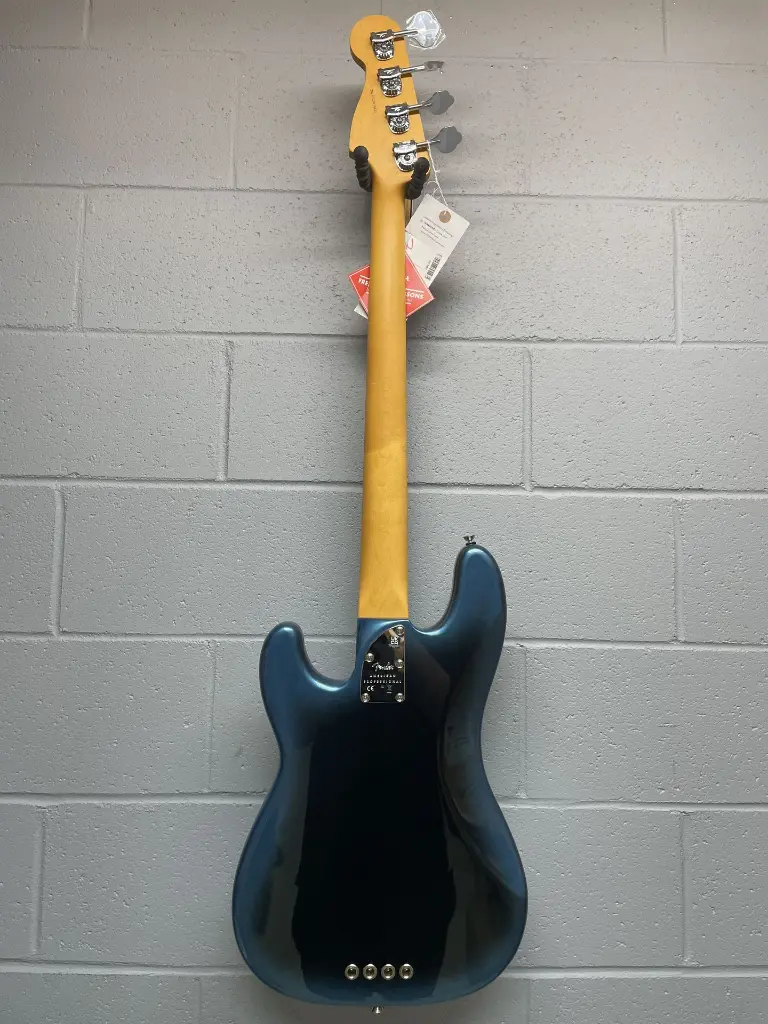
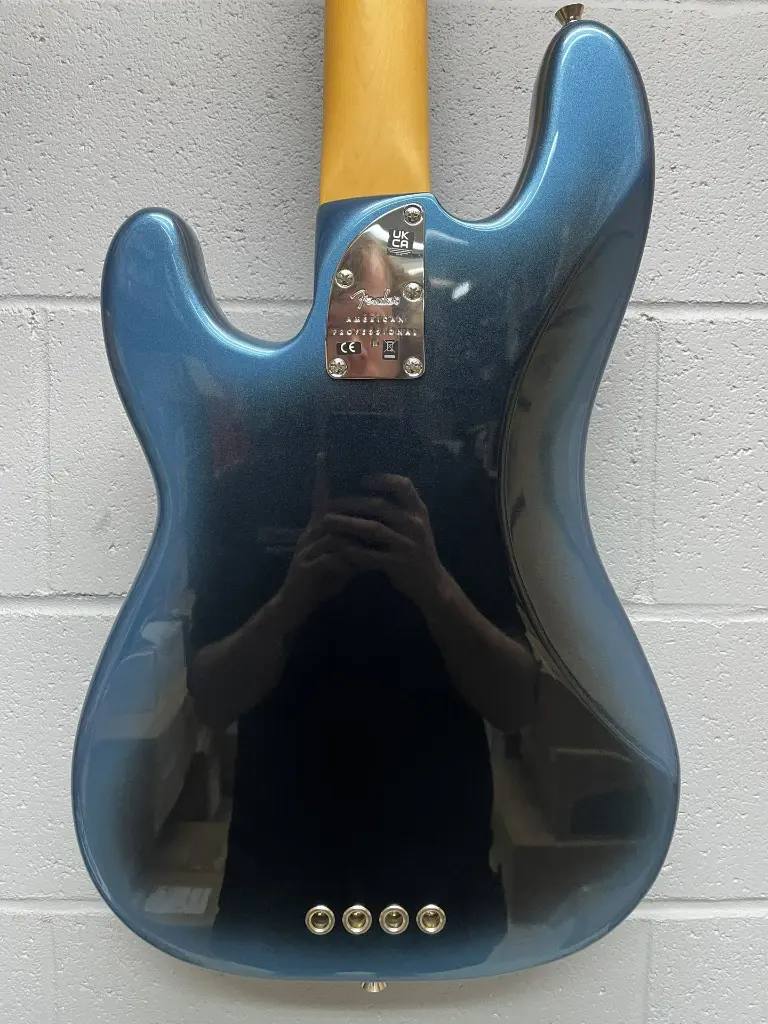
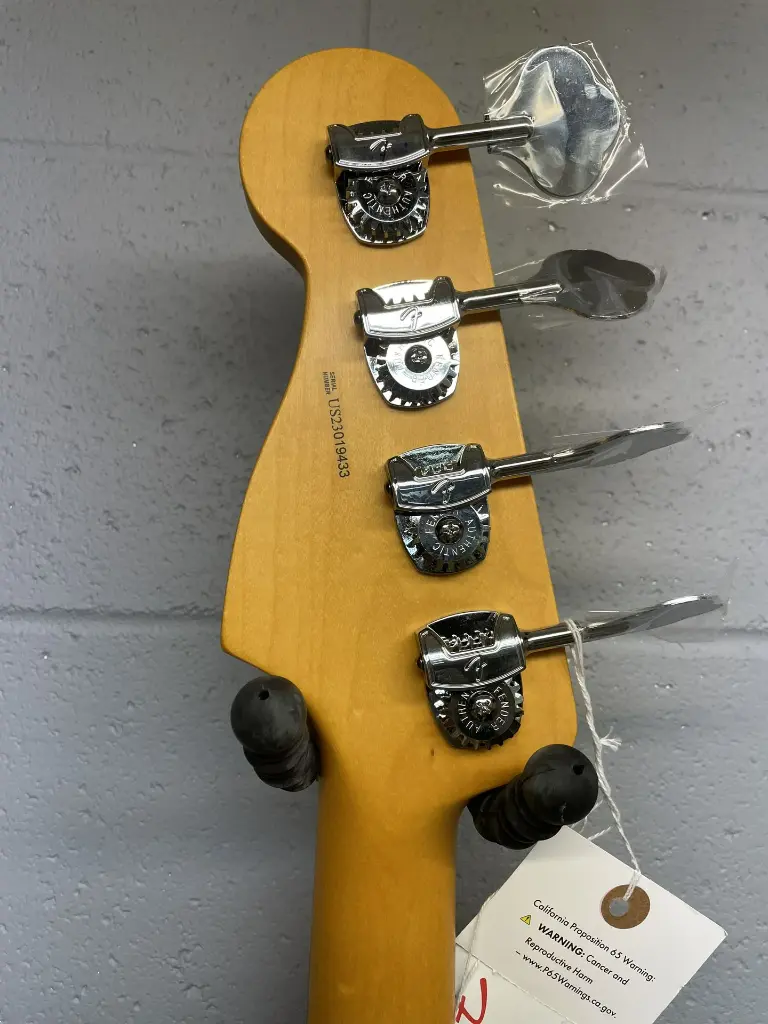
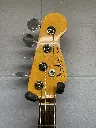
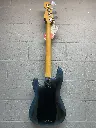
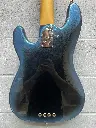
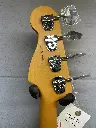
Fender American Pro II P-Bass RW Dark Night - Electric Bass
The beating heart of modern music, brought to its technical peak.
The Fender American Professional II Precision Bass® draws on over sixty years of global stage presence to deliver the ultimate standard for the professional bassist. Its iconic 1963 P Bass neck profile, now featuring rounded fingerboard edges and a Super-Natural finish, redefines playing comfort. Powered by the new V-Mod II Split-Coil pickup, it delivers the warm rumble and organic presence for which it is legendary, while incorporating surgically precise innovations for today's musician.
This content will be shared across all product pages.
The Authority of Rhythm: Why the Precision Bass II is the ultimate tool?
The Precision Bass is the instrument that invented the electric bass, and the American Professional II is its most sophisticated evolution. It meets the critical needs of professionals: complete access to the upper frets thanks to the sculpted neck heel and rock-solid structural stability thanks to Posiflex™ graphite bracing. Whether you're in a Montreal studio or on an international tour, this bass provides a rhythmic foundation that sits naturally in any mix, with the reliability that only Fender can guarantee.
Full Technical Specifications
Body & Construction
| Characteristic | Details |
| Series | American Professional II |
| Body material | Alder or Roasted Pine depending on the finish |
| Body finish | Glossy polyurethane (Gloss Urethane) |
| Body shape | Precision Bass® |
| Configuration | Split Single-Coil |
Neck & Fingerboard
| Characteristic | Details |
| Handle material | Maple |
| Construction | 4 screws with sculpted heel (4-Bolt) |
| Handle finish | Satin "Super-Natural" (back), Glossy (head) |
| Handle profile | "1963 C" |
| Tuning fork | 34" (864 mm) |
| Touch | Maple or Rosewood |
| Touchdown radius | 9.5" (241 mm) |
| Number of frets | 20 |
| Type of frets | Narrow Tall |
| Nut | Bone |
| Nut width | 1.625" (41.3 mm) |
| Inlays | Black or white spots |
| Adjustment rod | Standard with Posiflex™ graphite reinforcements |
Electronics & Marine Hardware
| Characteristic | Details |
| Micro Central | V-Mod II Split Single-Coil Precision Bass® |
| Controls | Master Volume, Master Tone |
| Easel | 4-Saddle HiMass™ Vintage (Traversal or Top-Load) |
| Mechanics | Fender® Lightweight Vintage-Style with tapered axles |
| Pickguard | 3-Ply (Mint Green, Black or Tortoiseshell depending on the model) |
| Buttons | Knurled Flat-Top (Moletés) |
| Hardware Finish | Nickel/Chrome |
Dimensions & Accessories
| Characteristic | Details |
| Ropes | Fender® USA 7250M NPS (.045-.105 Gauges) |
| Case included | Deluxe Molded Hard Case |
| Origin | USA (Corona, California) |
Comparative Analysis
Based on consensus from Sound on Sound, MusicRadar and Gearspace.
| Alternative Product | Market Segment | Comparative Analysis | Available at Garage à Musique |
| Fender American Ultra P-Bass | Modern / Active | PJ configuration with preamp, but deviates from the pure passive P sound. | Available here |
| Lakland Skyline 44-64 | Optimized P-Style | Very stable neck, but lacks the historical prestige of the Fender logo. | Product not listed |
| Fender American Vintage II '60 | Historical Reissue | An exact reproduction, but without the comfort of the modern sculpted heel. | Available here |
| Yamaha BB734A | Hybrid PJ | Very versatile, but with a more bulky ergonomics than the Precision. | Available here |
| Sandberg California VM | Custom Shop Style | Superb German construction, but a more modern sound character. | Product not listed |
| Fender Player II P-Bass | Entry-level Pro | Very sturdy, but lower-end pickups and hardware. | Available here |
| Sadowsky MetroLine P | High-end Studio | Lightweight, but with a very compressed, typical "New York" sound. | Product not listed |
| G&L LB-100 (USA) | Leo Fender's Evolution | Very powerful pickup, but neck profile often wider. | Product not listed |
| Music Man Caprice | Passive Premium | Very comfortable, but doesn't offer the iconic "growl" of the P-Bass. | Product not listed |
| Fender American Performer P | Entry-level USA | PJ configuration, but without the graphite reinforcement or the Deluxe case. | Available here |
History & Evolution
Introduced in 1951, the Precision Bass was the first instrument of its kind to be mass-produced. It replaced the bulky upright bass and allowed bassists to be heard with precision (hence its name). The American Professional II honors this lineage by retaining the "1963" neck profile, considered by purists to be the most comfortable in Fender history. The major innovation lies in the V-Mod II pickup, which uses a secret blend of Alnico magnets to deliver greater clarity in the high frequencies while maintaining the massive low-mids that defined rock and Motown.
Cultural References & Artists
James Jamerson - Standing in the Shadows of Motown : Le son qui a défini le R&B.
Steve Harris (Iron Maiden) - The Number of the Beast (1982) : Le claquement métallique du heavy metal.
Roger Waters (Pink Floyd) - The Wall (1979) : La précision rythmique et mélodique.
Pino Palladino - Voodoo (D'Angelo, 2000) : La référence ultime du groove moderne.
Duff McKagan (Guns N' Roses) - Appetite for Destruction (1987): The aggression of hard rock.
Dee Dee Ramone (The Ramones) - Rocket to Russia (1977) : L'énergie brute du punk.
Geezer Butler (Black Sabbath) - Paranoid (1970) : La fondation du son doom/heavy.
Donald "Duck" Dunn - Soul Man (Blues Brothers): The pillar of Stax Soul.
Sting - Synchronicity (The Police, 1983) : Souvent vu avec une P-Bass vintage.
John Entwistle (The Who) - My Generation (1965) : A utilisé la P-Bass avant de passer à d'autres modèles.
Carol Kaye - Pet Sounds (The Beach Boys, 1966) : La bassiste la plus enregistrée de l'histoire.
Nate Mendel (Foo Fighters) - The Colour and the Shape (1997) : La solidité du rock alternatif.
Jean-Jacques Burnel (The Stranglers) - No More Heroes (1977) : Un son de P-Bass saturé iconique.
Tim Commerford (Audioslave) - Audioslave (2002) : Souvent configurée avec des micros custom.
Guy Berryman (Coldplay) - A Rush of Blood to the Head (2002) : Des lignes de basse mélodiques et rondes.
FAQ (Frequently Asked Questions)
What is the difference between the "1963 C" neck profile and the other profiles?
The "1963 C" profile is slightly wider at the nut (1.625") than that of a Jazz Bass, offering a more solid feel under the hand. Fender has thinned the edges of the fingerboard to make this historic profile more comfortable than ever for the bassist at Garage à Musique.
Does the V-Mod II microphone produce hiss?
No, the "Split-Coil" design naturally acts like a humbucker. The two coils cancel each other out, eliminating background noise and RF interference, which is crucial for studio recordings.
Why are Posiflex™ graphite stems important?
Quebec's climate can be harsh on instruments. These reinforcement rods ensure that the neck remains straight despite changes in humidity, thus preventing problems such as ground loops or unwanted string buzzing.
Is this bass suitable for slap bass?
While the Jazz Bass is often preferred for slap bass, the American Pro II P-Bass delivers incredible punch. The V-Mod II pickup provides the necessary clarity in the high frequencies so that every pop cuts through the mix with authority.
Is the HiMass™ Vintage easel really superior?
Yes. Its heavier base increases sustain and improves attack. It also allows you to choose between through-body stringing (for more tension) or top-body stringing (for more flexibility), a feature appreciated at Garage à Musique.
Is the Precision Bass more difficult to play than a Jazz Bass?
The neck is slightly wider, but the ergonomics of the American Professional II, with its rounded fingerboard edges and "Super-Natural" finish, significantly reduce playing effort. It's a matter of personal preference regarding hand feel.
What is the "Super-Natural" finish?
It features a special satin finish on the back of the neck that never becomes sticky with sweat. It offers the perfect glide for fast movements, ensuring performance without physical lag .
Can I use this bass for jazz?
Absolutely. By slightly lowering the tone potentiometer, you get that deep, woody sound that has been the signature of the greatest jazz and blues bassists for 70 years.
Is the included case sturdy?
This is the Fender Deluxe molded case. It features an ultra-durable outer shell and TSA latches. It offers maximum protection for your instrument while traveling between gigs in Quebec.
Does this bass require a battery?
No, it's a 100% passive instrument. You'll never need phantom power or a 9V battery, which ensures your signal remains organic and you'll never experience a sound failure on stage.
The Authority of Rhythm: Why the Precision Bass II is the ultimate tool?
The Precision Bass is the instrument that invented the electric bass, and the American Professional II is its most sophisticated evolution. It meets the critical needs of professionals: complete access to the upper frets thanks to the sculpted neck heel and rock-solid structural stability thanks to Posiflex™ graphite bracing. Whether you're in a Montreal studio or on an international tour, this bass provides a rhythmic foundation that sits naturally in any mix, with the reliability that only Fender can guarantee.
Full Technical Specifications
Body & Construction
| Characteristic | Details |
| Series | American Professional II |
| Body material | Alder or Roasted Pine depending on the finish |
| Body finish | Glossy polyurethane (Gloss Urethane) |
| Body shape | Precision Bass® |
| Configuration | Split Single-Coil |
Neck & Fingerboard
| Characteristic | Details |
| Handle material | Maple |
| Construction | 4 screws with sculpted heel (4-Bolt) |
| Handle finish | Satin "Super-Natural" (back), Glossy (head) |
| Handle profile | "1963 C" |
| Tuning fork | 34" (864 mm) |
| Touch | Maple or Rosewood |
| Touchdown radius | 9.5" (241 mm) |
| Number of frets | 20 |
| Type of frets | Narrow Tall |
| Nut | Bone |
| Nut width | 1.625" (41.3 mm) |
| Inlays | Black or white spots |
| Adjustment rod | Standard with Posiflex™ graphite reinforcements |
Electronics & Marine Hardware
| Characteristic | Details |
| Micro Central | V-Mod II Split Single-Coil Precision Bass® |
| Controls | Master Volume, Master Tone |
| Easel | 4-Saddle HiMass™ Vintage (Traversal or Top-Load) |
| Mechanics | Fender® Lightweight Vintage-Style with tapered axles |
| Pickguard | 3-Ply (Mint Green, Black or Tortoiseshell depending on the model) |
| Buttons | Knurled Flat-Top (Moletés) |
| Hardware Finish | Nickel/Chrome |
Dimensions & Accessories
| Characteristic | Details |
| Ropes | Fender® USA 7250M NPS (.045-.105 Gauges) |
| Case included | Deluxe Molded Hard Case |
| Origin | USA (Corona, California) |
Comparative Analysis
Based on consensus from Sound on Sound, MusicRadar and Gearspace.
| Alternative Product | Market Segment | Comparative Analysis | Available at Garage à Musique |
| Fender American Ultra P-Bass | Modern / Active | PJ configuration with preamp, but deviates from the pure passive P sound. | Available here |
| Lakland Skyline 44-64 | Optimized P-Style | Very stable neck, but lacks the historical prestige of the Fender logo. | Product not listed |
| Fender American Vintage II '60 | Historical Reissue | An exact reproduction, but without the comfort of the modern sculpted heel. | Available here |
| Yamaha BB734A | Hybrid PJ | Very versatile, but with a more bulky ergonomics than the Precision. | Available here |
| Sandberg California VM | Custom Shop Style | Superb German construction, but a more modern sound character. | Product not listed |
| Fender Player II P-Bass | Entry-level Pro | Very sturdy, but lower-end pickups and hardware. | Available here |
| Sadowsky MetroLine P | High-end Studio | Lightweight, but with a very compressed, typical "New York" sound. | Product not listed |
| G&L LB-100 (USA) | Leo Fender's Evolution | Very powerful pickup, but neck profile often wider. | Product not listed |
| Music Man Caprice | Passive Premium | Very comfortable, but doesn't offer the iconic "growl" of the P-Bass. | Product not listed |
| Fender American Performer P | Entry-level USA | PJ configuration, but without the graphite reinforcement or the Deluxe case. | Available here |
History & Evolution
Introduced in 1951, the Precision Bass was the first instrument of its kind to be mass-produced. It replaced the bulky upright bass and allowed bassists to be heard with precision (hence its name). The American Professional II honors this lineage by retaining the "1963" neck profile, considered by purists to be the most comfortable in Fender history. The major innovation lies in the V-Mod II pickup, which uses a secret blend of Alnico magnets to deliver greater clarity in the high frequencies while maintaining the massive low-mids that defined rock and Motown.
Cultural References & Artists
James Jamerson - Standing in the Shadows of Motown : Le son qui a défini le R&B.
Steve Harris (Iron Maiden) - The Number of the Beast (1982) : Le claquement métallique du heavy metal.
Roger Waters (Pink Floyd) - The Wall (1979) : La précision rythmique et mélodique.
Pino Palladino - Voodoo (D'Angelo, 2000) : La référence ultime du groove moderne.
Duff McKagan (Guns N' Roses) - Appetite for Destruction (1987): The aggression of hard rock.
Dee Dee Ramone (The Ramones) - Rocket to Russia (1977) : L'énergie brute du punk.
Geezer Butler (Black Sabbath) - Paranoid (1970) : La fondation du son doom/heavy.
Donald "Duck" Dunn - Soul Man (Blues Brothers): The pillar of Stax Soul.
Sting - Synchronicity (The Police, 1983) : Souvent vu avec une P-Bass vintage.
John Entwistle (The Who) - My Generation (1965) : A utilisé la P-Bass avant de passer à d'autres modèles.
Carol Kaye - Pet Sounds (The Beach Boys, 1966) : La bassiste la plus enregistrée de l'histoire.
Nate Mendel (Foo Fighters) - The Colour and the Shape (1997) : La solidité du rock alternatif.
Jean-Jacques Burnel (The Stranglers) - No More Heroes (1977) : Un son de P-Bass saturé iconique.
Tim Commerford (Audioslave) - Audioslave (2002) : Souvent configurée avec des micros custom.
Guy Berryman (Coldplay) - A Rush of Blood to the Head (2002) : Des lignes de basse mélodiques et rondes.
FAQ (Frequently Asked Questions)
What is the difference between the "1963 C" neck profile and the other profiles?
The "1963 C" profile is slightly wider at the nut (1.625") than that of a Jazz Bass, offering a more solid feel under the hand. Fender has thinned the edges of the fingerboard to make this historic profile more comfortable than ever for the bassist at Garage à Musique.
Does the V-Mod II microphone produce hiss?
No, the "Split-Coil" design naturally acts like a humbucker. The two coils cancel each other out, eliminating background noise and RF interference, which is crucial for studio recordings.
Why are Posiflex™ graphite stems important?
Quebec's climate can be harsh on instruments. These reinforcement rods ensure that the neck remains straight despite changes in humidity, thus preventing problems such as ground loops or unwanted string buzzing.
Is this bass suitable for slap bass?
While the Jazz Bass is often preferred for slap bass, the American Pro II P-Bass delivers incredible punch. The V-Mod II pickup provides the necessary clarity in the high frequencies so that every pop cuts through the mix with authority.
Is the HiMass™ Vintage easel really superior?
Yes. Its heavier base increases sustain and improves attack. It also allows you to choose between through-body stringing (for more tension) or top-body stringing (for more flexibility), a feature appreciated at Garage à Musique.
Is the Precision Bass more difficult to play than a Jazz Bass?
The neck is slightly wider, but the ergonomics of the American Professional II, with its rounded fingerboard edges and "Super-Natural" finish, significantly reduce playing effort. It's a matter of personal preference regarding hand feel.
What is the "Super-Natural" finish?
It features a special satin finish on the back of the neck that never becomes sticky with sweat. It offers the perfect glide for fast movements, ensuring performance without physical lag .
Can I use this bass for jazz?
Absolutely. By slightly lowering the tone potentiometer, you get that deep, woody sound that has been the signature of the greatest jazz and blues bassists for 70 years.
Is the included case sturdy?
This is the Fender Deluxe molded case. It features an ultra-durable outer shell and TSA latches. It offers maximum protection for your instrument while traveling between gigs in Quebec.
Does this bass require a battery?
No, it's a 100% passive instrument. You'll never need phantom power or a 9V battery, which ensures your signal remains organic and you'll never experience a sound failure on stage.
Avis clients
Aucun avis pour le moment. Soyez le premier à partager votre expérience après votre achat.