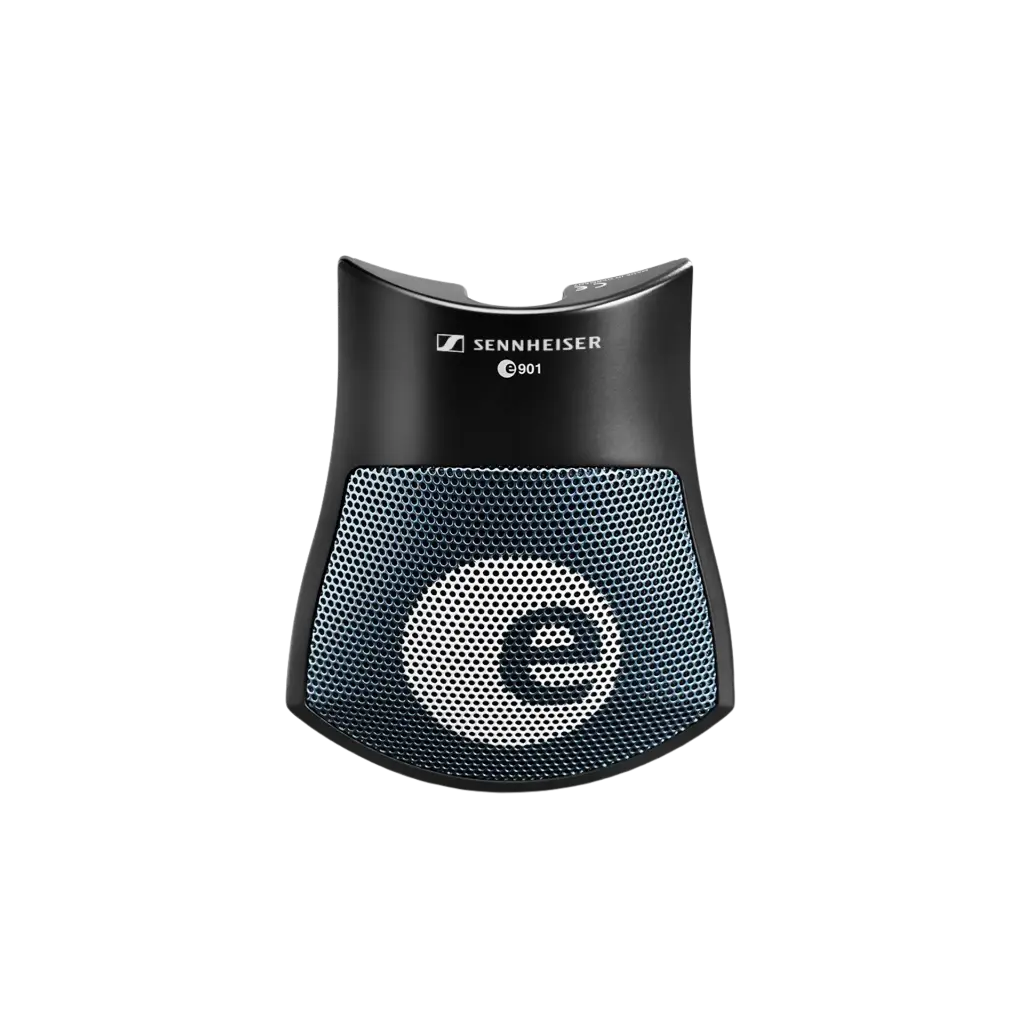
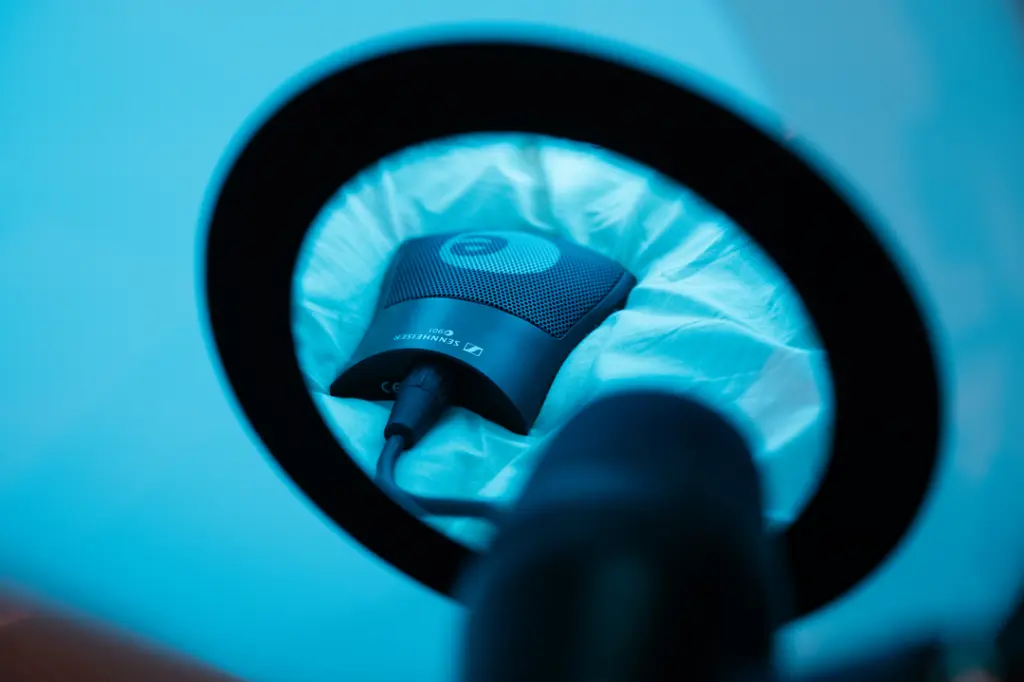
Sennheiser E 901 Semicardioid Condenser Microphone
This content will be shared across all product pages.
The Sound Authority: Why the Sennheiser e 901 is a Must-Have
In the professional world, the "kick" is the heart of the mix. The Sennheiser e 901 is not just a simple microphone; it is an engineering solution that solves two major problems: the bulkiness of microphone stands and the lack of clarity in the low frequencies.
Thanks to its high-quality electret capsule and semi-cardioid polar pattern, it isolates the beater's attack while minimizing unwanted room resonances. Its plug-and-play design with an integrated XLR connector means fewer cables cluttering the room and setup in seconds. For the Quebec musician juggling shows or studio sessions, it guarantees a consistent, powerful, and mix-ready sound.
Full Technical Specifications
Audio & Performance Features
| Setting | Specification |
| Transducer principle | Pre-polarized capacitor (Electret) |
| Directivity | Half-cardioid |
| Frequency response | 20 Hz - 20,000 Hz |
| Sensitivity (free field, no load) | 0.5 mV/Pa (at 1 kHz) |
| Maximum sound pressure level (SPL) | 154 dB/SPL |
| Equivalent noise level | 26 dB(A) |
| Signal-to-noise ratio | 68 dB |
Electronics & Connectivity
| Setting | Specification |
| Nominal impedance | < 100 Ω |
| Minimum terminal impedance. | 1000 Ω |
| Ghost Power Supply | 48 V / 1.1 mA |
| Connector | XLR-3 (gold plated) |
| Preamplifier | Integrated into the chassis |
Physics & Materials
| Setting | Specification |
| Dimensions | 126.5 x 105 x 26.5 mm |
| Weight | 550 g |
| Case material | High-strength reinforced metal |
| Base | Non-slip and shock-absorbing rubber |
| Color | Matte black / Anthracite grey |
Comparative Analysis: The e 901 vs. the industry
Sources consulted: Sound on Sound, Gearspace, MusicRadar.
| Alternative Product | Market Segment | Comparative Analysis | Music Garage Availability |
| Shure Beta 91A | Boundary Condenser | More "body" in the lower midrange, but the e 901 offers a more natural and faster "click". | Available here |
| Beyerdynamic TG D71 | Boundary Condenser | Very precise, but less physically robust than the Sennheiser's massive chassis. | Available here |
| Sennheiser e 902 | Dynamic Kick | Complementary. The e 902 handles the "thump" (down) while the e 901 handles the attack. | Available here |
| Audix D6 | Dynamic Kick | Its sound is very sculpted (V-Shape). Less versatile for piano than the e 901. | Available here |
| AKG D112 MKII | Standard Dynamics | A classic, but requires a microphone stand and offers less clarity in the high frequencies. | Available here |
| Crown PZM-30D | Boundary (General) | Excellent for creating atmosphere, but cannot handle the extreme SPLs of a bass drum. | Product not listed |
| Audio-Technica AE2500 | Dual-Element | Combines capacitor and dynamic elements. Very heavy and complex to position compared to the e 901. | Available here |
| Kelly SHU Flatz | Mounting system | It's not a microphone, but an internal system. The e 901 remains more stable on the ground. | Product not listed |
| Shure SM52 | Dynamic Kick | Less definition in the transient attack compared to the static capsule of the e 901. | Available here |
| Earthworks KickPad | Signal processor | Useful for sculpting, but the e 901 is already natively optimized at source. | Product not listed |
History & Evolution
The Sennheiser e 901 belongs to the prestigious evolution 900 series, launched to offer premium touring performance beyond the 600 series. It indirectly succeeded the PZM (Pressure Zone Microphone) plate concept by adapting the technology specifically for instruments with high sound pressure levels. Over the years, Sennheiser has refined the design to integrate the preamp directly into the housing (avoiding fragile external housings), making the e 901 the industry standard for bass drum attack capture for over 15 years.
Cultural References & Artists
Here are some renowned artists and engineers who have used or are using the Sennheiser e 901 (solo or combo):
Blake Richardson (Between the Buried and Me) - Utilisation intensive en live pour la clarté du kick.
Brian Blakes (Real Friends) - Standard de tournée.
Raphael Schuler - Configuration drum hybride Sennheiser.
Tool (Danny Carey) - Souvent utilisé en combinaison pour capturer l'attaque de ses percussions massives.
Nightwish (Kai Hahto) - Pour la précision nécessaire au métal symphonique.
Metallica (Big Mick Hughes) - Ingénieur de son utilisant souvent la série 900.
Pink Floyd (Live) - La série evolution est un pilier de leurs parcs microphoniques modernes.
Ed Sheeran - Utilisé sur les percussions de sa loop station en tournée mondiale.
Jolin Tsai - Utilisé pour la capture précise lors de ses tournées mondiales.
Steely Dan - Référence pour la fidélité sonore en studio.
Gojira (Mario Duplantier) - Indispensable pour la double pédale ultra-rapide.
Lamb of God (Art Cruz) - Capture chirurgicale de l'attaque.
Sting - Utilisé pour la captation de piano à queue sur scène.
Alicia Keys - Utilisé à l'intérieur de son piano pour une clarté exceptionnelle.
Hélène Fischer - Standard de production pour les grands stades européens.
Enhanced FAQ (Expert)
Le e 901 nécessite-t-il une alimentation fantôme ? Oui, c'est un microphone à condensateur (électret) qui nécessite une alimentation +48V pour fonctionner.
Est-ce qu'il peut remplacer un micro de kick dynamique comme le e 902 ? Il peut être utilisé seul pour un son très défini et moderne, mais il est souvent jumelé au e 902 pour obtenir le meilleur des deux mondes : l'attaque (e 901) et la rondeur (e 902).
Comment bien le positionner dans une grosse caisse ? Posez-le simplement sur le tapis ou l'amortisseur interne, la grille vers le haut, à environ 10-20 cm de la peau de frappe pour un maximum d'attaque.
Peut-on l'utiliser pour d'autres instruments ? Absolument. Il est exceptionnel placé à l'intérieur d'un piano à queue ou sur une table de conférence pour une captation de voix discrète.
Est-il fragile puisqu'il est à condensateur ? Pas du tout. Il est conçu pour supporter des niveaux de pression acoustique (SPL) allant jusqu'à 154 dB, ce qui est supérieur à un avion au décollage.
Pourquoi n'y a-t-il pas de pied de micro inclus ? Sa conception "Boundary" est faite pour qu'il repose directement sur une surface plane (le fond du drum ou le sol), éliminant le besoin de pied.
Est-ce qu'il glisse à l'intérieur du drum avec les vibrations ? Non, sa base en caoutchouc épais à haute adhérence le maintient fermement en place, même lors des sessions les plus intenses.
Le connecteur XLR est-il solide ? Oui, le connecteur est intégré au châssis métallique et plaqué or pour une conductivité maximale et une durabilité accrue.
Quelle est la différence avec le Shure Beta 91A ? Le e 901 a tendance à être plus "rapide" sur les transitoires et nécessite souvent moins d'égalisation pour sortir du mix.
Est-il fabriqué en Allemagne ? Oui, il est conçu et assemblé en Europe selon les standards de qualité rigoureux de Sennheiser.
The Sound Authority: Why the Sennheiser e 901 is a Must-Have
In the professional world, the "kick" is the heart of the mix. The Sennheiser e 901 is not just a simple microphone; it is an engineering solution that solves two major problems: the bulkiness of microphone stands and the lack of clarity in the low frequencies.
Thanks to its high-quality electret capsule and semi-cardioid polar pattern, it isolates the beater's attack while minimizing unwanted room resonances. Its plug-and-play design with an integrated XLR connector means fewer cables cluttering the room and setup in seconds. For the Quebec musician juggling shows or studio sessions, it guarantees a consistent, powerful, and mix-ready sound.
Full Technical Specifications
Audio & Performance Features
| Setting | Specification |
| Transducer principle | Pre-polarized capacitor (Electret) |
| Directivity | Half-cardioid |
| Frequency response | 20 Hz - 20,000 Hz |
| Sensitivity (free field, no load) | 0.5 mV/Pa (at 1 kHz) |
| Maximum sound pressure level (SPL) | 154 dB/SPL |
| Equivalent noise level | 26 dB(A) |
| Signal-to-noise ratio | 68 dB |
Electronics & Connectivity
| Setting | Specification |
| Nominal impedance | < 100 Ω |
| Minimum terminal impedance. | 1000 Ω |
| Ghost Power Supply | 48 V / 1.1 mA |
| Connector | XLR-3 (gold plated) |
| Preamplifier | Integrated into the chassis |
Physics & Materials
| Setting | Specification |
| Dimensions | 126.5 x 105 x 26.5 mm |
| Weight | 550 g |
| Case material | High-strength reinforced metal |
| Base | Non-slip and shock-absorbing rubber |
| Color | Matte black / Anthracite grey |
Comparative Analysis: The e 901 vs. the industry
Sources consulted: Sound on Sound, Gearspace, MusicRadar.
| Alternative Product | Market Segment | Comparative Analysis | Music Garage Availability |
| Shure Beta 91A | Boundary Condenser | More "body" in the lower midrange, but the e 901 offers a more natural and faster "click". | Available here |
| Beyerdynamic TG D71 | Boundary Condenser | Very precise, but less physically robust than the Sennheiser's massive chassis. | Available here |
| Sennheiser e 902 | Dynamic Kick | Complementary. The e 902 handles the "thump" (down) while the e 901 handles the attack. | Available here |
| Audix D6 | Dynamic Kick | Its sound is very sculpted (V-Shape). Less versatile for piano than the e 901. | Available here |
| AKG D112 MKII | Standard Dynamics | A classic, but requires a microphone stand and offers less clarity in the high frequencies. | Available here |
| Crown PZM-30D | Boundary (General) | Excellent for creating atmosphere, but cannot handle the extreme SPLs of a bass drum. | Product not listed |
| Audio-Technica AE2500 | Dual-Element | Combines capacitor and dynamic elements. Very heavy and complex to position compared to the e 901. | Available here |
| Kelly SHU Flatz | Mounting system | It's not a microphone, but an internal system. The e 901 remains more stable on the ground. | Product not listed |
| Shure SM52 | Dynamic Kick | Less definition in the transient attack compared to the static capsule of the e 901. | Available here |
| Earthworks KickPad | Signal processor | Useful for sculpting, but the e 901 is already natively optimized at source. | Product not listed |
History & Evolution
The Sennheiser e 901 belongs to the prestigious evolution 900 series, launched to offer premium touring performance beyond the 600 series. It indirectly succeeded the PZM (Pressure Zone Microphone) plate concept by adapting the technology specifically for instruments with high sound pressure levels. Over the years, Sennheiser has refined the design to integrate the preamp directly into the housing (avoiding fragile external housings), making the e 901 the industry standard for bass drum attack capture for over 15 years.
Cultural References & Artists
Here are some renowned artists and engineers who have used or are using the Sennheiser e 901 (solo or combo):
Blake Richardson (Between the Buried and Me) - Utilisation intensive en live pour la clarté du kick.
Brian Blakes (Real Friends) - Standard de tournée.
Raphael Schuler - Configuration drum hybride Sennheiser.
Tool (Danny Carey) - Souvent utilisé en combinaison pour capturer l'attaque de ses percussions massives.
Nightwish (Kai Hahto) - Pour la précision nécessaire au métal symphonique.
Metallica (Big Mick Hughes) - Ingénieur de son utilisant souvent la série 900.
Pink Floyd (Live) - La série evolution est un pilier de leurs parcs microphoniques modernes.
Ed Sheeran - Utilisé sur les percussions de sa loop station en tournée mondiale.
Jolin Tsai - Utilisé pour la capture précise lors de ses tournées mondiales.
Steely Dan - Référence pour la fidélité sonore en studio.
Gojira (Mario Duplantier) - Indispensable pour la double pédale ultra-rapide.
Lamb of God (Art Cruz) - Capture chirurgicale de l'attaque.
Sting - Utilisé pour la captation de piano à queue sur scène.
Alicia Keys - Utilisé à l'intérieur de son piano pour une clarté exceptionnelle.
Hélène Fischer - Standard de production pour les grands stades européens.
Enhanced FAQ (Expert)
Le e 901 nécessite-t-il une alimentation fantôme ? Oui, c'est un microphone à condensateur (électret) qui nécessite une alimentation +48V pour fonctionner.
Est-ce qu'il peut remplacer un micro de kick dynamique comme le e 902 ? Il peut être utilisé seul pour un son très défini et moderne, mais il est souvent jumelé au e 902 pour obtenir le meilleur des deux mondes : l'attaque (e 901) et la rondeur (e 902).
Comment bien le positionner dans une grosse caisse ? Posez-le simplement sur le tapis ou l'amortisseur interne, la grille vers le haut, à environ 10-20 cm de la peau de frappe pour un maximum d'attaque.
Peut-on l'utiliser pour d'autres instruments ? Absolument. Il est exceptionnel placé à l'intérieur d'un piano à queue ou sur une table de conférence pour une captation de voix discrète.
Est-il fragile puisqu'il est à condensateur ? Pas du tout. Il est conçu pour supporter des niveaux de pression acoustique (SPL) allant jusqu'à 154 dB, ce qui est supérieur à un avion au décollage.
Pourquoi n'y a-t-il pas de pied de micro inclus ? Sa conception "Boundary" est faite pour qu'il repose directement sur une surface plane (le fond du drum ou le sol), éliminant le besoin de pied.
Est-ce qu'il glisse à l'intérieur du drum avec les vibrations ? Non, sa base en caoutchouc épais à haute adhérence le maintient fermement en place, même lors des sessions les plus intenses.
Le connecteur XLR est-il solide ? Oui, le connecteur est intégré au châssis métallique et plaqué or pour une conductivité maximale et une durabilité accrue.
Quelle est la différence avec le Shure Beta 91A ? Le e 901 a tendance à être plus "rapide" sur les transitoires et nécessite souvent moins d'égalisation pour sortir du mix.
Est-il fabriqué en Allemagne ? Oui, il est conçu et assemblé en Europe selon les standards de qualité rigoureux de Sennheiser.