
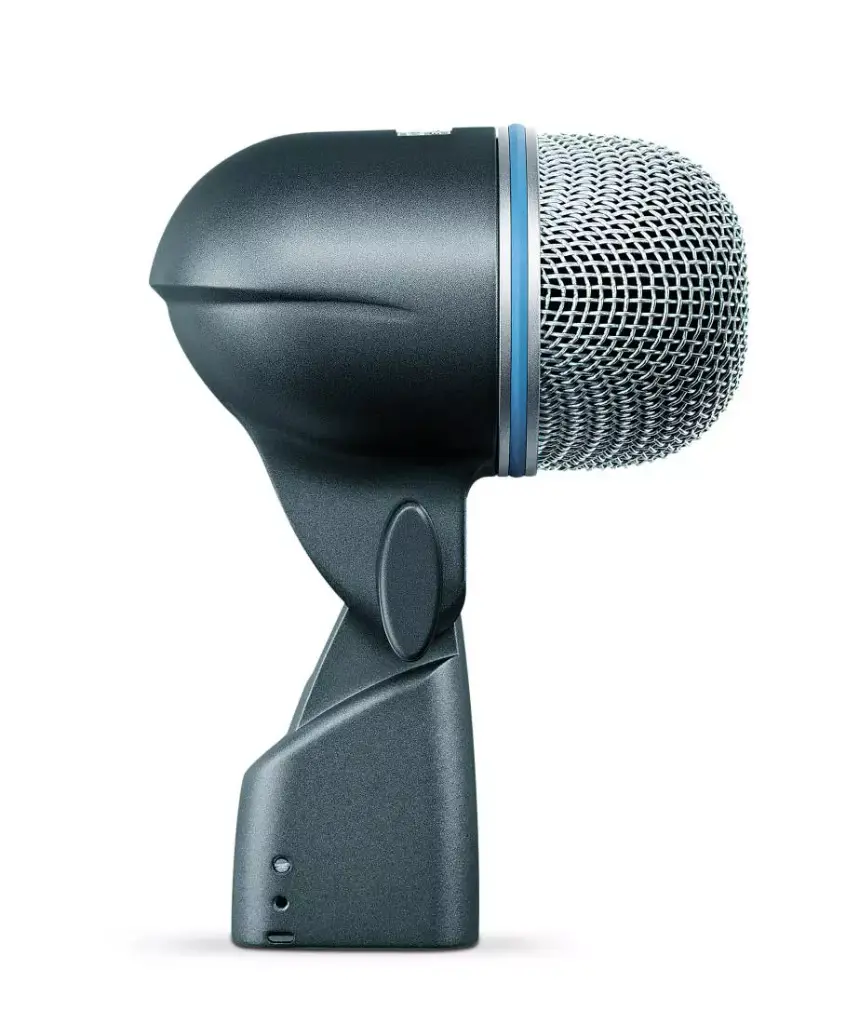
Shure BETA 52A Supercardioid Dynamic Kick Drum Microphone
The Shure BETA 52A is a supercardioid dynamic microphone designed for kick drum and other bass instruments. It delivers attack and « punch », and keeps studio quality even at extreme sound pressure levels: Shure publishes a maximum of 174 dB SPL.
What sets it apart
- 20 to 10,000 Hz response shaped for kick drum and bass instruments
- Built-in stand adapter with dynamic locking system and integral XLR connector
- Modified supercardioid pattern: high gain before feedback and good off-axis rejection
- 174 dB maximum sound pressure level (1 kHz, 1% THD)
- Hardened steel mesh grille and die-cast metal housing, made for touring
Inside or in front of the kick drum
Shure's guide offers two starting points. At 5 to 7.5 cm from the beater head, slightly off-centre from the beater: sharp attack, maximum bass, highest level. At 20 to 30 cm from the beater head, on axis with the beater: medium attack, balanced sound. Closer to the head, you gain attack; further away, resonance. The mic must not touch the head or the damping.
For a tighter, punchier sound, Shure suggests placing a pillow or blanket on the bottom of the drum, against the beater head.
A mount that does not slip
The built-in stand adapter resists slipping when struck or bumped, yet allows adjustments without loosening the knob. Thread the mic onto the stand, set the height and position, then tighten the knob by hand, without tools and without forcing it. The XLR connector is part of the adapter, which makes setup inside the kick drum simpler.
Beyond the kick drum
Shure also lists it for guitar and bass amps. At 2.5 cm from the speaker, at the centre of the cone: sharp attack, emphasized bass. At the edge of the cone: brighter sound. At 60 to 90 cm: softer attack, less bass.
Specifications
| Type | Dynamic (moving coil) |
|---|---|
| Polar pattern | Modified supercardioid |
| Frequency response | 20 to 10,000 Hz |
| Output impedance | 45 Ω |
| Sensitivity (1 kHz, open circuit) | -64 dBV/Pa (0.6 mV) |
| Max. sound pressure level | 174 dB (1 kHz, 1% THD, 1 kΩ load) |
| Connector | 3-pin male XLR, balanced, built into the adapter |
| Dimensions | 94 × 162 × 113 mm |
| Net weight | 605 g |
| Included | 5/8 in. to 3/8 in. thread adapter, storage bag |
What it's for
- Kick drum on stage and on tour
- Kick drum in the studio
- Bass amp
- Other bass instruments
Compared with other manufacturers
Other dynamic kick drum microphones from other manufacturers. Data as published by each manufacturer.
| Model | Polar pattern | Frequency response | Designed for |
|---|---|---|---|
| Shure BETA 52A | Supercardioid | 20 to 10,000 Hz | Kick drum and bass instruments |
| Sennheiser e 602 II | Cardioid | 20 to 16,000 Hz | Kick drum, bass cabs, tubas |
| Audix D6 | Cardioid | Not stated on the manufacturer's page | Kick drum, large toms, bass cabs |
| Audio-Technica ATM250 | Hypercardioid | 40 to 15,000 Hz | Kick drum, percussion, brass |
| beyerdynamic TG D70 | Hypercardioid | 20 to 14,100 Hz, up close | Kick drum |
Frequently asked questions
- Where should the BETA 52A go in a kick drum?
- For maximum attack and bass: 5 to 7.5 cm from the beater head, slightly off-centre from the beater. For a more balanced sound: 20 to 30 cm away, on axis with the beater. It must not touch the head or the damping.
- Can the BETA 52A be used on a bass amp?
- Yes. Shure designs it for kick drum and other bass instruments, and its guide gives the positions in front of a guitar or bass amp: 2.5 cm from the centre of the cone for emphasized bass, up to 60 to 90 cm for a softer attack.
- How loud can the BETA 52A go?
- Shure publishes a maximum sound pressure level of 174 dB, measured at 1 kHz for 1% total harmonic distortion into a 1 kΩ load. It keeps studio quality even at these extreme levels.
- How does the BETA 52A's built-in mount work?
- Thread the mic onto the stand, set height and position, then tighten the knob by hand, without tools. The dynamic locking system resists knocks while still letting you adjust the angle without loosening.
Avis clients
Inside or in front of the drum: where does your BETA 52A sound best? Tell us.
Aucun avis pour le moment. Soyez le premier à partager votre expérience après votre achat.