
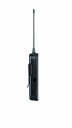
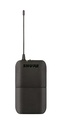
Shure BLX188/CVL-H9 Dual Wireless System with 2 Lavalier Mics, H9 Band
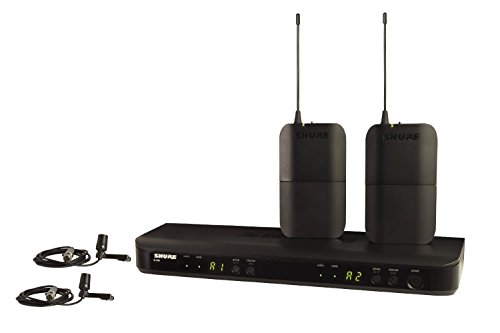
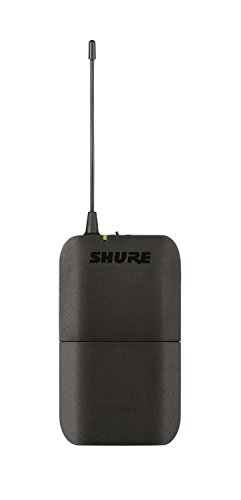
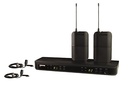
The Shure BLX188/CVL-H9 is a dual wireless system that equips two presenters at once: a two-channel BLX88 tabletop receiver, two BLX1 bodypack transmitters and two CVL cardioid lavalier microphones. The H9 version works between 512 and 542 MHz, and a single button press is all the receiver needs to look for open frequencies.
What sets it apart
- Two channels in a single tabletop receiver, set up with one scan
- Two CVL electret condenser lavalier mics, cardioid, with clips and windscreens
- Up to 14 hours per transmitter on two AA alkaline batteries
- 91 m line-of-sight range, according to Shure
- Up to 12 BLX systems at once in the same band, depending on the RF environment
Two voices, one receiver
A panel discussion, a host and a guest, a wedding where the officiant and a witness both speak: as soon as two people need a mic, two separate systems mean two receivers, two power supplies and two setups. The BLX188 puts both channels in the BLX88, a 308 mm wide tabletop unit powered by a single PS24 supply.
The two channels remain two separate receivers, each paired with its own transmitter. Each transmitter keeps its own gain control, so a soft voice and a voice that carries can be balanced before anyone touches the mixer.
The H9 band and frequency setup
The H9 suffix is the frequency band: 512 to 542 MHz, with 10 mW of transmitter output. Shure offers the same set in the H10, H11 and J11 bands, and notes that permitted bands vary from country to country.
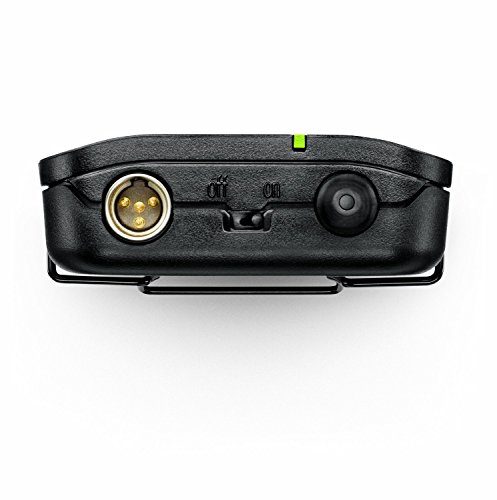
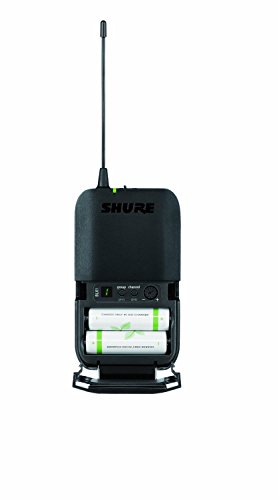
To set up, the receiver scans the band when the group button is pressed and picks the group with the most open channels; on the BLX88, that scan sets up both receivers at once. Each transmitter is then set to the same group and channel, and the receiver's ready LED lights up once the link is made. The controls then lock, on the transmitter as on the receiver, so an accidental press does not change the channel.
The CVL lavalier microphone
The CVL is an electret condenser lavalier mic with a cardioid pattern: it mainly picks up what is in front of it, the voice of the person wearing it, and rejects some of the room noise. Its 60 to 12,000 Hz response is tailored for speech and presentations. Shure recommends clipping it to a collar or tie, 15 to 25 cm from the mouth, away from jewellery and fabric that could rub against it.
Its 1.3 m cable ends in a TA4F connector that plugs into the four-pin input of the BLX1 transmitter. The transmitter's gain control covers 26 dB; for a lavalier, Shure suggests raising the gain as needed while watching the receiver's audio LED, which turns red on overload.
Battery life and setup
Each transmitter runs up to 14 hours on two AA alkaline batteries, and the system ships with two sets of batteries. The transmitter LED turns solid red when about one hour remains, enough time to swap batteries between two sessions of a conference day.
Shure gives a few rules for a stable link: keep a clear line of sight between transmitter and receiver, keep the receiver away from metal surfaces, keep the two transmitters more than 2 m apart and more than 5 m from the receiver. During sound check, it is worth marking trouble spots and asking presenters to avoid them.
Where it fits in the BLX range
Shure's BLX range comes in several sets. The BLX14/CVL pairs the same lavalier with a single receiver, for one person. The BLX1288/CVL combines a PG58 handheld and a CVL lavalier on a dual receiver. The BLX188/CVL is the two-lavalier version, for two presenters who keep their hands free.
Specifications
| In the box | BLX88 dual receiver, 2 BLX1 bodypack transmitters, 2 CVL lavalier mics, 2 clips, 2 windscreens, PS24 power supply, 2 sets of AA batteries |
|---|---|
| Frequency band | H9, 512 to 542 MHz |
| Transmitter output | 10 mW |
| Range | 91 m line of sight |
| System frequency response | 50 to 15,000 Hz, depending on the mic |
| Dynamic range | 100 dB, A-weighted |
| CVL microphone | Electret condenser, cardioid, 60 to 12,000 Hz |
| Mic cable | 1.3 m, TA4F connector |
| Transmitter battery life | Up to 14 h on 2 AA alkaline batteries |
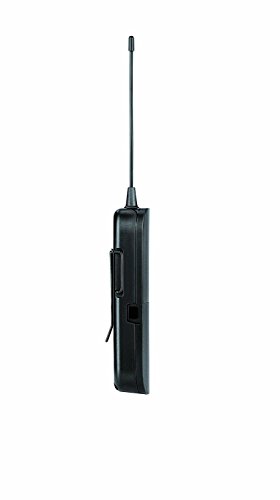
| BLX1 transmitter | 110 × 64 × 21 mm, 75 g without batteries |
| BLX88 receiver | 38 × 308 × 101 mm, 429 g |
| Receiver outputs | XLR at mic level and 6.35 mm at instrument level |
| Compatible systems | Up to 12 per band, depending on the environment |
| Operating temperature | −18 to 57 °C |
What it's for
- Panel or round table with two speakers
- Two-voice hosting of a gala, corporate event or wedding
- Class or talk given by a presenter and a guest
- School show or play with two lead roles
Compared with other manufacturers
Other wireless lavalier systems from other manufacturers. Data published by each manufacturer.
| Model | Configuration | Transmission | Notable feature |
|---|---|---|---|
| Shure BLX188/CVL-H9 | Dual receiver, 2 bodypack transmitters, 2 cardioid lavalier mics | 512 to 542 MHz (H9 band) | Up to 14 h on 2 AA batteries |
| Audio-Technica ATW-1311/L | Dual receiver, 2 bodypack transmitters, 2 MT830cW lavalier mics | 2.4 GHz band | More than 7 h on alkaline batteries |
| Sennheiser XSW 1-ME2 | Single receiver, 1 transmitter, 1 omnidirectional lavalier mic | UHF, depending on the version | About 10 h of battery life |
| Sennheiser EW-D ME4 Set | Single receiver, 1 transmitter, ME 4 cardioid lavalier mic | Digital, UHF | Up to 8 h on 2 AA batteries |
| Røde Wireless PRO | Receiver, 2 transmitters, 2 Lavalier II mics | Digital, 2.4 GHz | 32-bit float recording in each transmitter |
Frequently asked questions
- How do you scan for frequencies on the BLX88 receiver?
- Press and release the receiver's group button: it looks for the clearest group and channel, and on the BLX88 the scan sets up both receivers at once. Then turn on each transmitter and set it to the same group and channel. Shure advises turning on any other wireless gear that will be used during the event first, so the scan detects it.
- What is the range of the BLX188?
- Shure rates it at 91 m line of sight. Actual range depends on RF absorption, reflection and interference: the audience, metal and walls all reduce it.
- Can the BLX88 receiver be rack mounted?
- Yes, with Shure's URT2 rack tray, sold separately, which is designed for several of the brand's receivers, including the BLX88 and BLX4. Without the tray, the BLX88 sits on a table.
- What is the receiver's instrument output for?
- The receiver has an XLR output at mic level and a 6.35 mm output at the higher instrument level. According to Shure, the XLR output delivers −27 dBV and the 6.35 mm output −13 dBV; use whichever suits the input of the mixer or amplifier.
- What frequency range does the H9 version cover?
- The H9 band covers 512 to 542 MHz. Shure also offers the BLX188/CVL in the H10, H11 and J11 bands; the usable band depends on the rules of the country where the system is used.
Avis clients
Did the BLX188 cover two voices at your last event? Tell us how it went.
Aucun avis pour le moment. Soyez le premier à partager votre expérience après votre achat.