
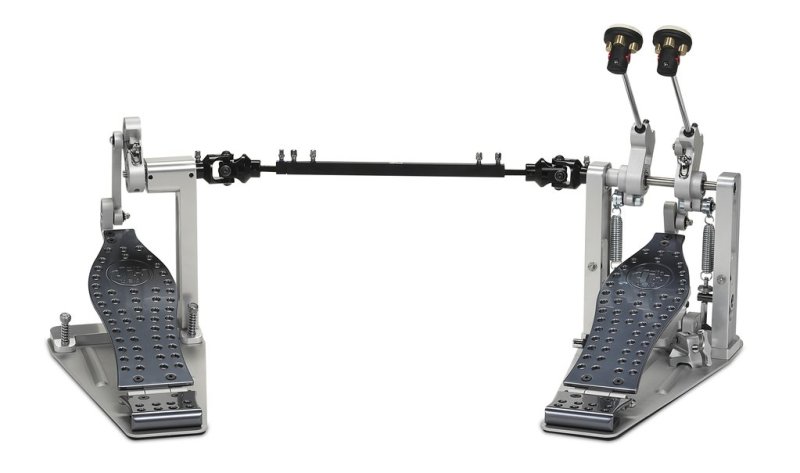
DW MFG MDD2 Double Bass Drum Pedal, Direct Drive
The MDD2 is a direct drive double kick pedal: between the footboard and the beater there is no chain anymore, only a rigid link. Your foot no longer pulls on something, it drives a rotation directly, and everything it does reaches the head at the same instant.
What sets it apart
- Direct drive machined from solid aluminum
- Bearings housed in the cam assembly, known as a floating rotor
- Linkage with optimized fulcrum geometry
- Solid aluminum direct drive cam, adjustable pivot
- Single-post cast frame, as on the chain version
- Soft leatherette case, carried as a backpack
What "floating rotor" means here
On a direct drive, the footboard drives the rotor through a rigid link. Anything that rubs or binds between the two ends up under your foot, with nothing along the way to cushion it.
DW houses bearings right inside the cam assembly. The drive then follows the path of least resistance and absorbs the small variations every mechanism has. The manufacturer's aim is a consistent stroke from one hit to the next, with no stiff spot at the start of the motion.
Fulcrum geometry
In a pedal, the position of the point everything rotates around sets two things: the distance the beater travels for a given movement of the foot, and the effort required at each moment of the stroke. Moving that point a few millimetres completely changes the pedal's character.
DW redesigned this linkage to get a smooth motion with beater travel judged sufficient without being excessive. It is the kind of work that shows up on no spec sheet and that you can judge in thirty seconds, foot on the board.
Direct or chain: settling it for good
The question comes up on every forum, and there is no one right answer. Direct drive suits players who want to feel the head at the end of their foot and who rely above all on precision. Chain suits players who like a slightly softer start and a more generous rebound.
A useful guide: the more your playing relies on well-placed single strokes, the more direct drive will serve you. The more it relies on sustained rebound rolls, the better a chain will suit you.
Specifications
| Drive | Direct, rigid link |
|---|---|
| Rotor | Floating mount |
| Linkage | Optimized fulcrum geometry |
| Cam | Solid aluminum, adjustable pivot |
| Format | Double pedal |
| Material | Aircraft-grade aluminum |
| Included | Soft leatherette case, backpack style |
What it is for
- Fast playing where each stroke has to land exactly on the beat
- Drummers who find a chain too springy at the start of the stroke
- Metal and other styles with sustained double bass drumming
- Studio work, where timing is judged to the millisecond
- Moving from a chain pedal to a more direct feel
Compare with other manufacturers
Other manufacturers' direct drive double pedals:
| Manufacturer | Comparable model | What differs |
|---|---|---|
| Pearl | Demon XR P3502D | Lighter construction and reinforced-impact beaters |
| Tama | Dyna-Sync | Adjustable to mimic the feel of a chain or a belt |
| Yamaha | DFP9500D | Conventional direct link, two-sided beater as standard |
| Mapex | Falcon | Drive the user can switch from one type to another |
Frequently asked questions
- Is direct drive faster than chain drive?
- It is more immediate: nothing has to tighten before the beater moves. The speed you reach then depends on the drummer, not on the drive.
- Does the floating rotor make the pedal feel mushy?
- No. It refers to bearings housed in the cam assembly: the drive stays rigid, it just has less friction.
- Do I have to relearn my playing when switching from chain to direct drive?
- It takes a few sessions. Single strokes are easier to place, while rebound rolls call for some readjustment.
- Is the cam pivot adjustable?
- Yes, the direct drive cam has a pivot adjustment that changes the beater's travel.
Avis clients
Chain or direct drive: what made up your mind?
Aucun avis pour le moment. Soyez le premier à partager votre expérience après votre achat.