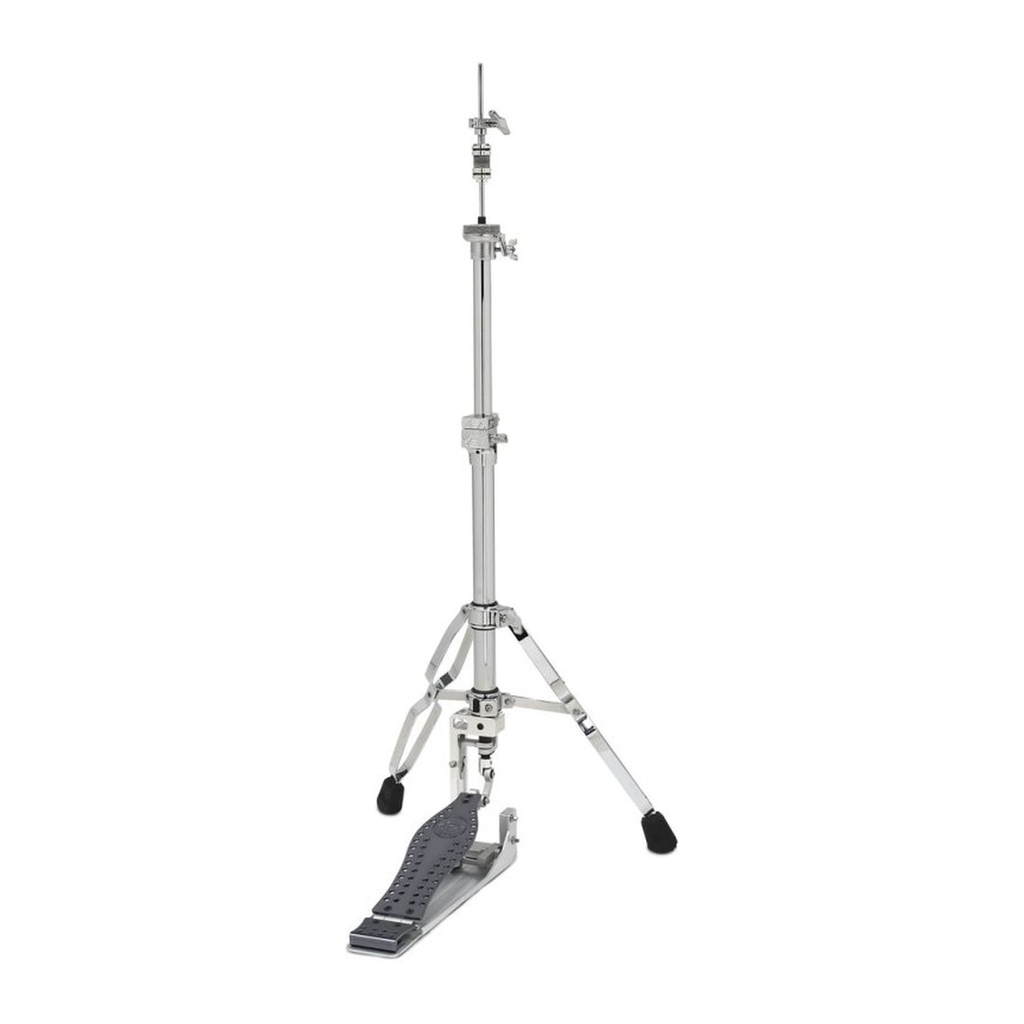
DW MFG MDD Two-Leg Hi-Hat Stand
The MDD HH2 is a direct pull hi-hat stand with only two legs, and that is deliberate. The third one, normally on the right side, sits exactly where the left half of a double pedal wants to go. Removing it solves a space conflict that nothing else solves.
What sets it apart
- Only two legs, to make room for the slave pedal
- Direct pull system with selectable action
- Nested Delta hinge with bearing, US patent 9472174
- Cut-out footboard in high-grade aluminum
- Legs that rotate to fit the rest of the setup
- Machined aluminum, made in the USA
The conflict nobody mentions at the time of purchase
A drummer buys a double pedal, gets home, sets it up — and finds that the left footboard runs into one leg of the hi-hat stand. So the hi-hat gets moved to the left, away from its natural position, and the drummer gets used to it, thinking that is normal.
It is not normal, and it is not inevitable. The two-leg stand removes the leg in the way. The hi-hat returns to where the left arm expects it, and the slave pedal sits beside it without compromise. It is a change in geometry, not an accessory.
Stability without the third point
Three points define a plane: that is the whole reason for a tripod. With two legs, balance depends on how far apart those legs are and on the mass of the lower assembly, which here is machined from solid stock and therefore heavy.
In practice, the stand stays put because the drummer's foot pushes downward, in line with the stand, not forward. The only time the third leg is really missed is on a very uneven or steeply sloped floor — a raked stage, a riser set on grass.
Direct pull, and what it does for the left foot
An ordinary hi-hat stand connects the footboard to the rod with a cable or a chain, which wraps and stretches. Direct pull replaces that flexible link with a rigid linkage enclosed in the lower assembly.
The left foot then gains what the right foot gains on a direct drive pedal: the cymbals close the instant you push. It matters most in the fine details — a barely open hi-hat, a crisp foot chick on the offbeat — where the slightest delay can be heard.
Specifications
| Number of legs | Two |
|---|---|
| Drive | Direct pull |
| Action | Selectable |
| Hinge | Nested Delta hinge with bearing |
| Footboard | Cut-out aluminum |
| Designed for | Setups with a double pedal |
What it is for
- Setups with a double pedal, without moving the hi-hat
- Playing where the left foot alternates between hi-hat and bass drum
- Drummers who want to keep their usual arm position
- Tight stages where every centimetre of floor counts
- Adding to an MFG pedal already in the setup
Compare with other manufacturers
Two-leg or retractable-leg hi-hat stands from other manufacturers:
| Manufacturer | Comparable model | What differs |
|---|---|---|
| Tama | Iron Cobra Lever Glide | Tripod with a retractable leg rather than a two-leg frame |
| Pearl | Eliminator Demon Drive | Tripod with a folding leg, also direct drive |
| Yamaha | HS1200 | Classic tripod, three-leg version offered separately |
| Gibraltar | 9707 Series | Tripod with rotating legs, cable drive |
Frequently asked questions
- Is a two-leg hi-hat stand really stable?
- Yes, in normal use: the foot pushes downward. The third leg is only missed on a very uneven or sloped floor.
- Why choose two legs instead of three?
- To fit the left half of a double pedal without having to move the hi-hat away from its natural position.
- Does direct pull change the sound of the hi-hat?
- It changes the moment the cymbals close. Fine details, a slightly open hi-hat in particular, benefit the most.
- Can I use it without a double pedal?
- Of course. The two-leg design is still an advantage anywhere floor space is limited.
Avis clients
Had you moved your hi-hat to make room for your double pedal?
Aucun avis pour le moment. Soyez le premier à partager votre expérience après votre achat.