DW SMPADMS 12 in Multi-Surface Drum Practice Pad
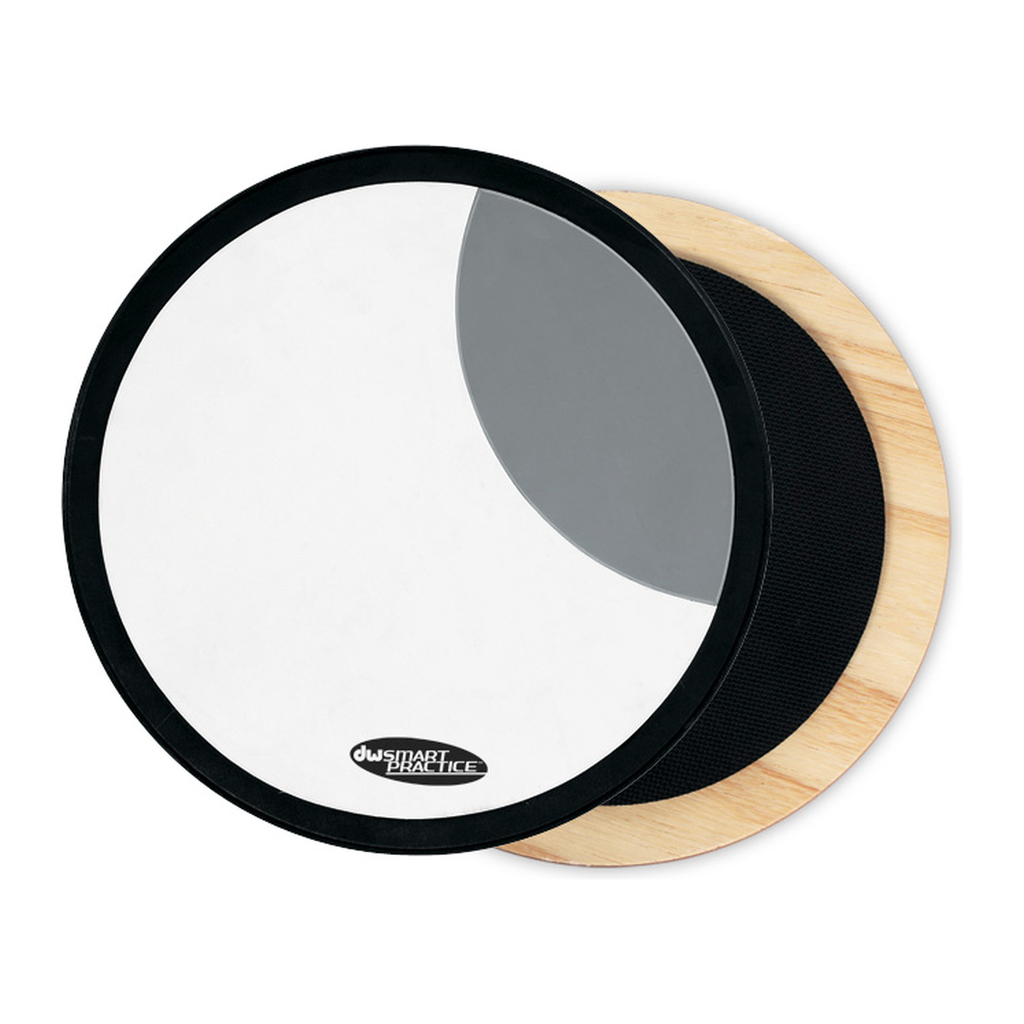
This 12 in drum practice pad carries three distinct surfaces, because a drummer never works on just one thing: soft foam on one side to build endurance, and on the back two different rubbers that mimic the response of a snare drum and of a cymbal.
What sets it apart
- 12 in diameter
- Three distinct playing surfaces on a single piece
- Soft foam side, deliberately low in rebound
- Dual-rubber reverse side: snare drum response on one part, cymbal response on the other
- Flip it over to change exercises without changing accessories
- One item to carry for several kinds of work
Why a soft surface helps you improve
On a very bouncy surface, the stick comes back up almost by itself. It feels good and it is misleading: the wrist leans on the rebound and stops working, so a roll sounds fine on the pad and falls apart on a loose head or a floor tom.
Soft foam takes that help away. Every stroke has to be lifted by the arm, which works exactly the muscles the rebound lets off the hook. Fifteen minutes is enough to notice.
Two rubbers, because two motions
Hitting a snare drum and hitting a cymbal do not call for the same motion. A head sends the stick back fast and short; metal sends it back longer, with a harder feel under the stick.
By splitting the two responses on the same side, the pad lets you work on a passage that alternates between them — a ride pattern with accents on the snare, for example — without setting up the kit.
A pad that replaces three accessories
Putting three surfaces on twelve inches solves a very concrete problem: the one in your bag. A drummer on the move does not carry three pads; they carry one and work on whatever it allows.
Here, you choose by flipping the pad over. In a dressing room, a classroom or on the corner of a table, your practice session is no longer dictated by the accessory you remembered to bring.
Specifications
| Diameter | 12 in |
|---|---|
| Number of surfaces | Three |
| Side A | Soft foam, endurance work |
| Side B | Dual rubber, snare drum and cymbal responses |
| Use | Standalone practice pad, to lay flat or mount |
What it is for
- Endurance and stick-lift work on a soft surface
- Rudiment practice with a snare drum response
- Ride and cymbal patterns worked on separately
- Warming up before a show
- Lessons in a room with no drum kit available
Compare with other manufacturers
Multi-surface practice pads from other manufacturers:
| Manufacturer | Comparable model | What differs |
|---|---|---|
| Vic Firth | Double-sided pad | Two rubber densities, with no foam endurance side |
| Evans | RealFeel double-sided | Dark gum and grey gum, with responses close to each other |
| Remo | Tensioned-head pad | Tunable head surface, one response per pad |
| Reflexx | Graduated-response pads | A range of separate pads, each set to a specific response |
Frequently asked questions
- Which of the three surfaces should a beginner use?
- The snare-type rubber, which comes closest to a drum head. The foam comes later, when you want to build up your stick lift.
- Will the pad sit on a snare stand?
- A pad this size sits in the basket of a snare stand. For a threaded mount, you need an adapter made for that purpose.
- Is it quiet?
- It is far quieter than a drum, but a rubber pad makes a sharp tap. In an apartment, a board or a mat under the pad greatly reduces how much noise travels through the floor.
- Can I practise brushes on it?
- On rubber, brushes do not glide well and wear out quickly. Brush work is better done on a head surface or on a pad designed for it.
Avis clients
Carrying three pads for three different exercises?
Aucun avis pour le moment. Soyez le premier à partager votre expérience après votre achat.