
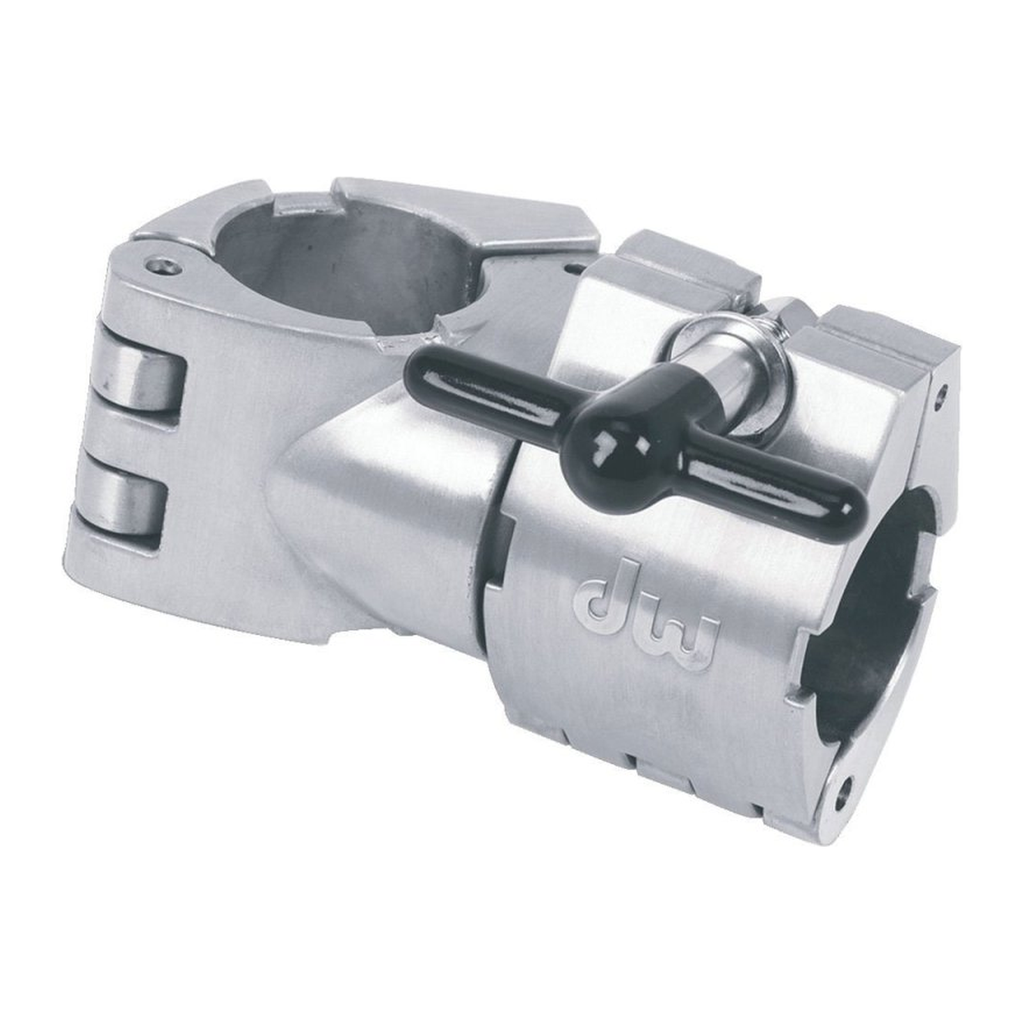
DW SMRKC15T Drum Rack Leg T-Clamp
The SMRKC15T joins two 1.5 in drum rack tubes in a T to form a leg. Its Allen hardware is low-profile, and that is not a cosmetic detail: down at leg level, anything that sticks out eventually catches a foot, a cable or a bag.
What sets it apart
- T joint designed for the rack's legs
- Low-profile Allen hardware
- Nothing sticks out at floor level
- Two 1.5 in rack tubes
- Transfers the rack's load down to the floor
- Chrome finish
The legs carry everything, and nobody thinks about them
People spend a long time positioning toms and cymbals, and rarely give the legs the same attention. Yet the entire weight of the rack, the drums and the hardware passes through them.
A poorly assembled leg shows up as a rack that sways gently with every stroke. The drummer then looks for the cause in the clamps up top, where there is nothing to find: the movement comes from below.
Why a low-profile screw head
A screw that sticks out at floor level becomes a hook. It catches a bag being slid along, a cable being pulled, sometimes the ankle of someone walking behind the kit in the dark.
A low profile removes that risk without taking anything away from holding power. The screw works in tension like any other; only its head sticks out less. It is a safety decision as much as a convenience.
A T for the leg, not for a suspended load
The T shape puts the vertical leg directly under the horizontal bar. The load travels down in a straight line, which is the most efficient way to support it.
Offsetting the leg from the bar, by contrast, creates a cantilever, and so flex. On a loaded rack, that flex is visible to the eye and audible in drums ringing in sympathy.
Specifications
| Purpose | Leg assembly |
|---|---|
| Tube size | 1.5 in |
| Screw type | Allen, low-profile head |
| Clamp shape | T |
What it is for
- Assembling the legs of a drum rack
- Rebuilding a rack base that has become unstable
- Avoiding protruding screws at floor level
- Adding a leg to a structure that has grown heavier
- Fixing a setup where the rack sways while you play
Compare with other manufacturers
Other manufacturers' leg clamps handle the hardware question differently:
| Manufacturer | In-house solution | The difference |
|---|---|---|
| Gibraltar | Rack leg clamps | More protruding screw heads on some lines |
| Pearl | Rack bases | Legs often integrated into the brand's system |
| Tama | Rack leg connectors | Collar assembly rather than a T on some parts |
Frequently asked questions
- How is it different from the drum key T-clamp?
- Hardware and purpose. This one takes an Allen key and its head stays low, because it works at floor level; the other tightens with a drum key and is used to add a branch.
- Do I need a particular Allen key?
- A key that matches the screw size, to keep in your hardware case. It is the only tool this assembly needs.
- How many legs does a rack need?
- At least two for a front bar, more as soon as the structure extends to the sides or carries several drums.
- Can I mount an accessory on it?
- That is not its role. It is an assembly part: mounts go on the bars, not on the leg clamps.
Avis clients
Does your rack sway when you hit hard?
Aucun avis pour le moment. Soyez le premier à partager votre expérience après votre achat.