
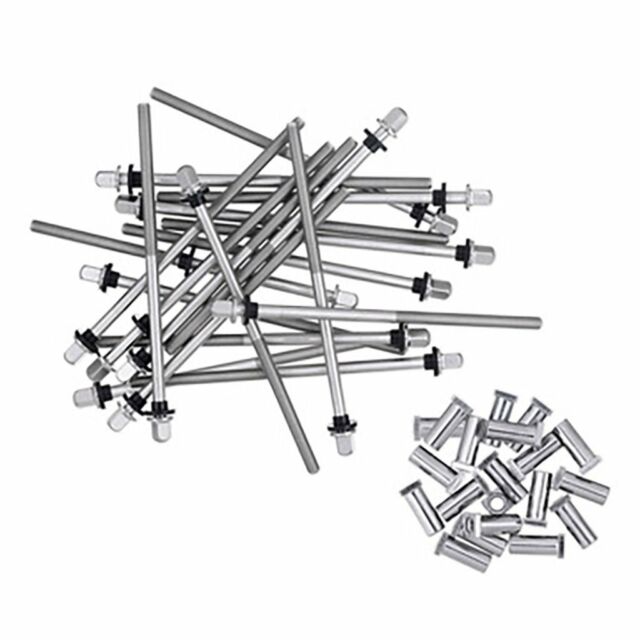
DW SMTP50B True Pitch 50 Bass Drum Tension Rods, 20-Pack
These stainless steel drum tension rods have fifty threads per inch. The pack of twenty includes the receivers, and it is meant for the bass drum — the drum that is hardest to tune and takes longest to retune.
What sets it apart
- Fifty threads per inch
- Stainless steel
- Pack of twenty rods with their receivers
- Made for the bass drum
- A finer thread pitch widens the usable tuning range
- Tension moves in small amounts, not in jumps
What a fine thread pitch changes in tuning
On a coarse thread, a quarter turn moves a lot of tension. You overshoot the point you want, come back, overshoot the other way: tuning becomes a series of approximations around a target you never quite hit.
With fifty threads per inch, the same quarter turn moves a fraction of that tension. The head responds gradually, and you can stop exactly where you wanted. The manufacturer also states that these extra threads widen the drum's usable tuning range.
The bass drum, the most demanding case
A bass drum has a large head surface and relatively low tension. Two consequences: the slightest variation is audible, and balance between the rods is hard to keep, since each one affects its neighbours over a long distance.
That is exactly where a fine pitch helps most. It lets you rebalance one rod without upsetting the whole head, and end up with an even head rather than a compromise between zones that do not sound the same.
What the fine pitch costs, honestly
More threads means more turns to cover the same distance. When changing heads, bringing the new head up to tension takes noticeably longer than with ordinary rods. Drummers who use these rods all say so.
The trade-off is easy to lay out: you pay at head changes, which are rare, for what you gain at every tuning, which is frequent. For a drum you adjust often, it is a good deal; for a drum you tune once a year, much less so.
Specifications
| Thread density | Fifty threads per inch |
|---|---|
| Material | Stainless steel |
| Contents | Twenty rods and their receivers |
| Intended drum | Bass drum |
What it is for
- Fine-tuning a bass drum
- Rebalancing a head that does not respond evenly
- Replacing worn or seized rods
- Converting an existing drum to fine threading
- Matching the hardware on a studio bass drum
Compare with other manufacturers
Fine-pitch tension rods are not common; here is how other makers compare:
| Manufacturer | Equivalent part | What changes |
|---|---|---|
| Pearl | Bass drum tension rods | Standard threading on most lines |
| Tama | Tension rods for the brand's drums | Different lengths and rod heads |
| Gibraltar | Replacement tension rods | General-purpose range, no dedicated fine pitch |
Frequently asked questions
- Will they fit my bass drum?
- They are designed for the manufacturer's original lugs, and the pack includes the receivers. On another brand's drum, check that the lugs are compatible before buying.
- Do head changes take longer?
- Yes, that is the trade-off of the fine pitch: it takes more turns. It is the point most often raised by drummers who have made the switch.
- Why twenty rods?
- To fit both heads of a ten-lug bass drum. The pack is meant to re-equip the whole drum rather than replace a single rod.
- Does stainless steel make a difference?
- It resists corrosion, which matters on a threaded part that gets handled over and over and lives in damp rooms.
Avis clients
Is your bass drum giving you a hard time with tuning?
Aucun avis pour le moment. Soyez le premier à partager votre expérience après votre achat.