
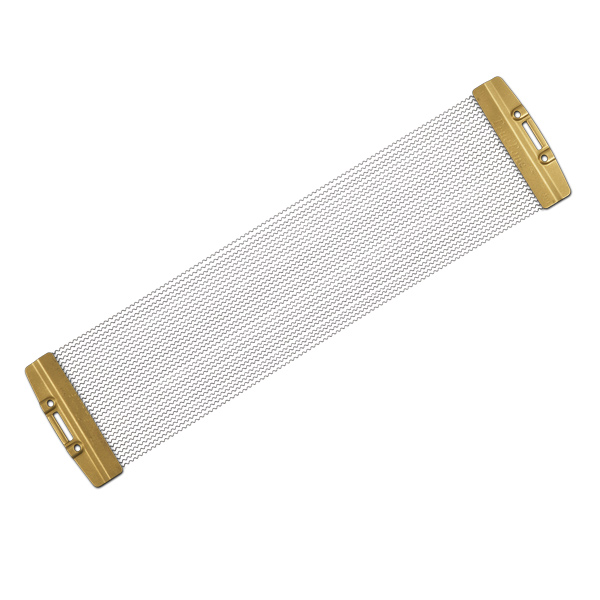
DW True-Tone 14 in Snare Wires, 30 Strands
The 14 in True-Tone with 30 strands is the middle snare wire count for this size, between the 20 strands of the entry set and the 42 of the densest. Dense enough to change how the drum responds, restrained enough to keep it open under a close mic.
What sets it apart
- 30 strands on 14 in
- Ten more strands than the 14 in, 20-strand set
- Middle step between 20 and 42 strands
- Brass end plates
- Slightly shorter sustain, more defined attack
The middle step, and why it exists
Between the entry set and the maximum density, the gap is huge: you go from an open drum to one with maximum snare contact. Many drummers who try the full jump end up going back, for lack of a middle ground.
Thirty strands fill that space. The drum gains definition without losing the body that makes it recognizable, and the change takes one rehearsal to get used to rather than a month.
In front of a microphone
When the snare is close-miked, the sound engineer hears everything the drummer no longer notices: the snare sustain lingering after the stroke, the hiss creeping up during silences, the resonant tail blending into the toms.
A middle density tightens that tail without drying out the drum. The signal needs less processing in the mix, and the drum keeps its character instead of being corrected with compression.
The adjustment that goes with the change
Going from twenty to thirty strands changes the balance of the drum: you often need to loosen the throw-off slightly, since the wider coverage makes up for part of the tension on its own.
A dense set tightened too much gives a dead drum. Start looser than usual, and come back up until the response returns without the texture hardening.
Specifications
| Snare | 14 in |
|---|---|
| Strands | 30 |
| Other densities offered in 14 in | 20 and 42 strands |
| Ends | brass |
| Place in the range | middle count for the 14 in |
What it is for
- A 14 in snare recorded in the studio
- Close miking where snare sustain is a problem
- Drummers after more definition without changing drums
- Small-room live sound with a tight mic
Compare with other manufacturers
Middle-density options elsewhere:
| Manufacturer | Comparable model | What differs |
|---|---|---|
| Puresound | Medium-density 14 in snare wires | Density steps spaced closer together in the catalogue |
| Ludwig | Stock snare wires | The brand's original part, one density per size |
| Canopus | 14 in replacement snare wires | Seeks finesse through the wire itself, not the count |
| Pearl | Professional-line replacement snare wires | Matched to the brand's snare beds |
Frequently asked questions
- What is the difference between 20 and 30 strands on a 14 in snare?
- Thirty strands cover more of the snare-side head: the attack gets more defined, the sustain shortens a little, and soft strokes come through better. The drum still stays more open than with the maximum density.
- Do I need to readjust after the change?
- Yes, almost always. Denser coverage generally calls for a throw-off set a little looser than before.
- Is it a good choice for recording?
- It is an area where this step is often chosen: the snare wires ring less after the stroke, which makes the mixing work simpler.
- Can I go back?
- No problem. The set comes off in a few minutes, and nothing on the drum is permanently modified.
Avis clients
Is your snare sustain getting in the way on the mic?
Aucun avis pour le moment. Soyez le premier à partager votre expérience après votre achat.