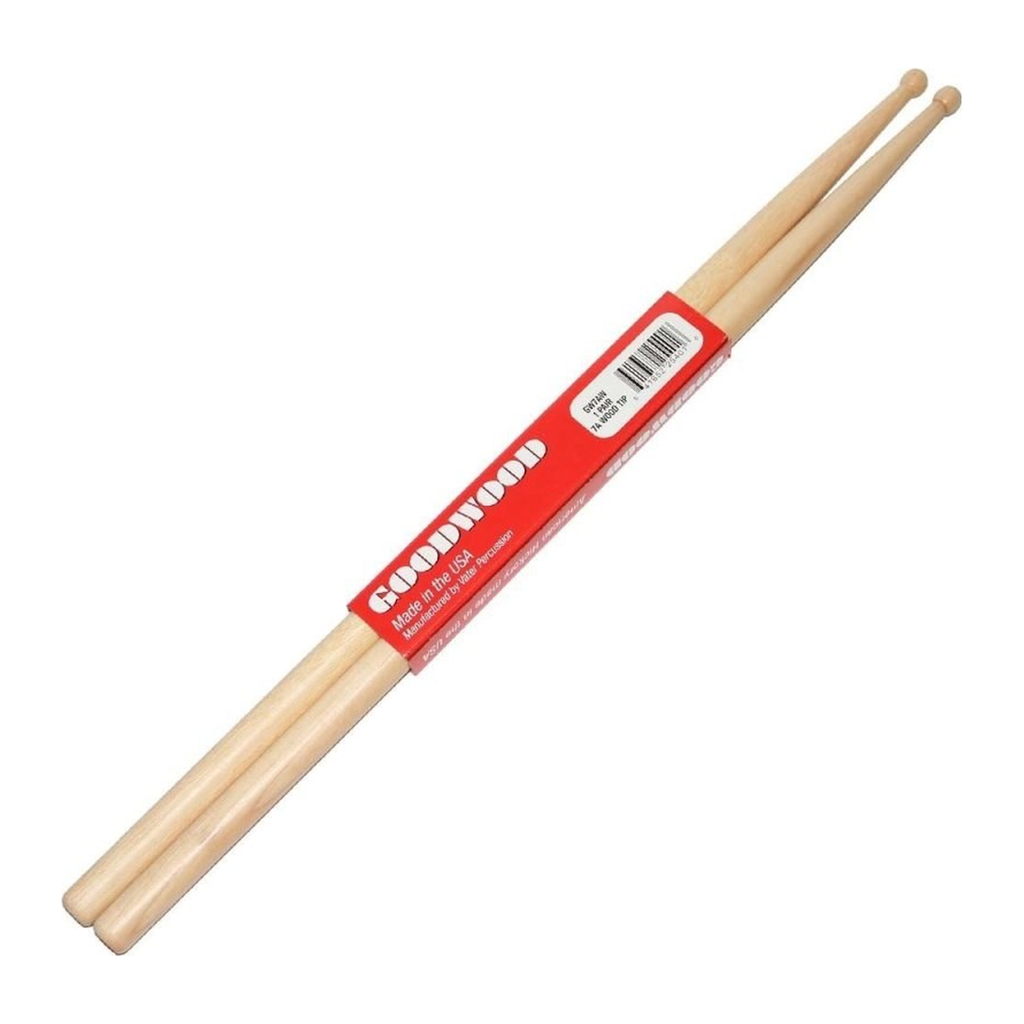
Vater Goodwood 7A Drumsticks — Wood Tip, Hickory
The Goodwood 7A is the 7A drumstick you reach for when volume is a problem before it is a goal. It is the lightest of the four common sizes, the one that lets the wrist do the work and never forces the snare to shout to be heard.
What sets it apart
- 7A size: the thinnest of the four common sizes
- Tip turned from the hickory, with nothing glued or moulded on
- Reduced weight, so less fatigue over a long set
- Designed for wrist playing rather than arm playing
- Hickory: the wood the manufacturer chooses for shock absorption
- Vater's entry line, made to be replaced without a second thought
Playing soft without playing limp
Bringing the volume down behind a drum kit does not mean hitting less hard: it means hitting with less mass. A heavy stick held back loses speed, and a slow stick produces a limp sound with no attack, which forces the drummer to make up for it by hitting harder. Anyone who has backed a singer in a small room knows that circle.
The 7A size solves this with mass rather than restraint. Less wood between your fingers and the head, so a stroke that stays fast and clean at a low volume. The sound keeps its edge; only the volume comes down.
What a hickory tip brings to bronze
A tip turned from the same piece of wood as the rest of the stick gives the metal a slightly warmer contact than an attached tip. On a ride cymbal played at low intensity, that means a rounder texture, less isolated ping and more body.
That is exactly what you want when the drums accompany instead of leading. The trade-off is honest: wood wears where it strikes, and a dented tip eventually loses its definition.
Endurance before power
Three hours of playing are not measured in decibels but in grams. Every stroke lifts the stick, and you pay for the weight in your forearm well before the end of the night. A thin size changes that arithmetic.
Drummers who play one accompaniment gig after another, long rehearsals or weekend church services get what they need here: the hand is still free for dynamics in the third set as in the first.
Specifications
| Wood | Hickory |
|---|---|
| Size | 7A — the thinnest of the common sizes |
| Tip material | Hickory, turned in one piece |
| Feel | Light |
| Packaging | Pair |
What it is for
- Accompanying a singer or an acoustic duo
- Small-group jazz and lounge music
- Rehearsing in a cramped room or an apartment
- Drum lessons and wrist work
- Church services and background music
Compare with other manufacturers
Thin sizes from other drumstick manufacturers, and what sets them apart from this one:
| Manufacturer | Comparable model | What differs |
|---|---|---|
| Vic Firth | American Classic 7A | Same 7A name, with the manufacturer's own taper and tip |
| Promark | Classic Forward 7A | Balance shifted forward, American hickory |
| Zildjian | 7A Hickory | Drumstick range from a cymbal manufacturer |
| Los Cabos | 7A Red Hickory | Heat-treated hickory, made in Canada |
Frequently asked questions
- Are 7A drumsticks good for beginners?
- Yes, and they are often the best start. A light stick makes you develop rebound and wrist technique instead of making up for it with force, which builds healthier technique.
- Are 7A sticks too light for rock?
- For an amplified band, yes, in most cases. The 7A is cut for moderate volume; under a wall of guitars, it wears out quickly and the drummer ends up forcing.
- Are the two sticks in a pair matched?
- The manufacturer only keeps dowels with a moisture content between 10 and 12 %, which narrows the differences. Wood is still a living material: small differences in weight remain from one stick to the next.
- When should I replace my drumsticks?
- As soon as a deep notch appears near the tip, or a dull thud replaces the crisp click when you tap them together. A crack that spreads always gives way at the worst moment.
Avis clients
Do you often play at low volume? Tell us how these sticks worked out.
Aucun avis pour le moment. Soyez le premier à partager votre expérience après votre achat.