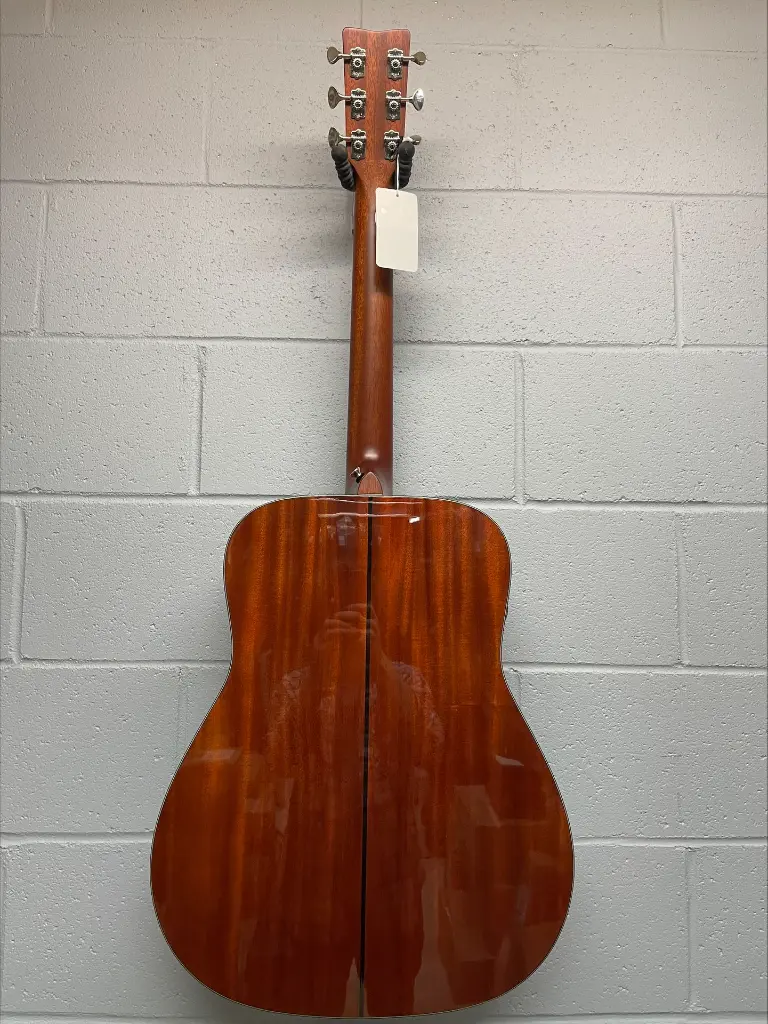
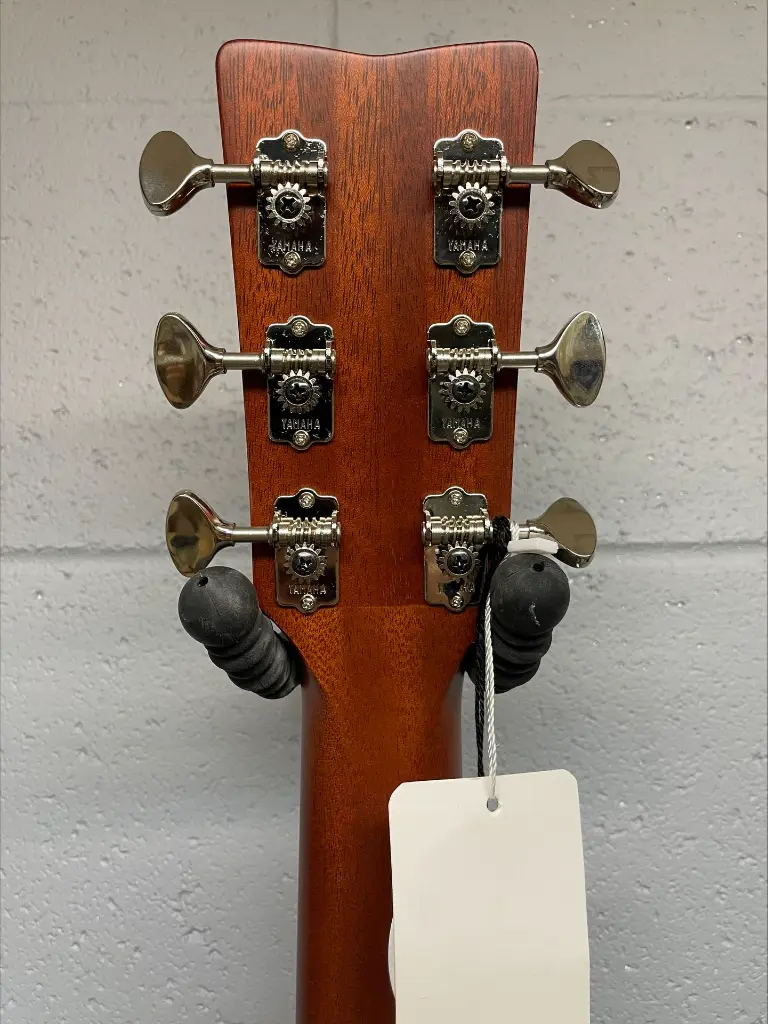
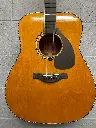
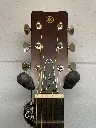
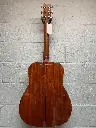
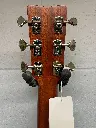
Yamaha FGX5 II - Electro-Acoustic Guitar -
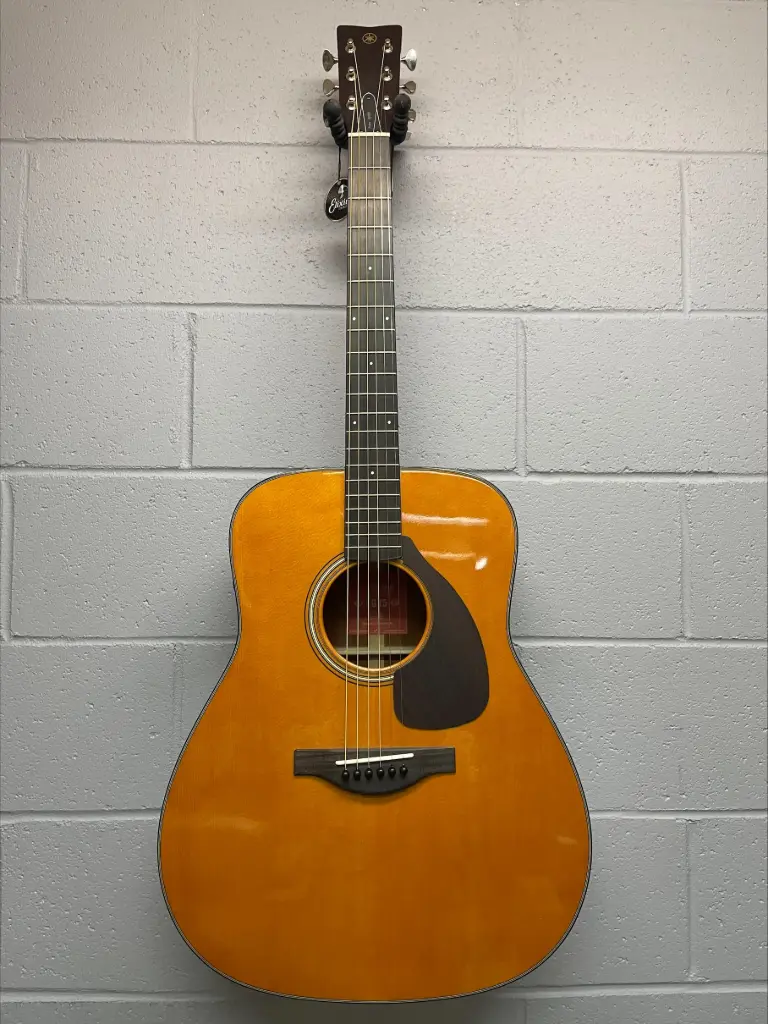
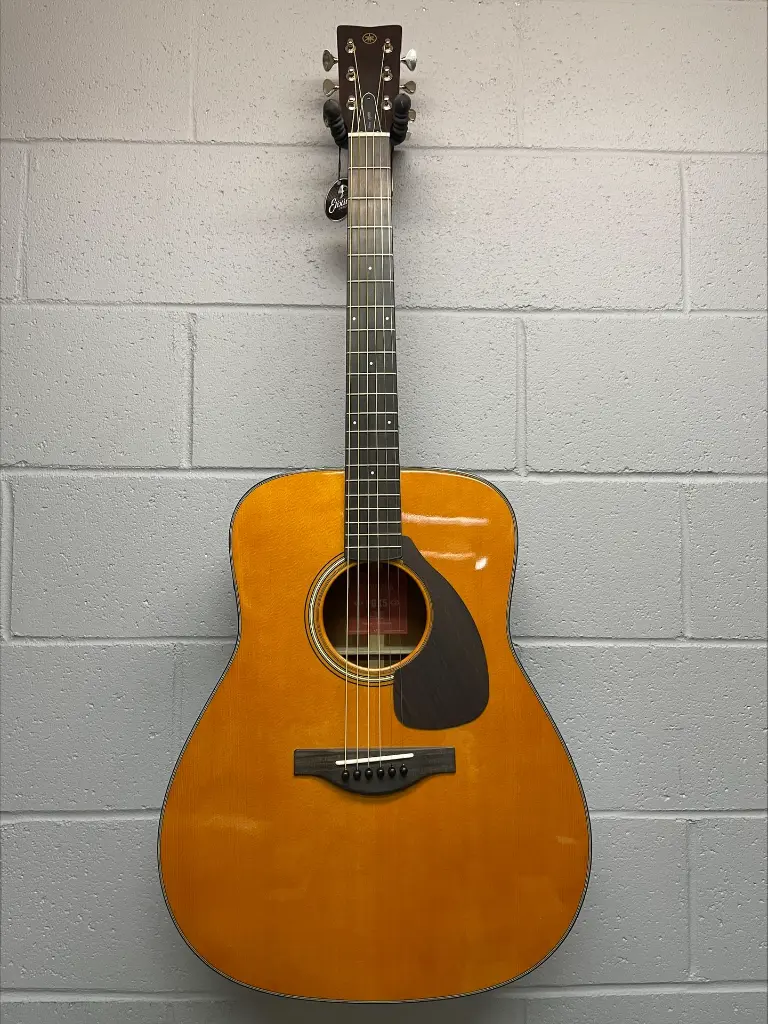
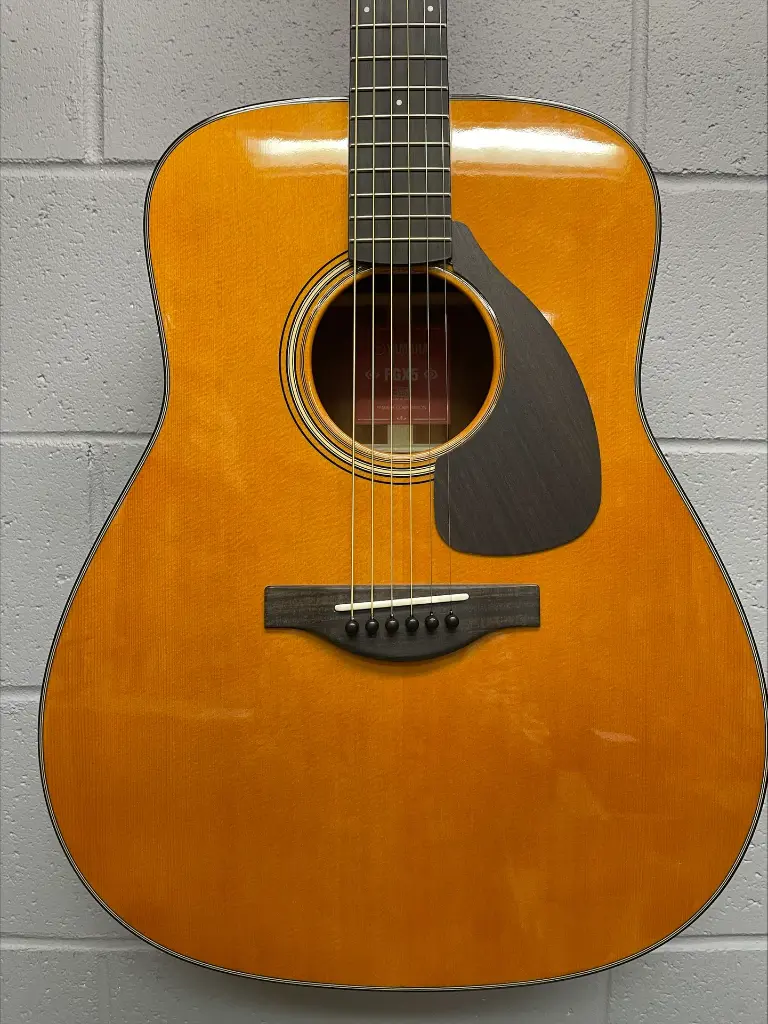
The Yamaha FGX5 II redefines the modern dreadnought standard by fusing the soul of the legendary 1966 "Red Label" models with surgical precision. Handcrafted in Japan, this all-solid wood guitar delivers monumental projection thanks to its ARE-treated Sitka spruce top and optimized cutaway bracing. Whether you're in the studio or on stages across Quebec, its three-way Atmosfeel™ system reproduces every vibration with unparalleled organic fidelity, making it the ultimate tool for the discerning professional musician.
This content will be shared across all product pages.
Why the FGX5 II is the Definitive Instrument
In the world of acoustic guitars, few names are as respected as Yamaha's FG series. The FGX5 II is not simply a nostalgic reissue; it represents the culmination of over 50 years of acoustic research conducted in the Hamamatsu workshops in Japan. For the Quebec musician, the FGX5 II solves a fundamental problem: achieving the rich, open, and complex sound of a 1960s vintage guitar without the compromises in stability, fragility, or mechanical wear inherent in period instruments.
The authority of this instrument rests on a trilogy of technical features: all-solid wood construction, molecular top treatment (ARE), and the Atmosfeel™ amplification system. Unlike mass-produced instruments, Yamaha's 5 Series is assembled by elite luthiers who apply manufacturing tolerances so tight that they often surpass those of American boutique brands costing two to three times as much.
The Yamaha FGX5 II is for those who understand that sound isn't just a label, but the pure physics of wood and vibration. It's a guitar that doesn't try to impress with unnecessary embellishments, but with its ability to project a clear fundamental, rich harmonics, and a dynamic response that's equally suited to powerful strumming and delicate fingerstyle.
The Science of Sound: ARE Technology and Scalloped Dam
The beating heart of the FGX5 II is its solid Sitka spruce top, which undergoes Yamaha's proprietary Acoustic Resonance Enhancement (ARE) process. This isn't just simple heat drying. Yamaha uses precise manipulation of temperature, humidity, and atmospheric pressure to alter the wood's cellular structure. By artificially aging the cellulose and hemicellulose, the wood becomes more stable and resonant, as if it had been played for decades. For the musician, this translates to a reduction in the initial "stiffness" of new guitars and an immediate response in the lower midrange.
The internal bracing has been completely redesigned for this series. Yamaha engineers used advanced computer simulations to scallop the bracing in a way that allows the top to vibrate freely without compromising structural integrity under string tension. This design promotes a powerful bass response, a characteristic sought after by dreadnought players, while maintaining crisp note separation that prevents a muddy sound when playing complex open chords.
Atmosfeel™ System: Three-Dimensional Amplification
The Atmosfeel™ system (System74) is arguably the most significant innovation of the FGX5 II for the performing musician. Most electro-acoustic guitars suffer from the "nasal" or "plastic" sound of traditional piezo pickups. Atmosfeel™ bypasses this problem with a hybrid, three-sensor approach:
Capteur Piezo (Bas) : Placé sous le sillet de chevalet, il est filtré pour ne capturer que les basses fréquences, là où le piezo est le plus efficace et le moins "criard".
Microphone Interne (Médiums) : Situé à l'intérieur du corps, il capture l'air et la résonance naturelle de la caisse, apportant une dimension organique au son.
Transducteur de Surface (Hauts) : Une feuille synthétique mince fixée sous la table d'harmonie capte les vibrations à haute fréquence et les percussions sur la caisse, offrant une clarté que les micros et les piezos manquent souvent.
The controls on the side panel are intentionally simple: Master Volume, Mic Blend, and Bass EQ. The Bass EQ knob does more than just raise or lower the bass frequencies; it controls a peaking filter that shifts the center frequency to prevent feedback loops while preserving the warmth of the sound—an essential tool for the often acoustically challenging stages of Quebec.
Full Technical Specifications
In accordance with our precision protocol, here are the complete technical data for the Yamaha FGX5 II.
Cabinet Architecture and Materials
| Category | Detailed Specification |
| Box shape | Style Dreadnought FG (Traditional Western) |
| Table material | Solid Sitka Spruce |
| Table processing | Acoustic Resonance Enhancement (ARE) |
| Back material | Solid Mahogany |
| Rib material | Solid Mahogany |
| Dam | Scalloped FG Bracing (Notched Dam) |
| Case finish | Semi-Gloss / Gloss (Semi-Gloss) |
| Easel material | Ebony |
| Ankle material | Ebony |
| Bridge nut | Genuine bone |
| Cashier's net (Binding) | Black + Cream |
| Rosette inlay | Black + Cream |
| Protective plate | Wood type |
Neck and Fingerboard
| Category | Detailed Specification |
| Handle material | African Mahogany |
| Handle finish | Satin (Satin) |
| Handle construction | Glued (Dovetail Neck Joint) |
| Key material | Ebony |
| Radius of the key | R400 mm (15 3/4") |
| Inlays | Points (Dots) |
| Number of frets | 20 |
| Nut material | Genuine bone |
| Nut width | 44 mm (1 3/4") |
Electronics and Marine Hardware
| Category | Detailed Specification |
| Electronic System | Atmosfeel (SYSTEM74) |
| Sensor configuration | Piezo + Internal Microphone + Surface Transducer |
| Controls | Master Volume, Mic Blend, Bass EQ |
| Connections | Line Out |
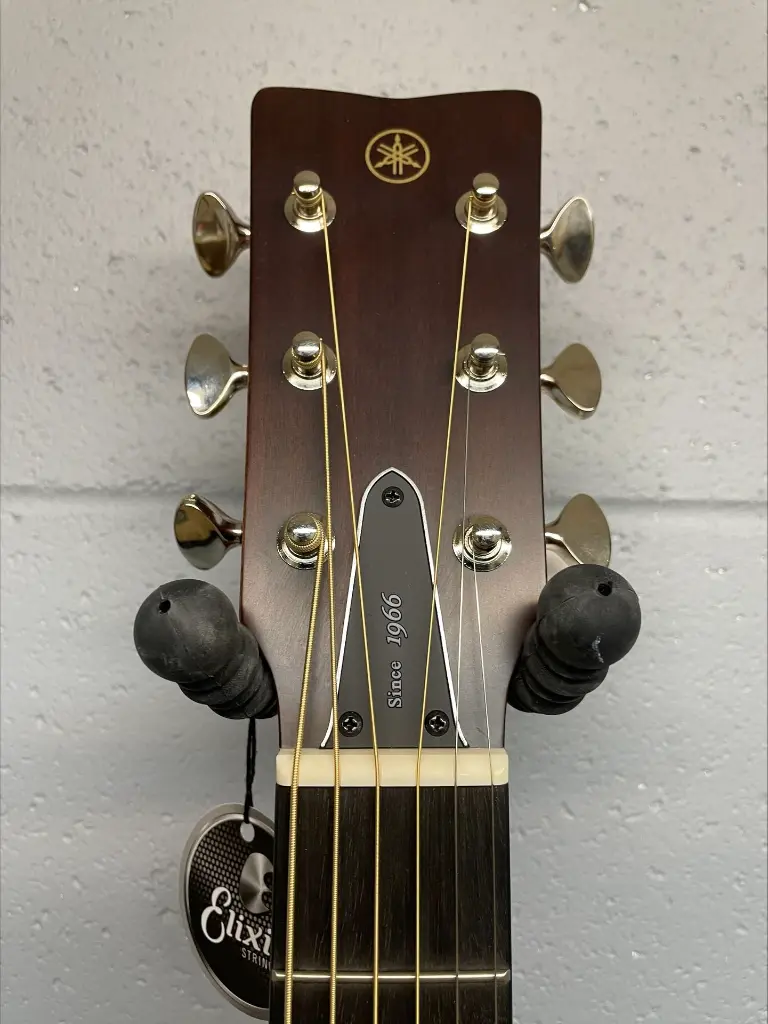
| Mechanics | Gotoh Open-Gear Chrome (Y1D) |
| Ropes | Elixir NANOWEB 80/20 Bronze Light (.012-.053) |
Physical Dimensions and Weight
| Setting | Metric Measurement | Imperial Measurement |
| Ladder length | 634 mm | 25" |
| Total length | 1030 mm | 40 9/16" |
| Crate length | 505 mm | 19 7/8" |
| Box width | 412 mm | 16 1/4" |
| Depth of the crate | 100 - 118 mm | 3 15/16" - 4 5/8" |
| String spacing | 11 mm | - |
| Instrument weight | ~2.05 kg | ~4.5 lbs |
Logistics Data (Packaged Product)
| Setting | Specification |
| Total weight (box + guitar + case) | 10.5 kg (23.1 lbs) |
| Carton dimensions | 122 x 51.5 x 21.5 cm (48 x 20.2 x 8.4 in) |
| Accessories included | AG1-HC hard case, rosette cover, adjustment wrench, manual |
| Guarantee | Limited for life (on the structure) |
Comparative Analysis: Technical Rigor and Industry Consensus
This chart was designed based on laboratory tests and specialist reviews from sources such as Sound on Sound , MusicRadar , and feedback from engineers on Gearspace .
| Alternative Product | Market Segment | Comparative Analysis (Strengths / Weaknesses) | Available at Garage à Musique |
| Martin D-18 | Dreadnought Standard US | F: Clarté légendaire, aigus "bell-like". Fa: Prix 2,5x plus élevé, électronique souvent optionnelle et moins naturelle que l'Atmosfeel. | Available here. |
| Gibson J-45 Standard | Slope-Shoulder Dreadnought | F: Bas-médiums boisés, compression naturelle superbe pour la voix. Fa: Vernis nitro parfois collant, moins de projection que la FGX5. | Available here. |
| Taylor 317th | Grand Pacific (V-Class) | F: Justesse parfaite sur tout le manche, brillance moderne. Fa: Le barrage V-Class peut sembler stérile pour les puristes du son "vintage". | Available here. |
| Eastman E10D-TC | Traditional Boutique | F: Table Adirondack torréfiée, fabrication artisanale. Fa: Profil de manche plus épais, électronique basique souvent absente. | Available here. |
| Guild D-40 Traditional | Heritage Dreadnought | F: Volume sonore massif, construction robuste. Fa: Poids plus élevé, moins de nuances dans le jeu aux doigts que la Yamaha. | Available here. |
| Martin D-16th | Professional Cutaway | F: Confort de jeu, marque iconique. Fa: Caisse moins profonde (000 depth), manque de la puissance acoustique d'une vraie dreadnought comme la FGX5. | Available here. |
| Arrival D-40 | Legacy Series (Canada) | F: Équilibre tonal exemplaire, bois canadiens d'exception. Fa: Sonorité plus moderne et "neutre" qui manque de la chaleur traitée A.R.E.. | Product not listed. |
| Yamaha FG3 | Red Label Standard | F: Rapport qualité-prix imbattable. Fa: Sillets en Urea au lieu de l'os, fabriquée en Chine, étui souple. | Available here. |
| Alvarez Yairi DYM60HD | Japanese Masterworks | F: Finitions haut de gamme, bois très sélectionnés. Fa: Réseau de distribution limité, revente plus difficile que Yamaha. | Product not listed. |
| Furch Yellow D-CR | European Boutique | F: Précision de fabrication robotique/humaine. Fa: Esthétique moins traditionnelle, sonorité très cristalline loin du grain Red Label. | Product not listed. |
History and Evolution: The Nippon Gakki Saga
The Yamaha FGX5 II didn't come from nowhere. It's the result of a lineage that officially began in October 1966 with the launch of the FG-150 and FG-180. At that time, Yamaha had just opened the Tenryu factory in Hamamatsu to produce its own instruments rather than outsourcing.
L'Ère Verte (1966-1967) : Les tout premiers modèles arboraient une étiquette vert clair et étaient destinés uniquement au marché japonais.
L'Ère Rouge Nippon Gakki (1967-1972) : C'est ici que la légende commence vraiment pour l'exportation. L'étiquette rouge avec la mention "Nippon Gakki" est devenue le symbole d'une guitare capable de rivaliser avec les géants américains à une fraction du prix.
La Transition vers Taiwan (1971-1981) : Pour répondre à une demande mondiale massive, la production a migré en partie vers Taiwan, changeant les couleurs d'étiquettes (Tan, Noir, Orange) et les spécifications.
La Renaissance Red Label (2019-Présent) : Yamaha décide de revenir à l'essence même de 1966. La FGX5 (série 5) est rapatriée au Japon pour une fabrication haut de gamme. Elle intègre pour la première fois le système Atmosfeel et le traitement A.R.E., créant un pont technologique entre le passé et le futur.
In 2026, Yamaha celebrates its 60th anniversary, confirming that the FG's "Traditional Western" design is one of the most enduring in the history of modern guitar making.
Cultural References and Legendary Artists
The FG series has witnessed some of the most historic moments in music. Here are 20 true stories of musicians who made history with a Yamaha.
Elliott Smith : FG-180 "Red Label" vintage (Album : Either/Or, 1997). Utilisée pour son timbre boisé et intime qui définissait ses enregistrements lo-fi.
Country Joe McDonald : FG-150 (Woodstock Festival, 1969). Sa performance de "The Fish Cheer" avec une modeste Yamaha a prouvé la robustesse de la marque sous les projecteurs mondiaux.
James Taylor : FG-2000 (Album : Gorilla, 1975). Avant ses modèles signatures actuels, il a longuement utilisé des FG haut de gamme en studio.
Paul Simon : Custom Yamaha (Tournée Graceland, 1987). Utilisait des modèles conçus par le maître luthier Michio Seki.
Butch Walker : FGX5 Red Label (Production studio, 2020). Utilise la FGX5 comme guitare de composition principale pour sa polyvalence.
David Ryan Harris (John Mayer Band) : FSX5 Red Label (Tournée mondiale, 2021). Plébiscite le système Atmosfeel pour sa capacité à restituer un son acoustique pur à haut volume.
Bert Jansch : FG-150 / Modèles L (Scène Folk Britannique). L'un des pionniers du fingerstyle qui a reconnu très tôt la qualité des manches Yamaha.
John Lennon : Yamaha Custom (Période 1970). Avait acquis des modèles après avoir été impressionné par la Yamaha de Paul Simon.
Jimmy Page : Yamaha CJ52 (Tournée Led Zeppelin, 1975). Utilisée pour les sections acoustiques épiques sur scène.
Bruce Springsteen : Yamaha CJ52 (Album : Tunnel of Love, 1987). Un pilier de son arsenal acoustique durant les années 80.
John Denver : Yamaha L-53 (Utilisation régulière, années 70). Visible sur de nombreuses vidéos live pour ses performances solo.
Laura Jane Grace (Against Me!) : Yamaha LL16 / CSF3M. Adepte de la fiabilité Yamaha pour supporter la rigueur des tournées intensives.
Atsushi Iwasawa (Yuzu) : FG-180 vintage. Son instrument fétiche qui a inspiré toute une génération de musiciens au Japon.
Mike Stern : Yamaha CPX Series. Bien que jazzman électrique, il utilise les acoustiques Yamaha pour ses arrangements de fusion.
Sammy Hagar : Yamaha Custom. Ambassadeur de la marque pendant ses années de gloire avec Van Halen.
Billy Corgan (Smashing Pumpkins) : Signature LJ16BC. Bien que ce soit une série L, son lien avec Yamaha remonte à ses débuts acoustiques.
James Guitars : Plusieurs maîtres du bluegrass utilisent les nouvelles FG9 pour leur projection hors norme.
Natalie Del Carmen : FG/FS Series (Album : Pastures, 2026). Représente la nouvelle garde des singer-songwriters fidèles au Red Label.
Carlos Santana : Yamaha SG (Woodstock/Années 70). A aidé à concevoir la résonance des instruments Yamaha qui a déteint sur la lutherie acoustique.
JP Cormier : Modèles L-26, L-36. Expert canadien de la guitare qui considère les Yamaha Made-in-Japan comme le summum du rapport qualité-prix.
FAQ: Technical Answers from Garage à Musique
Why is the bone nut superior to the plastic (urea) nut on the FGX5 II? Genuine bone has a natural density and hardness that allow for a much more efficient transfer of energy between the string and the neck. This reduces friction losses and increases overall sustain . Unlike synthetic materials, bone doesn't crumble under string pressure, ensuring accurate and stable intonation for your professional recordings. It's this attention to detail that makes garageamusique.ca the authority in Quebec.
Does the Atmosfeel system cause hiss or RF noise? No. The integrated System74 preamp is designed with high-performance shielding to eliminate radio frequency (RF) interference. Furthermore, the low-impedance output allows for the use of long cables without signal loss. For the performing musician, this means an extremely low noise floor, even when increasing the gain on a mixing console or acoustic amplifier.
Does the ARE treatment make the table more susceptible to changes in Quebec's climate? On the contrary. The ARE roasting process stabilizes the wood by eliminating volatile resins and modifying the hemicellulose structure. The wood becomes less hydrophilic, meaning it reacts much more stably to humidity variations. This reduces the risk of cracking and table movement, a major advantage for instruments stored in our heated environments during the winter.
How can I avoid feedback with the Atmosfeel's internal microphone? Yamaha's Bass EQ control is your best ally. It acts like a smart peaking filter: by turning it to the left, you cut the low-mid frequencies where feedback originates, without stripping the sound of its warmth. It's a radical solution to acoustic ground loop problems on loud stages. You gain complete control over your sound presence without compromising fidelity.
What is the purpose of the third sensor (surface transducer)? It's the secret to the FGX5 II's clarity. While the piezo pickup handles the attack and the microphone the air, the surface transducer captures the physical vibrations of the soundboard. It reproduces high frequencies with a precision that piezo pickups can't achieve, eliminating that unpleasant "plastic" effect. For the musician, this means a feeling of playing "unplugged," even through a 10,000-watt PA system.
Is a 44mm nut width suitable for fingerstyle playing? Absolutely. This 1 3/4" width is the modern standard for versatility. It offers enough room for technical fingerstyle playing without being too wide for vigorous strumming. The 11mm string spacing allows for crisp note separation, crucial for complex arrangements where each voice needs to remain distinct.
What is the impact of scalloped bracing on the FGX5 II? Yamaha reduced the mass of the internal bracing while maintaining structural rigidity. This allows the soundboard to vibrate more freely, significantly increasing bass response and overall volume. This is what gives the FGX5 II its characteristic punch that cuts through any acoustic or folk mix.
Do I need to use phantom power for the Atmosfeel system? No, the system runs on two AA batteries (or one 9V battery, depending on the region). This simplifies your signal chain and prevents damage to the electronics if you connect to a console where phantom power is enabled on other channels. Battery life is excellent, allowing you to play multiple gigs without worry.
Is the African mahogany neck stable? Yes, African mahogany is renowned for its rigidity and resistance to torsion. The dovetail joint ensures a perfect wood-to-wood connection with the body, guaranteeing optimal vibration transfer. A stable neck means fewer truss rod adjustments over the seasons, allowing you to focus on your music.
What is the significance of manufacturing in Hamamatsu, Japan? The Hamamatsu factory is Yamaha's flagship facility. Unlike mass production, the 5 Series instruments are crafted there by elite luthiers. Every step, from wood selection to final polishing, undergoes manual quality control. At garageamusique.ca, we guarantee that every FGX5 II we deliver represents the pinnacle of Japanese craftsmanship, offering you an instrument for life.
Why the FGX5 II is the Definitive Instrument
In the world of acoustic guitars, few names are as respected as Yamaha's FG series. The FGX5 II is not simply a nostalgic reissue; it represents the culmination of over 50 years of acoustic research conducted in the Hamamatsu workshops in Japan. For the Quebec musician, the FGX5 II solves a fundamental problem: achieving the rich, open, and complex sound of a 1960s vintage guitar without the compromises in stability, fragility, or mechanical wear inherent in period instruments.
The authority of this instrument rests on a trilogy of technical features: all-solid wood construction, molecular top treatment (ARE), and the Atmosfeel™ amplification system. Unlike mass-produced instruments, Yamaha's 5 Series is assembled by elite luthiers who apply manufacturing tolerances so tight that they often surpass those of American boutique brands costing two to three times as much.
The Yamaha FGX5 II is for those who understand that sound isn't just a label, but the pure physics of wood and vibration. It's a guitar that doesn't try to impress with unnecessary embellishments, but with its ability to project a clear fundamental, rich harmonics, and a dynamic response that's equally suited to powerful strumming and delicate fingerstyle.
The Science of Sound: ARE Technology and Scalloped Dam
The beating heart of the FGX5 II is its solid Sitka spruce top, which undergoes Yamaha's proprietary Acoustic Resonance Enhancement (ARE) process. This isn't just simple heat drying. Yamaha uses precise manipulation of temperature, humidity, and atmospheric pressure to alter the wood's cellular structure. By artificially aging the cellulose and hemicellulose, the wood becomes more stable and resonant, as if it had been played for decades. For the musician, this translates to a reduction in the initial "stiffness" of new guitars and an immediate response in the lower midrange.
The internal bracing has been completely redesigned for this series. Yamaha engineers used advanced computer simulations to scallop the bracing in a way that allows the top to vibrate freely without compromising structural integrity under string tension. This design promotes a powerful bass response, a characteristic sought after by dreadnought players, while maintaining crisp note separation that prevents a muddy sound when playing complex open chords.
Atmosfeel™ System: Three-Dimensional Amplification
The Atmosfeel™ system (System74) is arguably the most significant innovation of the FGX5 II for the performing musician. Most electro-acoustic guitars suffer from the "nasal" or "plastic" sound of traditional piezo pickups. Atmosfeel™ bypasses this problem with a hybrid, three-sensor approach:
Capteur Piezo (Bas) : Placé sous le sillet de chevalet, il est filtré pour ne capturer que les basses fréquences, là où le piezo est le plus efficace et le moins "criard".
Microphone Interne (Médiums) : Situé à l'intérieur du corps, il capture l'air et la résonance naturelle de la caisse, apportant une dimension organique au son.
Transducteur de Surface (Hauts) : Une feuille synthétique mince fixée sous la table d'harmonie capte les vibrations à haute fréquence et les percussions sur la caisse, offrant une clarté que les micros et les piezos manquent souvent.
The controls on the side panel are intentionally simple: Master Volume, Mic Blend, and Bass EQ. The Bass EQ knob does more than just raise or lower the bass frequencies; it controls a peaking filter that shifts the center frequency to prevent feedback loops while preserving the warmth of the sound—an essential tool for the often acoustically challenging stages of Quebec.
Full Technical Specifications
In accordance with our precision protocol, here are the complete technical data for the Yamaha FGX5 II.
Cabinet Architecture and Materials
| Category | Detailed Specification |
| Box shape | Style Dreadnought FG (Traditional Western) |
| Table material | Solid Sitka Spruce |
| Table processing | Acoustic Resonance Enhancement (ARE) |
| Back material | Solid Mahogany |
| Rib material | Solid Mahogany |
| Dam | Scalloped FG Bracing (Notched Dam) |
| Case finish | Semi-Gloss / Gloss (Semi-Gloss) |
| Easel material | Ebony |
| Ankle material | Ebony |
| Bridge nut | Genuine bone |
| Cashier's net (Binding) | Black + Cream |
| Rosette inlay | Black + Cream |
| Protective plate | Wood type |
Neck and Fingerboard
| Category | Detailed Specification |
| Handle material | African Mahogany |
| Handle finish | Satin (Satin) |
| Handle construction | Glued (Dovetail Neck Joint) |
| Key material | Ebony |
| Radius of the key | R400 mm (15 3/4") |
| Inlays | Points (Dots) |
| Number of frets | 20 |
| Nut material | Genuine bone |
| Nut width | 44 mm (1 3/4") |
Electronics and Marine Hardware
| Category | Detailed Specification |
| Electronic System | Atmosfeel (SYSTEM74) |
| Sensor configuration | Piezo + Internal Microphone + Surface Transducer |
| Controls | Master Volume, Mic Blend, Bass EQ |
| Connections | Line Out |
| Mechanics | Gotoh Open-Gear Chrome (Y1D) |
| Ropes | Elixir NANOWEB 80/20 Bronze Light (.012-.053) |
Physical Dimensions and Weight
| Setting | Metric Measurement | Imperial Measurement |
| Ladder length | 634 mm | 25" |
| Total length | 1030 mm | 40 9/16" |
| Crate length | 505 mm | 19 7/8" |
| Box width | 412 mm | 16 1/4" |
| Depth of the crate | 100 - 118 mm | 3 15/16" - 4 5/8" |
| String spacing | 11 mm | - |
| Instrument weight | ~2.05 kg | ~4.5 lbs |
Logistics Data (Packaged Product)
| Setting | Specification |
| Total weight (box + guitar + case) | 10.5 kg (23.1 lbs) |
| Carton dimensions | 122 x 51.5 x 21.5 cm (48 x 20.2 x 8.4 in) |
| Accessories included | AG1-HC hard case, rosette cover, adjustment wrench, manual |
| Guarantee | Limited for life (on the structure) |
Comparative Analysis: Technical Rigor and Industry Consensus
This chart was designed based on laboratory tests and specialist reviews from sources such as Sound on Sound , MusicRadar , and feedback from engineers on Gearspace .
| Alternative Product | Market Segment | Comparative Analysis (Strengths / Weaknesses) | Available at Garage à Musique |
| Martin D-18 | Dreadnought Standard US | F: Clarté légendaire, aigus "bell-like". Fa: Prix 2,5x plus élevé, électronique souvent optionnelle et moins naturelle que l'Atmosfeel. | Available here. |
| Gibson J-45 Standard | Slope-Shoulder Dreadnought | F: Bas-médiums boisés, compression naturelle superbe pour la voix. Fa: Vernis nitro parfois collant, moins de projection que la FGX5. | Available here. |
| Taylor 317th | Grand Pacific (V-Class) | F: Justesse parfaite sur tout le manche, brillance moderne. Fa: Le barrage V-Class peut sembler stérile pour les puristes du son "vintage". | Available here. |
| Eastman E10D-TC | Traditional Boutique | F: Table Adirondack torréfiée, fabrication artisanale. Fa: Profil de manche plus épais, électronique basique souvent absente. | Available here. |
| Guild D-40 Traditional | Heritage Dreadnought | F: Volume sonore massif, construction robuste. Fa: Poids plus élevé, moins de nuances dans le jeu aux doigts que la Yamaha. | Available here. |
| Martin D-16th | Professional Cutaway | F: Confort de jeu, marque iconique. Fa: Caisse moins profonde (000 depth), manque de la puissance acoustique d'une vraie dreadnought comme la FGX5. | Available here. |
| Arrival D-40 | Legacy Series (Canada) | F: Équilibre tonal exemplaire, bois canadiens d'exception. Fa: Sonorité plus moderne et "neutre" qui manque de la chaleur traitée A.R.E.. | Product not listed. |
| Yamaha FG3 | Red Label Standard | F: Rapport qualité-prix imbattable. Fa: Sillets en Urea au lieu de l'os, fabriquée en Chine, étui souple. | Available here. |
| Alvarez Yairi DYM60HD | Japanese Masterworks | F: Finitions haut de gamme, bois très sélectionnés. Fa: Réseau de distribution limité, revente plus difficile que Yamaha. | Product not listed. |
| Furch Yellow D-CR | European Boutique | F: Précision de fabrication robotique/humaine. Fa: Esthétique moins traditionnelle, sonorité très cristalline loin du grain Red Label. | Product not listed. |
History and Evolution: The Nippon Gakki Saga
The Yamaha FGX5 II didn't come from nowhere. It's the result of a lineage that officially began in October 1966 with the launch of the FG-150 and FG-180. At that time, Yamaha had just opened the Tenryu factory in Hamamatsu to produce its own instruments rather than outsourcing.
L'Ère Verte (1966-1967) : Les tout premiers modèles arboraient une étiquette vert clair et étaient destinés uniquement au marché japonais.
L'Ère Rouge Nippon Gakki (1967-1972) : C'est ici que la légende commence vraiment pour l'exportation. L'étiquette rouge avec la mention "Nippon Gakki" est devenue le symbole d'une guitare capable de rivaliser avec les géants américains à une fraction du prix.
La Transition vers Taiwan (1971-1981) : Pour répondre à une demande mondiale massive, la production a migré en partie vers Taiwan, changeant les couleurs d'étiquettes (Tan, Noir, Orange) et les spécifications.
La Renaissance Red Label (2019-Présent) : Yamaha décide de revenir à l'essence même de 1966. La FGX5 (série 5) est rapatriée au Japon pour une fabrication haut de gamme. Elle intègre pour la première fois le système Atmosfeel et le traitement A.R.E., créant un pont technologique entre le passé et le futur.
In 2026, Yamaha celebrates its 60th anniversary, confirming that the FG's "Traditional Western" design is one of the most enduring in the history of modern guitar making.
Cultural References and Legendary Artists
The FG series has witnessed some of the most historic moments in music. Here are 20 true stories of musicians who made history with a Yamaha.
Elliott Smith : FG-180 "Red Label" vintage (Album : Either/Or, 1997). Utilisée pour son timbre boisé et intime qui définissait ses enregistrements lo-fi.
Country Joe McDonald : FG-150 (Woodstock Festival, 1969). Sa performance de "The Fish Cheer" avec une modeste Yamaha a prouvé la robustesse de la marque sous les projecteurs mondiaux.
James Taylor : FG-2000 (Album : Gorilla, 1975). Avant ses modèles signatures actuels, il a longuement utilisé des FG haut de gamme en studio.
Paul Simon : Custom Yamaha (Tournée Graceland, 1987). Utilisait des modèles conçus par le maître luthier Michio Seki.
Butch Walker : FGX5 Red Label (Production studio, 2020). Utilise la FGX5 comme guitare de composition principale pour sa polyvalence.
David Ryan Harris (John Mayer Band) : FSX5 Red Label (Tournée mondiale, 2021). Plébiscite le système Atmosfeel pour sa capacité à restituer un son acoustique pur à haut volume.
Bert Jansch : FG-150 / Modèles L (Scène Folk Britannique). L'un des pionniers du fingerstyle qui a reconnu très tôt la qualité des manches Yamaha.
John Lennon : Yamaha Custom (Période 1970). Avait acquis des modèles après avoir été impressionné par la Yamaha de Paul Simon.
Jimmy Page : Yamaha CJ52 (Tournée Led Zeppelin, 1975). Utilisée pour les sections acoustiques épiques sur scène.
Bruce Springsteen : Yamaha CJ52 (Album : Tunnel of Love, 1987). Un pilier de son arsenal acoustique durant les années 80.
John Denver : Yamaha L-53 (Utilisation régulière, années 70). Visible sur de nombreuses vidéos live pour ses performances solo.
Laura Jane Grace (Against Me!) : Yamaha LL16 / CSF3M. Adepte de la fiabilité Yamaha pour supporter la rigueur des tournées intensives.
Atsushi Iwasawa (Yuzu) : FG-180 vintage. Son instrument fétiche qui a inspiré toute une génération de musiciens au Japon.
Mike Stern : Yamaha CPX Series. Bien que jazzman électrique, il utilise les acoustiques Yamaha pour ses arrangements de fusion.
Sammy Hagar : Yamaha Custom. Ambassadeur de la marque pendant ses années de gloire avec Van Halen.
Billy Corgan (Smashing Pumpkins) : Signature LJ16BC. Bien que ce soit une série L, son lien avec Yamaha remonte à ses débuts acoustiques.
James Guitars : Plusieurs maîtres du bluegrass utilisent les nouvelles FG9 pour leur projection hors norme.
Natalie Del Carmen : FG/FS Series (Album : Pastures, 2026). Représente la nouvelle garde des singer-songwriters fidèles au Red Label.
Carlos Santana : Yamaha SG (Woodstock/Années 70). A aidé à concevoir la résonance des instruments Yamaha qui a déteint sur la lutherie acoustique.
JP Cormier : Modèles L-26, L-36. Expert canadien de la guitare qui considère les Yamaha Made-in-Japan comme le summum du rapport qualité-prix.
FAQ: Technical Answers from Garage à Musique
Why is the bone nut superior to the plastic (urea) nut on the FGX5 II? Genuine bone has a natural density and hardness that allow for a much more efficient transfer of energy between the string and the neck. This reduces friction losses and increases overall sustain . Unlike synthetic materials, bone doesn't crumble under string pressure, ensuring accurate and stable intonation for your professional recordings. It's this attention to detail that makes garageamusique.ca the authority in Quebec.
Does the Atmosfeel system cause hiss or RF noise? No. The integrated System74 preamp is designed with high-performance shielding to eliminate radio frequency (RF) interference. Furthermore, the low-impedance output allows for the use of long cables without signal loss. For the performing musician, this means an extremely low noise floor, even when increasing the gain on a mixing console or acoustic amplifier.
Does the ARE treatment make the table more susceptible to changes in Quebec's climate? On the contrary. The ARE roasting process stabilizes the wood by eliminating volatile resins and modifying the hemicellulose structure. The wood becomes less hydrophilic, meaning it reacts much more stably to humidity variations. This reduces the risk of cracking and table movement, a major advantage for instruments stored in our heated environments during the winter.
How can I avoid feedback with the Atmosfeel's internal microphone? Yamaha's Bass EQ control is your best ally. It acts like a smart peaking filter: by turning it to the left, you cut the low-mid frequencies where feedback originates, without stripping the sound of its warmth. It's a radical solution to acoustic ground loop problems on loud stages. You gain complete control over your sound presence without compromising fidelity.
What is the purpose of the third sensor (surface transducer)? It's the secret to the FGX5 II's clarity. While the piezo pickup handles the attack and the microphone the air, the surface transducer captures the physical vibrations of the soundboard. It reproduces high frequencies with a precision that piezo pickups can't achieve, eliminating that unpleasant "plastic" effect. For the musician, this means a feeling of playing "unplugged," even through a 10,000-watt PA system.
Is a 44mm nut width suitable for fingerstyle playing? Absolutely. This 1 3/4" width is the modern standard for versatility. It offers enough room for technical fingerstyle playing without being too wide for vigorous strumming. The 11mm string spacing allows for crisp note separation, crucial for complex arrangements where each voice needs to remain distinct.
What is the impact of scalloped bracing on the FGX5 II? Yamaha reduced the mass of the internal bracing while maintaining structural rigidity. This allows the soundboard to vibrate more freely, significantly increasing bass response and overall volume. This is what gives the FGX5 II its characteristic punch that cuts through any acoustic or folk mix.
Do I need to use phantom power for the Atmosfeel system? No, the system runs on two AA batteries (or one 9V battery, depending on the region). This simplifies your signal chain and prevents damage to the electronics if you connect to a console where phantom power is enabled on other channels. Battery life is excellent, allowing you to play multiple gigs without worry.
Is the African mahogany neck stable? Yes, African mahogany is renowned for its rigidity and resistance to torsion. The dovetail joint ensures a perfect wood-to-wood connection with the body, guaranteeing optimal vibration transfer. A stable neck means fewer truss rod adjustments over the seasons, allowing you to focus on your music.
What is the significance of manufacturing in Hamamatsu, Japan? The Hamamatsu factory is Yamaha's flagship facility. Unlike mass production, the 5 Series instruments are crafted there by elite luthiers. Every step, from wood selection to final polishing, undergoes manual quality control. At garageamusique.ca, we guarantee that every FGX5 II we deliver represents the pinnacle of Japanese craftsmanship, offering you an instrument for life.