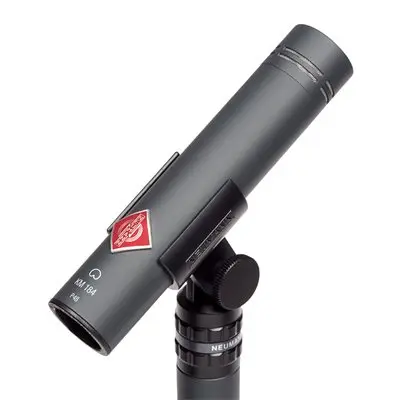
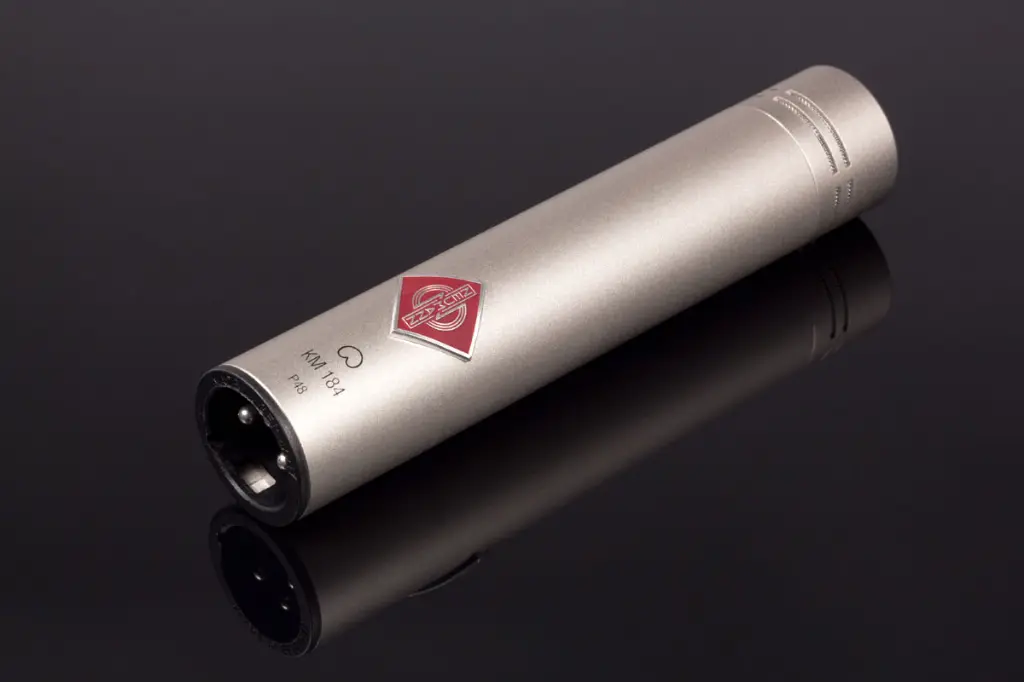
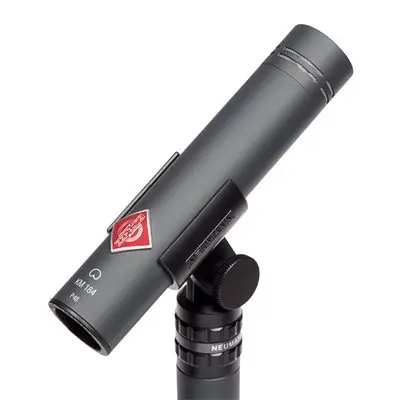
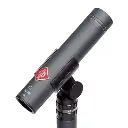
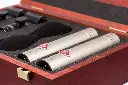
Neumann KM 184 MT - Cardioid Condenser Microphone - Pure Sound
The global benchmark for surgically accurate acoustic capture.
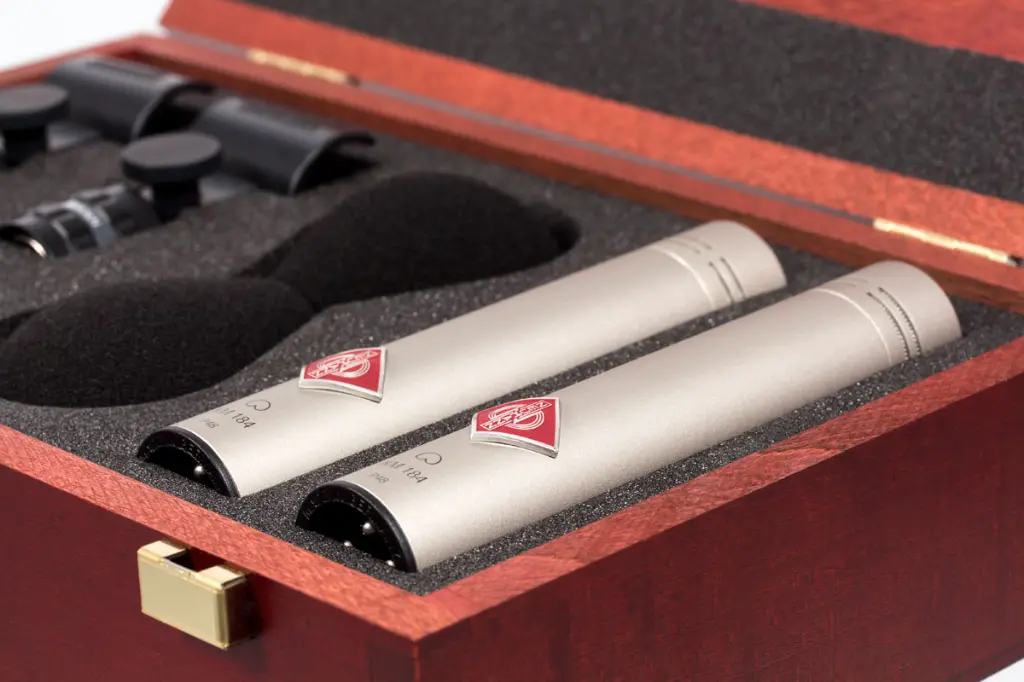
The Neumann KM 184 MT is the small-diaphragm condenser (SDC) microphone that sets the industry standard for studio and stage use. Designed for demanding musicians, it combines transformerless electronics and an ultra-precise cardioid capsule to capture every nuance of guitars, pianos, and percussion with unparalleled natural brilliance. Ready for the most challenging environments, it delivers complete transparency without any unwanted coloration.
This content will be shared across all product pages.
Acoustic excellence knows no bounds, and the Neumann KM 184 MT is its ultimate embodiment in the small-diaphragm condenser (SDC) microphone category. A technological evolution of the legendary KM 84, this model has become the tool of choice for top-level sound engineers and musicians in Quebec and around the world. Its ability to capture the very essence of an instrument, with a linear frequency response yet a subtle touch of brightness, makes it a must-have for any professional signal chain.
Authority Section: The ultimate tool for acoustic precision
In the world of professional recording, the Neumann name commands immediate respect. The KM 184 MT is not simply a microphone; it is a technical solution to the most common recording problems encountered by musicians. One of the major challenges in the studio is managing off-axis coloration. A lower-quality microphone will distort the sound coming from the sides or rear, creating phase issues and an unnatural sound. The KM 184 MT solves this problem with a frequency-independent cardioid polar pattern, ensuring that even sounds captured off-axis retain perfect tonal integrity.
Furthermore, the absence of a transformer in its output stage (transformerless circuitry) allows for lightning-fast transient response. For an acoustic guitarist, this translates into precise capture of the pick attack and string resonance. For a drummer, it means cymbals and hi-hats that "breathe" without harmonic distortion, even at extreme sound pressure levels. With a self-noise of only 13 dB-A, the KM 184 MT enables crystal-clear recordings, even from very quiet sound sources such as woodwinds or bowed string instruments.
Full Technical Specifications
Analysis of the Neumann KM 184 MT's technical data reveals precision engineering where every parameter is optimized for pure performance. The manufacturer leaves no room for approximations, offering values that confirm its status as a global standard.
Audio and Acoustic Performance
| Technical Parameter | Specified Value |
| Acoustic operating principle | Transducteur à gradient de pression |
| Directionality (Polar Pattern) | Cardioïde |
| Frequency range | 20 Hz - 20 kHz |
| Sensitivity at 1 kHz in 1 kohm | 15 mV/Pa ± 1 dB |
| Nominal impedance | 50 ohms |
| Nominal load impedance | 1 kohms |
| Equivalent noise level, CCIR | 22 dB |
| Equivalent noise level, A-weighted | 13 dB-A |
| Signal-to-noise ratio, CCIR (re. 94 dB SPL) | 72 dB |
| Signal-to-noise ratio, A-weighted (re. 94 dB SPL) | 81 dB |
| Maximum SPL for THD 0.5% | 138 dB |
| Maximum output voltage | 10 dBu |
| Amplifier dynamics (A-weighted) | 125 dB |
Food and Electronics
| Electrical Parameter | Specification |
| Type of electronics | FET (Transistor à effet de champ), sans transformateur |
| Supply voltage (P48, IEC 61938) | 48 V ± 4 V |
| Current consumption (P48, IEC 61938) | 3.2 mA |
| Corresponding connector | XLR 3 F |
| Analog output | 1x XLR 3 broches |
Physical Characteristics and Materials
| Dimensions / Material | Detail |
| Approximate weight | 80 g (0.18 lbs) |
| Diameter | 22 mm |
| Length | 107 mm (4.21") |
| Finishing | Noir mat (MT - Matte Black) |
| Construction | Métal robuste pour usage intensif |
| Operating temperature | Conçu pour studio et scène broadcast |
Package contents (Single Unit)
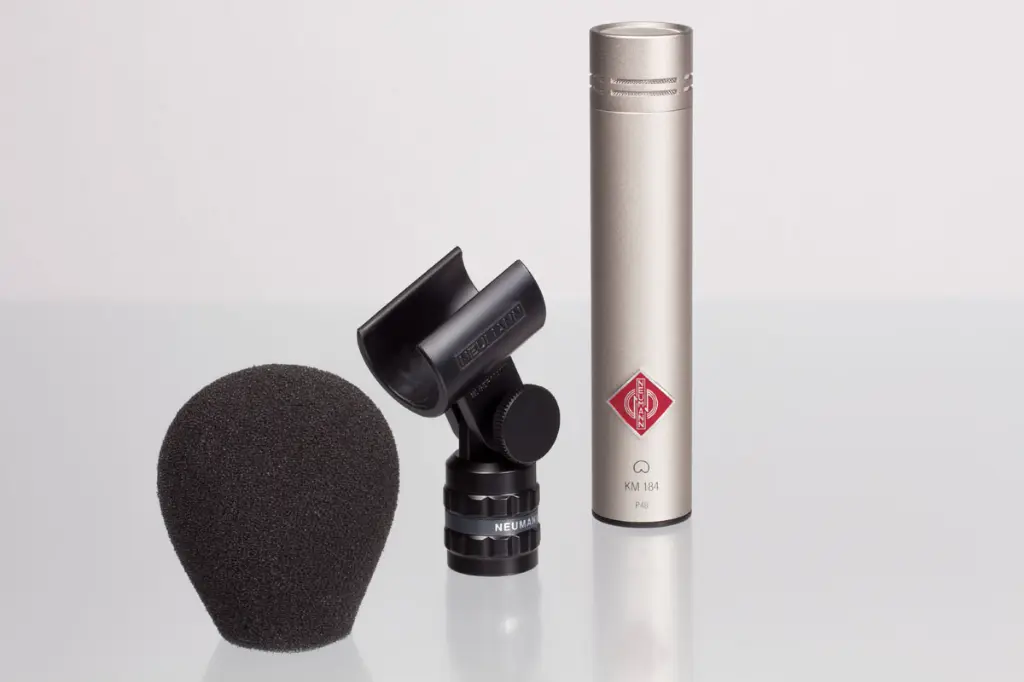
Microphone Neumann KM 184 MT.
Bonnette anti-vent WNS 100 (Noire).
Support pivotant SG 21 (Stand Mount Swivel).
Comparative Analysis: The KM 184 MT versus market standards
For professional musicians, choosing an SDC microphone is a critical decision. The following table compares the Neumann KM 184 MT to the 10 most thoroughly reviewed alternatives from industry authorities (Sound on Sound, MusicRadar, Gearspace). This analysis is based on technical specifications and actual market positioning.
| Alternative Product | Market Segment | Comparative Analysis (Strengths vs. Weaknesses) | Available at Garage à Musique |
| Schoeps MK4 | Premium Studio | Points Forts : Neutralité absolue, réponse hors-axe exemplaire. Points Faibles : Prix très élevé, nécessite des préamplis haut de gamme. | Product not listed |
| AKG C451 B | Percussion / Strings | Points Forts : SPL de 155 dB, son très brillant ("airé"). Points Faibles : Peut paraître trop tranchant ou agressif sur certaines sources. | Available here |
| Shure SM81 | Standard of Work | Points Forts : Réponse ultra-plate, durabilité légendaire. Points Faibles : Moins de détails fins dans les transitoires que le Neumann. | Available here |
| Rode NT5 | Budget / Project Studio | Points Forts : Prix accessible, robuste. Points Faibles : Bruit de fond plus élevé, moins de cohérence dans les paires appairées. | Available here |
| Warm Audio WA-84 | Vintage Reproduction | Points Forts : Utilise un transformateur, son "chaud" rappelant le KM 84. Points Faibles : Moins de précision chirurgicale que le KM 184 moderne. | Available here |
| Sennheiser MKH 8040 | Field / Broadcast | Points Forts : Bruit de fond minimal (11 dBA), résistant à l'humidité. Points Faibles : Format modulaire coûteux. | Available here |
| DPA 4011 | Critical Reference | Points Forts : Précision scientifique, SPL massif (159 dB). Points Faibles : Coût prohibitif pour les home studios. | Product not listed |
| Beyerdynamic MC 930 | Multipurpose Studio | Points Forts : Son très doux et musical, excellent rapport qualité-prix. Points Faibles : Moins de prestige de marque que Neumann. | Available here |
| Soyuz 013 FET | Modern Boutique | Points Forts : Sonorité riche, fabrication artisanale. Points Faibles : Moins discret visuellement, disponibilité limitée. | Product not listed |
| SE Electronics SE8 | Value / Precision | Points Forts : Bruit de fond très bas, filtres intégrés. Points Faibles : Rendu moins "luxueux" dans les hauts médiums. | Available here |
History and Technological Evolution
The history of the Neumann KM 184 MT is inextricably linked to the evolution of the brand's "Kleinmikrophon" (KM) technology. It all began in 1953 with the KM 53, but it was the KM 84, introduced in 1966, that truly revolutionized the world of recording by being the first microphone to utilize 48V phantom power. The KM 84 was renowned for its output transformer, which provided subtle harmonic saturation and a perfectly flat frequency response.
In 1993, in response to the growing demands of digital technology for greater clarity and dynamic range, Neumann launched the 180 Series, including the KM 184 (cardioid), KM 183 (omni), and KM 185 (hypercardioid). The KM 184 was designed as a more economical and higher-performing version of the modular KM 100 system. Its major innovation lies in its transformerless output stage, which significantly reduces self-noise (from 17 dB-A on the KM 84 to 13 dB-A on the KM 184) and allows it to handle much higher sound pressure levels. Although sharing the same K 40 capsule, the KM 184 features a slight +3 dB boost at 9 kHz, delivering a fresher, more modern sound than its predecessor.
Cultural References and Artists: A True Sonic Heritage
The Neumann KM 184 is present on the stages and in the studios of the most influential artists. Here is a carefully curated selection of its use throughout music history:
Mac DeMarco : Utilise une paire de KM 184 pour capturer les ambiances uniques de sa chambre d'écho personnelle lors de ses sessions de production.
Johnny Marr (The Smiths) : Sur l'album Call the Comet (2018), le KM 184 a servi de micro d'overhead, placé stratégiquement pour capturer la clarté de sa batterie.
Tim Henson (Polyphia) : Dans sa configuration de studio personnel (2023), il privilégie les KM 184 pour l'enregistrement détaillé de son kit de batterie.
Dominic Howard (Muse) : Utilise ces micros en configuration live sur ses cymbales pour garantir une présence percutante et claire dans les mixages frontaux.
Meg White (The White Stripes) : Lors de la tournée Elephant (2003), des KM 184 étaient utilisés pour le hi-hat et comme overheads pour définir son son caractéristique.
Dave Lombardo (Slayer) : Ses ingénieurs du son font confiance au KM 184 pour la gestion du hi-hat et de la ride, même sous des pressions acoustiques extrêmes.
Anderson.Paak (Silk Sonic) : Vu en studio utilisant le KM 184 pour les overheads, capturant le groove organique qui définit ses productions.
John Rzeznik (Goo Goo Dolls) : Place un KM 184 devant la rosace de sa guitare acoustique pour obtenir un son flat et naturel destiné au mixage de films.
The Band (Levon Helm) : L'ingénieur utilise le KM 184 sur la caisse claire pour capturer le "snap" et la définition de cet instrument iconique.
Carter Beauford (Dave Matthews Band) : Le KM 184 fait partie intégrante de son imposant kit de batterie, assurant la fidélité des cymbales en tournée.
Keshi : Utilise le KM 184 dans son home studio pour ses prises de guitare, apportant une qualité professionnelle à ses productions indépendantes.
Erik Rutan (Cannibal Corpse) : Incontournable dans son studio MANA Recording pour la précision chirurgicale requise par le métal extrême.
Paul Davids : Le pédagogue et guitariste reconnu utilise le KM 184 pour ses démonstrations de guitares acoustiques de haute voltige sur YouTube.
Daft Punk : Les ingénieurs du duo ont utilisé des microphones Neumann SDC pour capturer les éléments percussifs réels sur l'album Random Access Memories.
The Smashing Pumpkins : Billy Corgan a souvent eu recours au KM 184 pour les couches de guitares acoustiques cristallines.
FAQ - Technical Questions and Expert Advice
How do you manage the gain on the KM 184 MT to avoid a weak signal? The KM 184 is a "warm" microphone with a sensitivity of 15 mV/Pa. If you're using an interface like the SSL2 and need to push the gain to 7 or 8 out of 10, make sure your source isn't too far away. For an acoustic guitar, a distance of 15-20 cm is ideal. A clean gain setting allows you to take full advantage of the microphone's 125 dB dynamic range. At Garage à Musique, we recommend low-noise preamps to maximize this performance.
Is the KM 184 MT susceptible to RF or electromagnetic interference? Thanks to its all-metal body and symmetrical design, the KM 184 offers excellent protection against RF . However, in some dense urban environments, a poorly shielded XLR cable may introduce noise. Always use high-quality cables to ensure the transformerless output stage remains quiet and clean.
Why does the microphone require a stable 48V phantom power supply? Unlike dynamic microphones, the KM 184 is a condenser microphone that uses phantom power to bias the capsule and power the internal FET amplifier. Unstable voltage can cause crackling or a loss of dynamic range. The KM 184 is specified for "48V only," so avoid low-end 12V or 24V power supplies.
Can ground loop problems occur with this microphone? A ground loop manifests as a hum at 60 Hz. Although the KM 184 is electronically balanced, poor studio cabling or connections between different grounded devices can cause this problem. Using a direct box (DI) with a ground lift switch for instruments connected to the same system can help eliminate this noise.
Is the KM 184 MT suitable for outdoor recording? While its construction is robust, its capsule is sensitive to wind and humidity. For any outdoor use, the included WNS 100 windscreen is mandatory. For windy conditions in Quebec, we recommend adding a deadcat-type windscreen or a full windscreen system to prevent plosives and wind noise.
What is the sonic difference between the KM 184 and the legendary KM 84? The KM 184 offers a more modern response with a slight boost in the high frequencies (+3 dB at 9 kHz), while the KM 84 is flatter and "darker" thanks to its transformer. The KM 184 is quieter and handles high sound pressure levels better, making it a more versatile tool for contemporary productions.
Is the KM 184 MT suitable for recording stringed instruments like the violin? Absolutely. Its ability to capture fast transients allows it to reproduce the full grain of the bow on the strings. However, due to its natural brightness, it's advisable not to place it too close to the bridge to avoid an overly bright sound. A position slightly above the musician's shoulder often yields magical results.
How do I mount the KM 184 MT without scratching the matte black finish? The included SG 21 mount is designed to hold the microphone securely. However, the matte black (MT) finish can be susceptible to repeated metal-on-metal contact. Insert the microphone carefully and avoid forcing it. As the authority on the subject at Garage à Musique, we inspect every unit to ensure a perfect finish upon delivery.
Why isn't there an attenuation switch (pad) on the microphone? Neumann chose to simplify the design to offer a more attractive price without sacrificing quality. Since the KM 184 can handle 138 dB SPL before distortion, a pad is rarely necessary for most acoustic instruments. If you're recording an extremely loud source, attenuation will occur at your preamp.
What is the typical lifespan of a Neumann KM 184 MT? With proper care (storage in its case, protection from moisture), a KM 184 can last for decades. Its resale value remains extremely high, making it not just a piece of equipment purchase, but a true long-term investment for your studio. Garage à Musique is proud to support you in this sustainable investment.
In-Depth Frequency Response Analysis
One of the reasons the KM 184 MT is so highly regarded is its spectral behavior. Unlike many inexpensive SDC microphones that exhibit unpleasant resonances in the upper frequencies, the KM 184 offers a remarkably smooth frequency response. The slight bump at 9 kHz is a deliberate engineering decision to compensate for the loss of clarity that can occur during digital recording or when listening in acoustically treated rooms. This characteristic allows classical vocals and woody instruments to stand out effortlessly in the mix.
At the lower end of the spectrum, there is a slight natural attenuation starting around 100 Hz, reaching -3 dB at 80 Hz. This helps reduce rumble and mechanical background noise without sacrificing the instrument's warmth. For musicians wanting more bass, the proximity effect inherent in the pressure gradient transducer allows this drop to be compensated for simply by moving the microphone closer to the source.
Conclusion: The ultimate investment for your sound
The Neumann KM 184 MT represents the perfect balance between traditional craftsmanship and electronic innovation. Its versatility, robustness, and iconic sonic signature make it the ultimate all-purpose microphone for anyone who takes acoustic recording seriously. Whether you're a guitarist looking to capture the brilliance of your strings or a sound engineer orchestrating a complex session, the KM 184 MT gives you the assurance that every nuance will be preserved with absolute fidelity.
Choosing Garage à Musique for your Neumann purchase means choosing the expertise of a passionate team that understands the real needs of Quebec musicians. We don't just sell microphones; we provide the tools that will define your sonic identity for years to come.
Acoustic excellence knows no bounds, and the Neumann KM 184 MT is its ultimate embodiment in the small-diaphragm condenser (SDC) microphone category. A technological evolution of the legendary KM 84, this model has become the tool of choice for top-level sound engineers and musicians in Quebec and around the world. Its ability to capture the very essence of an instrument, with a linear frequency response yet a subtle touch of brightness, makes it a must-have for any professional signal chain.
Authority Section: The ultimate tool for acoustic precision
In the world of professional recording, the Neumann name commands immediate respect. The KM 184 MT is not simply a microphone; it is a technical solution to the most common recording problems encountered by musicians. One of the major challenges in the studio is managing off-axis coloration. A lower-quality microphone will distort the sound coming from the sides or rear, creating phase issues and an unnatural sound. The KM 184 MT solves this problem with a frequency-independent cardioid polar pattern, ensuring that even sounds captured off-axis retain perfect tonal integrity.
Furthermore, the absence of a transformer in its output stage (transformerless circuitry) allows for lightning-fast transient response. For an acoustic guitarist, this translates into precise capture of the pick attack and string resonance. For a drummer, it means cymbals and hi-hats that "breathe" without harmonic distortion, even at extreme sound pressure levels. With a self-noise of only 13 dB-A, the KM 184 MT enables crystal-clear recordings, even from very quiet sound sources such as woodwinds or bowed string instruments.
Full Technical Specifications
Analysis of the Neumann KM 184 MT's technical data reveals precision engineering where every parameter is optimized for pure performance. The manufacturer leaves no room for approximations, offering values that confirm its status as a global standard.
Audio and Acoustic Performance
| Technical Parameter | Specified Value |
| Acoustic operating principle | Transducteur à gradient de pression |
| Directionality (Polar Pattern) | Cardioïde |
| Frequency range | 20 Hz - 20 kHz |
| Sensitivity at 1 kHz in 1 kohm | 15 mV/Pa ± 1 dB |
| Nominal impedance | 50 ohms |
| Nominal load impedance | 1 kohms |
| Equivalent noise level, CCIR | 22 dB |
| Equivalent noise level, A-weighted | 13 dB-A |
| Signal-to-noise ratio, CCIR (re. 94 dB SPL) | 72 dB |
| Signal-to-noise ratio, A-weighted (re. 94 dB SPL) | 81 dB |
| Maximum SPL for THD 0.5% | 138 dB |
| Maximum output voltage | 10 dBu |
| Amplifier dynamics (A-weighted) | 125 dB |
Food and Electronics
| Electrical Parameter | Specification |
| Type of electronics | FET (Transistor à effet de champ), sans transformateur |
| Supply voltage (P48, IEC 61938) | 48 V ± 4 V |
| Current consumption (P48, IEC 61938) | 3.2 mA |
| Corresponding connector | XLR 3 F |
| Analog output | 1x XLR 3 broches |
Physical Characteristics and Materials
| Dimensions / Material | Detail |
| Approximate weight | 80 g (0.18 lbs) |
| Diameter | 22 mm |
| Length | 107 mm (4.21") |
| Finishing | Noir mat (MT - Matte Black) |
| Construction | Métal robuste pour usage intensif |
| Operating temperature | Conçu pour studio et scène broadcast |
Package contents (Single Unit)
Microphone Neumann KM 184 MT.
Bonnette anti-vent WNS 100 (Noire).
Support pivotant SG 21 (Stand Mount Swivel).
Comparative Analysis: The KM 184 MT versus market standards
For professional musicians, choosing an SDC microphone is a critical decision. The following table compares the Neumann KM 184 MT to the 10 most thoroughly reviewed alternatives from industry authorities (Sound on Sound, MusicRadar, Gearspace). This analysis is based on technical specifications and actual market positioning.
| Alternative Product | Market Segment | Comparative Analysis (Strengths vs. Weaknesses) | Available at Garage à Musique |
| Schoeps MK4 | Premium Studio | Points Forts : Neutralité absolue, réponse hors-axe exemplaire. Points Faibles : Prix très élevé, nécessite des préamplis haut de gamme. | Product not listed |
| AKG C451 B | Percussion / Strings | Points Forts : SPL de 155 dB, son très brillant ("airé"). Points Faibles : Peut paraître trop tranchant ou agressif sur certaines sources. | Available here |
| Shure SM81 | Standard of Work | Points Forts : Réponse ultra-plate, durabilité légendaire. Points Faibles : Moins de détails fins dans les transitoires que le Neumann. | Available here |
| Rode NT5 | Budget / Project Studio | Points Forts : Prix accessible, robuste. Points Faibles : Bruit de fond plus élevé, moins de cohérence dans les paires appairées. | Available here |
| Warm Audio WA-84 | Vintage Reproduction | Points Forts : Utilise un transformateur, son "chaud" rappelant le KM 84. Points Faibles : Moins de précision chirurgicale que le KM 184 moderne. | Available here |
| Sennheiser MKH 8040 | Field / Broadcast | Points Forts : Bruit de fond minimal (11 dBA), résistant à l'humidité. Points Faibles : Format modulaire coûteux. | Available here |
| DPA 4011 | Critical Reference | Points Forts : Précision scientifique, SPL massif (159 dB). Points Faibles : Coût prohibitif pour les home studios. | Product not listed |
| Beyerdynamic MC 930 | Multipurpose Studio | Points Forts : Son très doux et musical, excellent rapport qualité-prix. Points Faibles : Moins de prestige de marque que Neumann. | Available here |
| Soyuz 013 FET | Modern Boutique | Points Forts : Sonorité riche, fabrication artisanale. Points Faibles : Moins discret visuellement, disponibilité limitée. | Product not listed |
| SE Electronics SE8 | Value / Precision | Points Forts : Bruit de fond très bas, filtres intégrés. Points Faibles : Rendu moins "luxueux" dans les hauts médiums. | Available here |
History and Technological Evolution
The history of the Neumann KM 184 MT is inextricably linked to the evolution of the brand's "Kleinmikrophon" (KM) technology. It all began in 1953 with the KM 53, but it was the KM 84, introduced in 1966, that truly revolutionized the world of recording by being the first microphone to utilize 48V phantom power. The KM 84 was renowned for its output transformer, which provided subtle harmonic saturation and a perfectly flat frequency response.
In 1993, in response to the growing demands of digital technology for greater clarity and dynamic range, Neumann launched the 180 Series, including the KM 184 (cardioid), KM 183 (omni), and KM 185 (hypercardioid). The KM 184 was designed as a more economical and higher-performing version of the modular KM 100 system. Its major innovation lies in its transformerless output stage, which significantly reduces self-noise (from 17 dB-A on the KM 84 to 13 dB-A on the KM 184) and allows it to handle much higher sound pressure levels. Although sharing the same K 40 capsule, the KM 184 features a slight +3 dB boost at 9 kHz, delivering a fresher, more modern sound than its predecessor.
Cultural References and Artists: A True Sonic Heritage
The Neumann KM 184 is present on the stages and in the studios of the most influential artists. Here is a carefully curated selection of its use throughout music history:
Mac DeMarco : Utilise une paire de KM 184 pour capturer les ambiances uniques de sa chambre d'écho personnelle lors de ses sessions de production.
Johnny Marr (The Smiths) : Sur l'album Call the Comet (2018), le KM 184 a servi de micro d'overhead, placé stratégiquement pour capturer la clarté de sa batterie.
Tim Henson (Polyphia) : Dans sa configuration de studio personnel (2023), il privilégie les KM 184 pour l'enregistrement détaillé de son kit de batterie.
Dominic Howard (Muse) : Utilise ces micros en configuration live sur ses cymbales pour garantir une présence percutante et claire dans les mixages frontaux.
Meg White (The White Stripes) : Lors de la tournée Elephant (2003), des KM 184 étaient utilisés pour le hi-hat et comme overheads pour définir son son caractéristique.
Dave Lombardo (Slayer) : Ses ingénieurs du son font confiance au KM 184 pour la gestion du hi-hat et de la ride, même sous des pressions acoustiques extrêmes.
Anderson.Paak (Silk Sonic) : Vu en studio utilisant le KM 184 pour les overheads, capturant le groove organique qui définit ses productions.
John Rzeznik (Goo Goo Dolls) : Place un KM 184 devant la rosace de sa guitare acoustique pour obtenir un son flat et naturel destiné au mixage de films.
The Band (Levon Helm) : L'ingénieur utilise le KM 184 sur la caisse claire pour capturer le "snap" et la définition de cet instrument iconique.
Carter Beauford (Dave Matthews Band) : Le KM 184 fait partie intégrante de son imposant kit de batterie, assurant la fidélité des cymbales en tournée.
Keshi : Utilise le KM 184 dans son home studio pour ses prises de guitare, apportant une qualité professionnelle à ses productions indépendantes.
Erik Rutan (Cannibal Corpse) : Incontournable dans son studio MANA Recording pour la précision chirurgicale requise par le métal extrême.
Paul Davids : Le pédagogue et guitariste reconnu utilise le KM 184 pour ses démonstrations de guitares acoustiques de haute voltige sur YouTube.
Daft Punk : Les ingénieurs du duo ont utilisé des microphones Neumann SDC pour capturer les éléments percussifs réels sur l'album Random Access Memories.
The Smashing Pumpkins : Billy Corgan a souvent eu recours au KM 184 pour les couches de guitares acoustiques cristallines.
FAQ - Technical Questions and Expert Advice
How do you manage the gain on the KM 184 MT to avoid a weak signal? The KM 184 is a "warm" microphone with a sensitivity of 15 mV/Pa. If you're using an interface like the SSL2 and need to push the gain to 7 or 8 out of 10, make sure your source isn't too far away. For an acoustic guitar, a distance of 15-20 cm is ideal. A clean gain setting allows you to take full advantage of the microphone's 125 dB dynamic range. At Garage à Musique, we recommend low-noise preamps to maximize this performance.
Is the KM 184 MT susceptible to RF or electromagnetic interference? Thanks to its all-metal body and symmetrical design, the KM 184 offers excellent protection against RF . However, in some dense urban environments, a poorly shielded XLR cable may introduce noise. Always use high-quality cables to ensure the transformerless output stage remains quiet and clean.
Why does the microphone require a stable 48V phantom power supply? Unlike dynamic microphones, the KM 184 is a condenser microphone that uses phantom power to bias the capsule and power the internal FET amplifier. Unstable voltage can cause crackling or a loss of dynamic range. The KM 184 is specified for "48V only," so avoid low-end 12V or 24V power supplies.
Can ground loop problems occur with this microphone? A ground loop manifests as a hum at 60 Hz. Although the KM 184 is electronically balanced, poor studio cabling or connections between different grounded devices can cause this problem. Using a direct box (DI) with a ground lift switch for instruments connected to the same system can help eliminate this noise.
Is the KM 184 MT suitable for outdoor recording? While its construction is robust, its capsule is sensitive to wind and humidity. For any outdoor use, the included WNS 100 windscreen is mandatory. For windy conditions in Quebec, we recommend adding a deadcat-type windscreen or a full windscreen system to prevent plosives and wind noise.
What is the sonic difference between the KM 184 and the legendary KM 84? The KM 184 offers a more modern response with a slight boost in the high frequencies (+3 dB at 9 kHz), while the KM 84 is flatter and "darker" thanks to its transformer. The KM 184 is quieter and handles high sound pressure levels better, making it a more versatile tool for contemporary productions.
Is the KM 184 MT suitable for recording stringed instruments like the violin? Absolutely. Its ability to capture fast transients allows it to reproduce the full grain of the bow on the strings. However, due to its natural brightness, it's advisable not to place it too close to the bridge to avoid an overly bright sound. A position slightly above the musician's shoulder often yields magical results.
How do I mount the KM 184 MT without scratching the matte black finish? The included SG 21 mount is designed to hold the microphone securely. However, the matte black (MT) finish can be susceptible to repeated metal-on-metal contact. Insert the microphone carefully and avoid forcing it. As the authority on the subject at Garage à Musique, we inspect every unit to ensure a perfect finish upon delivery.
Why isn't there an attenuation switch (pad) on the microphone? Neumann chose to simplify the design to offer a more attractive price without sacrificing quality. Since the KM 184 can handle 138 dB SPL before distortion, a pad is rarely necessary for most acoustic instruments. If you're recording an extremely loud source, attenuation will occur at your preamp.
What is the typical lifespan of a Neumann KM 184 MT? With proper care (storage in its case, protection from moisture), a KM 184 can last for decades. Its resale value remains extremely high, making it not just a piece of equipment purchase, but a true long-term investment for your studio. Garage à Musique is proud to support you in this sustainable investment.
In-Depth Frequency Response Analysis
One of the reasons the KM 184 MT is so highly regarded is its spectral behavior. Unlike many inexpensive SDC microphones that exhibit unpleasant resonances in the upper frequencies, the KM 184 offers a remarkably smooth frequency response. The slight bump at 9 kHz is a deliberate engineering decision to compensate for the loss of clarity that can occur during digital recording or when listening in acoustically treated rooms. This characteristic allows classical vocals and woody instruments to stand out effortlessly in the mix.
At the lower end of the spectrum, there is a slight natural attenuation starting around 100 Hz, reaching -3 dB at 80 Hz. This helps reduce rumble and mechanical background noise without sacrificing the instrument's warmth. For musicians wanting more bass, the proximity effect inherent in the pressure gradient transducer allows this drop to be compensated for simply by moving the microphone closer to the source.
Conclusion: The ultimate investment for your sound
The Neumann KM 184 MT represents the perfect balance between traditional craftsmanship and electronic innovation. Its versatility, robustness, and iconic sonic signature make it the ultimate all-purpose microphone for anyone who takes acoustic recording seriously. Whether you're a guitarist looking to capture the brilliance of your strings or a sound engineer orchestrating a complex session, the KM 184 MT gives you the assurance that every nuance will be preserved with absolute fidelity.
Choosing Garage à Musique for your Neumann purchase means choosing the expertise of a passionate team that understands the real needs of Quebec musicians. We don't just sell microphones; we provide the tools that will define your sonic identity for years to come.