
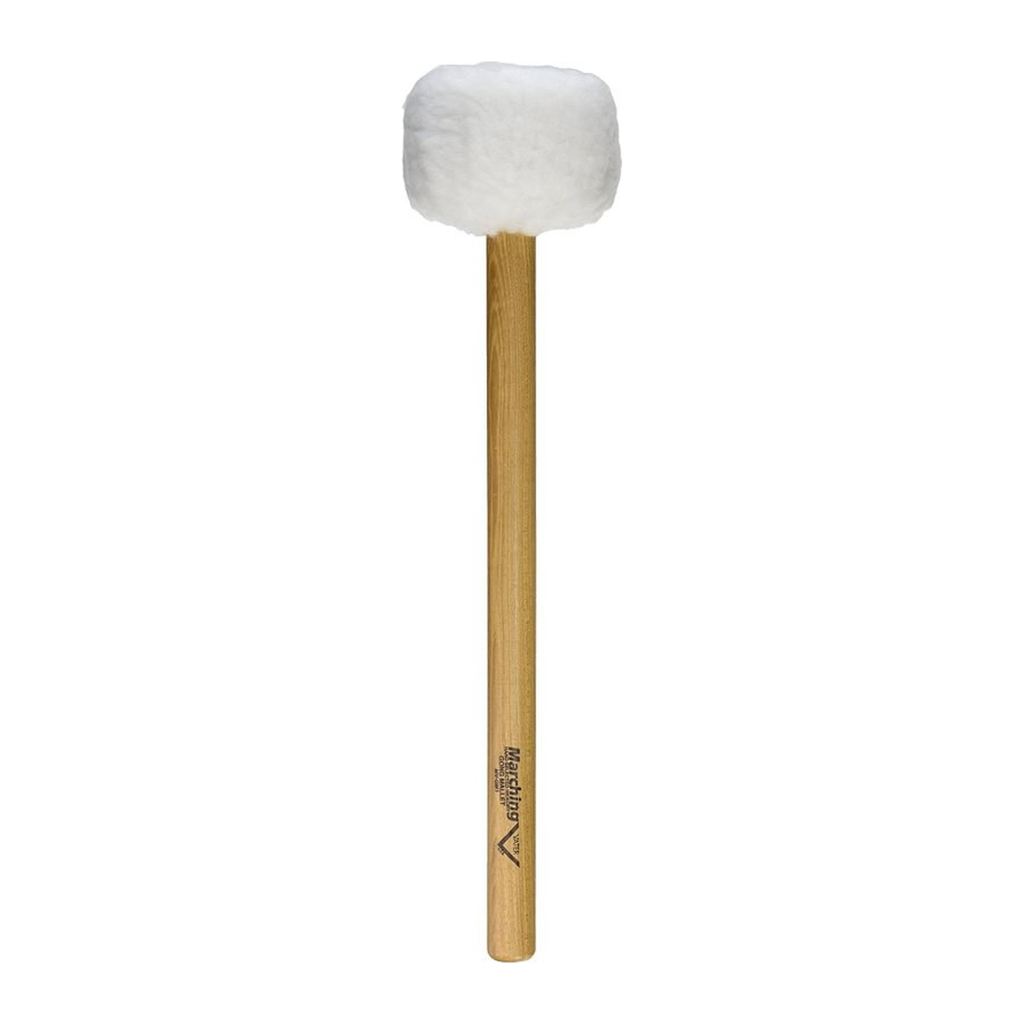
Vater MV-GM1 Gong Mallet — for Gong, Tam-Tam and Suspended Cymbal, 16.5 in
The MV-GM1 is a gong mallet, and it is a tool of mass before it is a tool for striking. Its 16.5 in length and 0.950 in diameter serve one purpose: setting in motion a metal disc that does not start on its own.
What sets it apart
- 16.5 in (41.9 cm) long
- 0.950 in (24.1 mm) diameter, among the thickest in the lineup
- Concentrated mass to start a large metal disc
- Also suited to suspended cymbal crescendos
- A unique tool: nothing else in a percussion inventory replaces it
- Length that lets you work at a comfortable distance from the gong
A gong is not struck, it is set in motion
A large tam-tam produces nothing useful when you hit it sharply: it answers with a metallic clang, and then the note settles poorly. What you are after is a sound that swells, spreads and fills the space several seconds after contact.
That takes significant mass applied slowly. The MV-GM1 is sized for that motion: you throw the head, let it meet the metal, and follow through rather than stopping it.
Why a 0.950 in diameter changes the stroke
At this diameter, the hand does not close completely around the shaft. The grip is a cradle, palm open, and the motion comes from the shoulder rather than the wrist. It is an orchestral percussionist's stroke, not a drummer's.
This wide grip has a concrete benefit: it damps the returning vibration. A gong sends a lot of energy back into the mallet, and a thin shaft passes it straight into the hand.
The second use: the cymbal crescendo
The same mallet works for the suspended cymbal roll, the crescendo that swells under an orchestral tutti. The heavy head sets the metal vibrating without making it speak too early, so you can truly start soft.
With a light mallet, the roll is already audible when it starts and the crescendo loses its first half.
Specifications
| Length | 16.5 in (41.9 cm) |
|---|---|
| Diameter | 0.950 in (24.1 mm) |
| Instruments | Gong, tam-tam, suspended cymbal |
| Type of tool | Heavy mallet |
What it is for
- Symphony orchestra tam-tam and gong
- Suspended cymbal crescendos
- Wind ensemble and film music percussion
- College and university percussion ensembles
- Stage effects in contemporary music
Compare with other manufacturers
Gong mallets from other manufacturers:
| Manufacturer | Comparable model | What differs |
|---|---|---|
| Innovative Percussion | Tam-tam mallets | Several sizes graded by gong diameter |
| Vic Firth | Gong Beater Soundpower | Different head covering, different shaft length |
| Zildjian | Gong mallet from its range | Designed first for its own gong sizes |
| Malletech | Orchestral tam-tam mallets | Range graded by hardness rather than a single model |
Frequently asked questions
- Can I play a gong with a timpani mallet?
- You can, and the result is disappointing: too light, the head makes the metal ring before the body of the gong gets going. You hear a hit instead of a swell.
- Where should you strike a gong?
- Slightly below the centre for a full sound, closer to the edge for a sound that builds slowly. The point of impact changes the result more than the force used.
- Does the same mallet work on a suspended cymbal?
- Yes, for crescendos. For a soft, continuous roll, many percussionists prefer a pair of vibraphone mallets.
- Do I need two gong mallets?
- For the gong, one is enough in the vast majority of scores. The suspended cymbal roll, on the other hand, is played with two hands.
Avis clients
Does your gong clang instead of swell?
Aucun avis pour le moment. Soyez le premier à partager votre expérience après votre achat.