
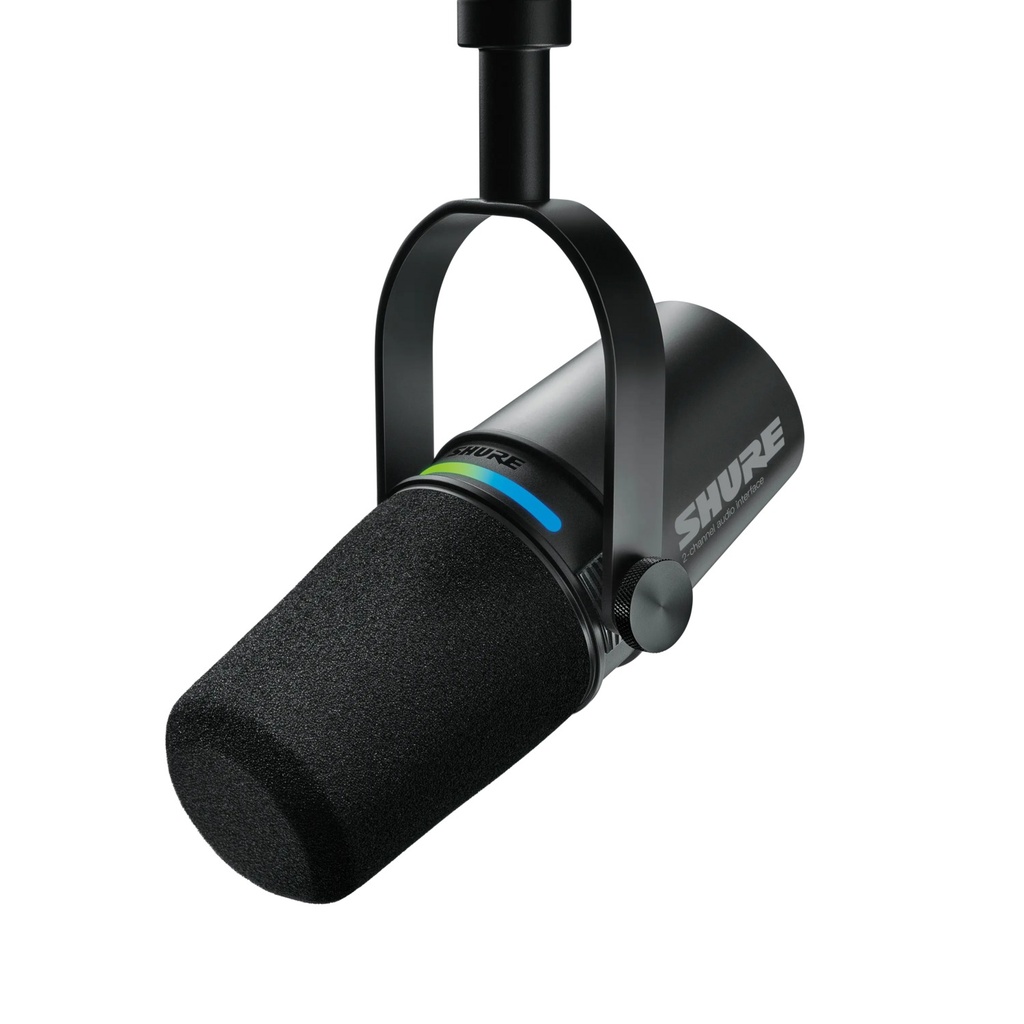
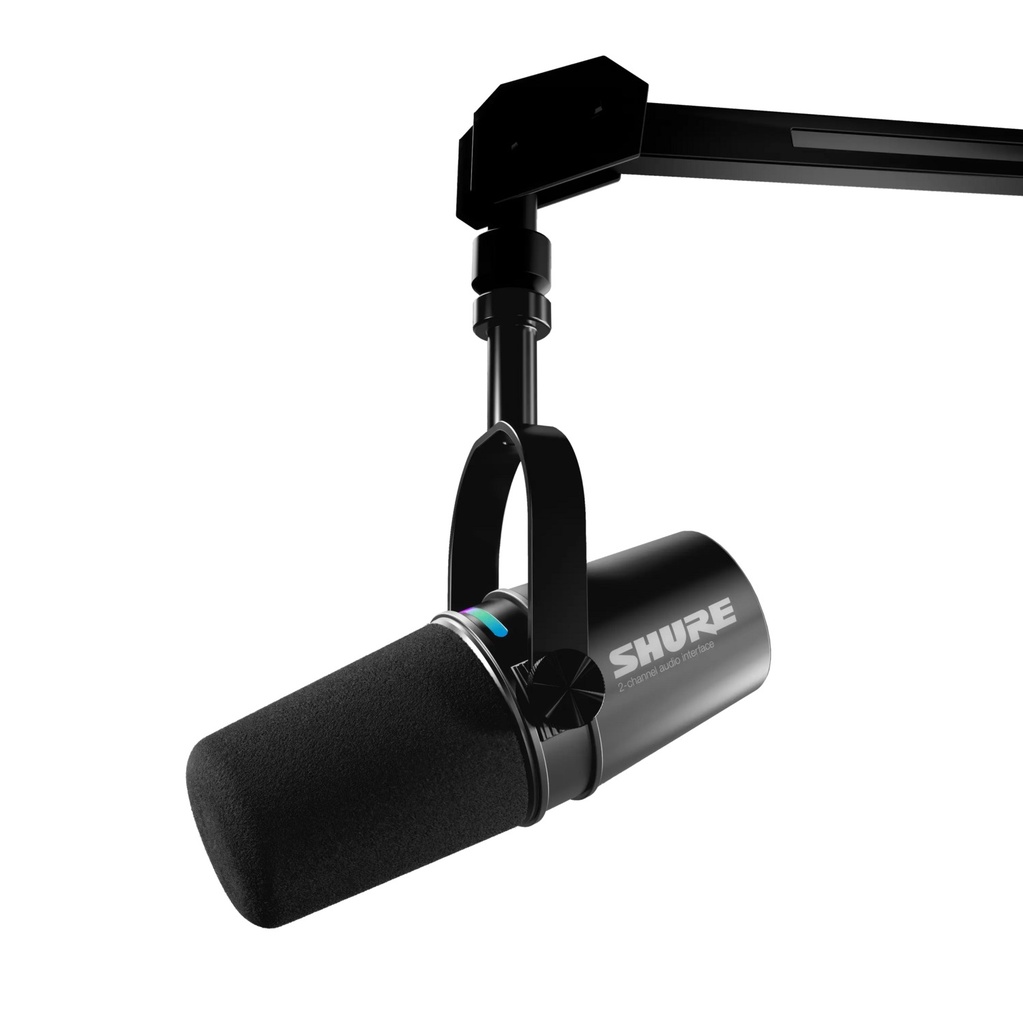
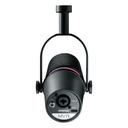
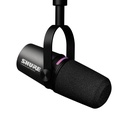
Shure MV7i Podcast Microphone with Built-in Audio Interface
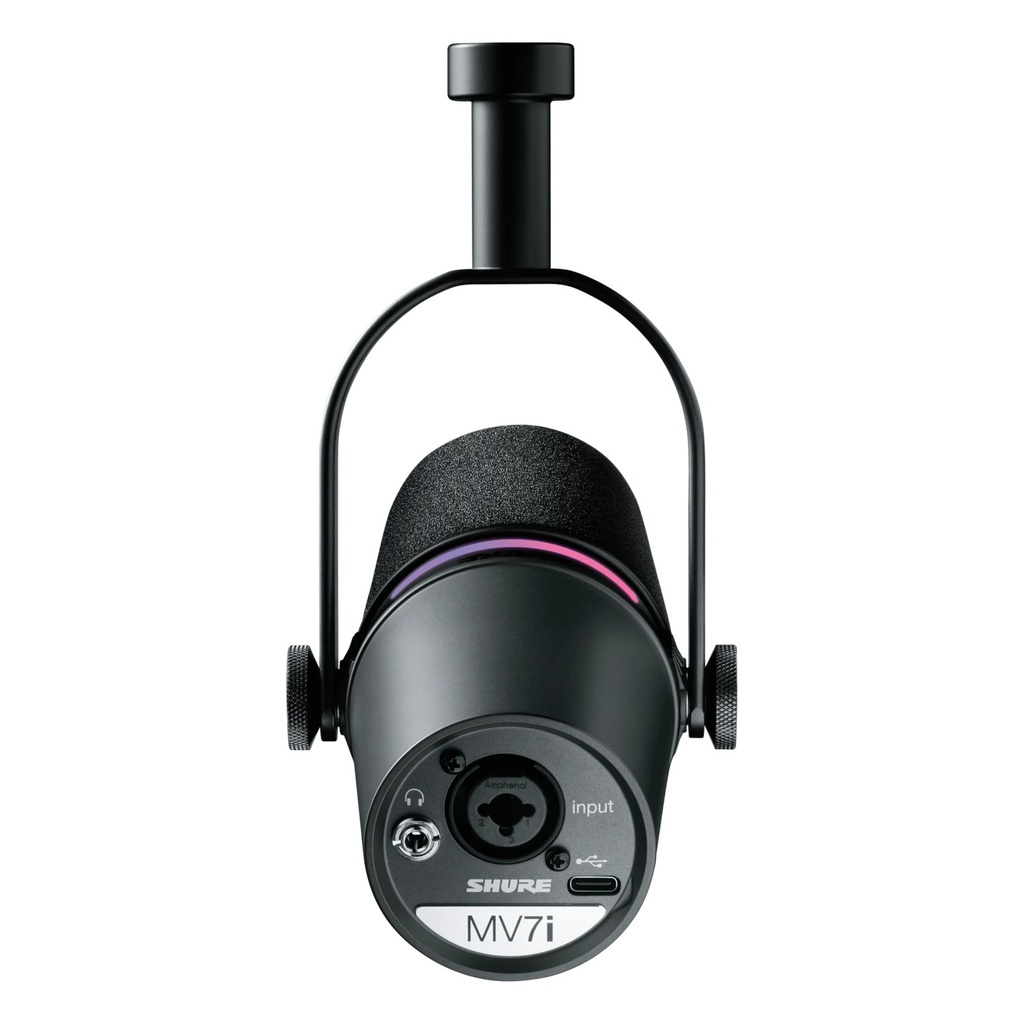
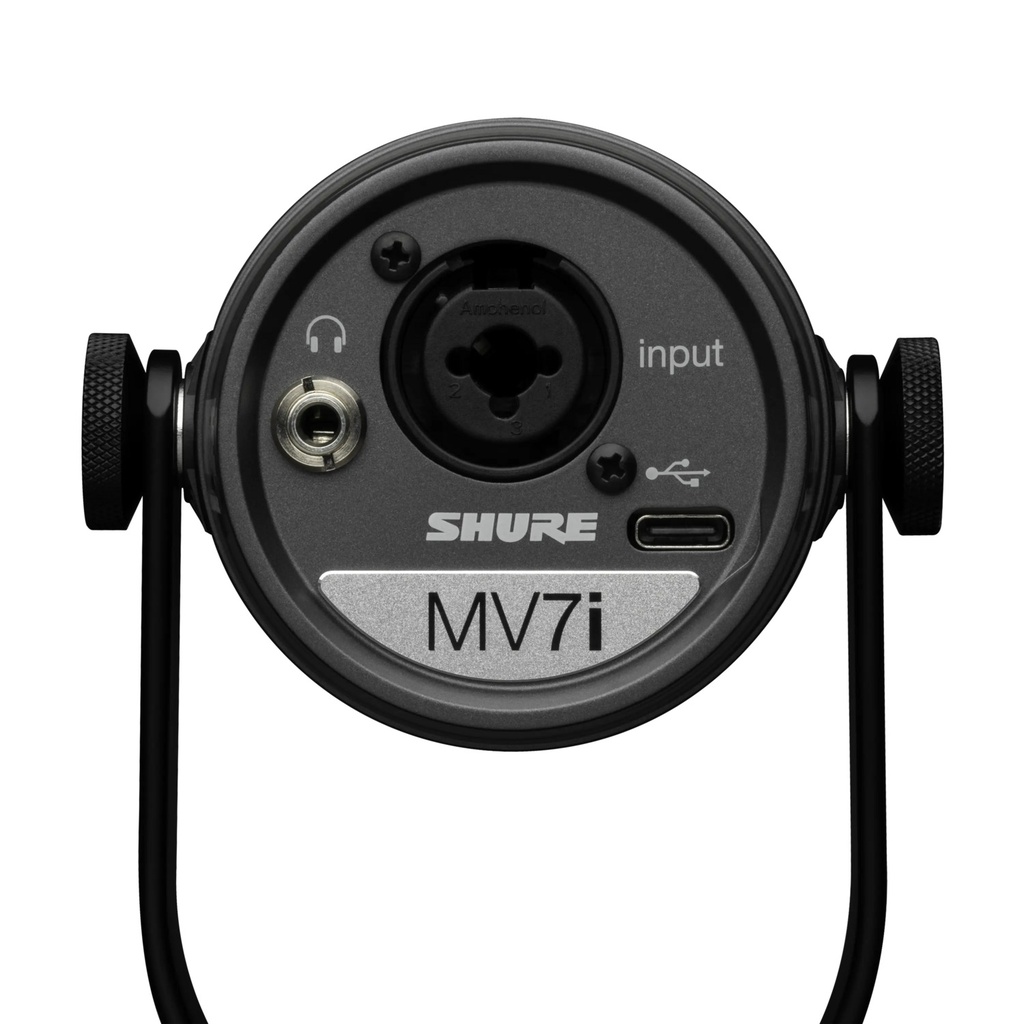
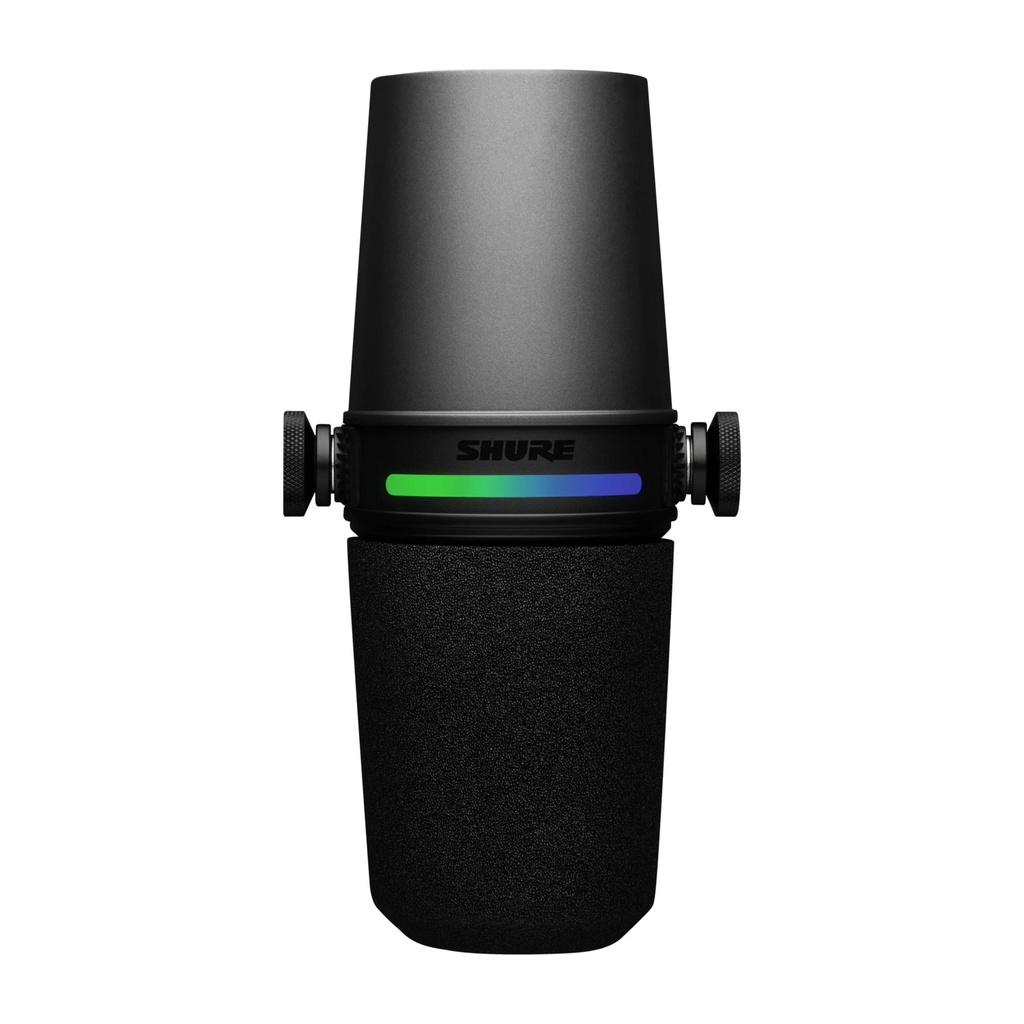
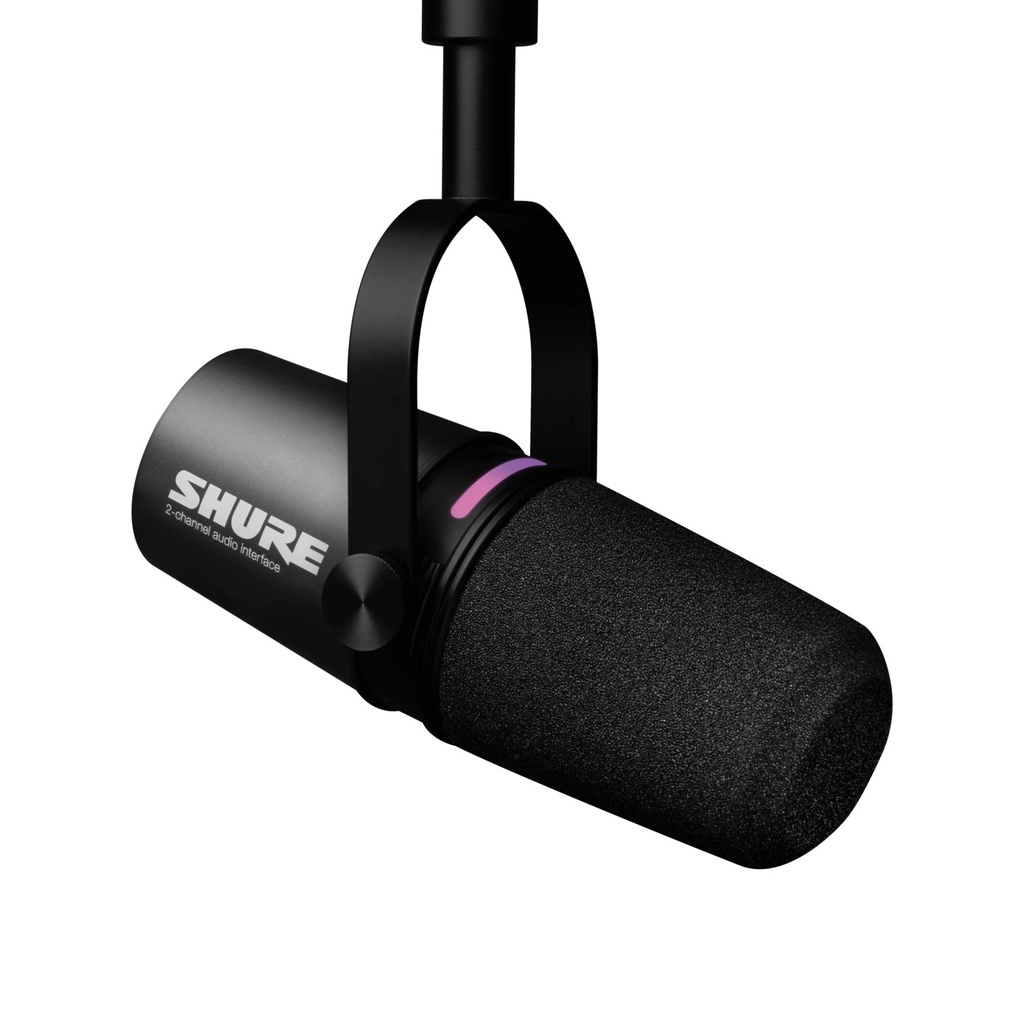
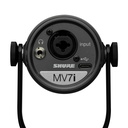
The Shure MV7i is a dynamic cardioid microphone with its own audio interface inside: a combo XLR and 1/4" input on the back takes a second mic or an instrument, and both channels go to the computer, tablet or phone over a single USB-C cable. Shure presents it as the first dynamic USB microphone of its kind.
What sets it apart
- Combo XLR and 1/4" (TS or TRS) input with +60 dB of gain and 48 V phantom power
- Two channels recorded over a single USB-C cable, at 24-bit/48 kHz
- Auto Level Mode with SmartGate, which lowers the channel of whoever goes quiet
- Three output modes: mono mixdown, two separate tracks or stereo
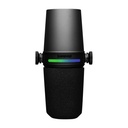
- Split LED touch panel: one half per channel for muting
Two voices without an external interface
A two-person podcast usually takes two mics and an interface. With the MV7i, the host speaks into the built-in mic and the guest into an XLR mic plugged into the back: dynamic or condenser, since the input offers as much as +60 dB of gain plus phantom power. Shure's guide advises against pointing the mics at each other and, when they face each other, keeping them at least 1 ft apart.
SmartGate and the three output modes
SmartGate works with Auto Level Mode: when one of the two people goes quiet, their channel drops, which limits crosstalk between the mics. Mixdown mode, the default, combines both sources into one mono track. Multi-Track mode puts the built-in mic on the left and the input on the right, so each can be adjusted separately in editing. Stereo mode, available with a TRS source, keeps the stereo of a keyboard or a player.
For music too
MOTIV Mix, Shure's desktop settings app, offers three presets per input: Speech, Singing and Instrument. In Singing mode, only the Popper Stopper, the plosive filter, stays on; in Instrument mode, voice processing is switched off to keep the raw sound. A guitar plugged into the 1/4" jack goes into Instrument mode automatically. Shure notes that the MV7i remembers the last settings of the XLR input and of the 1/4" input, each on its own.
Specifications
| Mic type | Dynamic (moving coil), cardioid |
|---|---|
| Mic frequency response | 50 Hz to 16 kHz |
| Built-in mic gain | 0 to +36 dB |
| Combo input | XLR, 1/4" TS or TRS |
| Input gain | 0 to +60 dB (0 to +40 dB in stereo mode) |
| Input impedance | 5.8 kilohms on XLR; 1 megohm on 1/4" TRS |
| Phantom power | +48 V DC, on the XLR input |
| Conversion | 24-bit, 48 kHz (16-bit and 44.1 kHz on iOS) |
| Connection | USB-C port, bus powered |
| Headphone jack | 3.5 mm |
| Housing | Die-cast aluminum |
| Net weight | 567 g |
| Dimensions (mic and yoke at 90 degrees) | 164 mm high, 207 mm long, 90 mm deep |
What it's for
- Two-voice podcast recorded on a laptop or phone
- Interview where the guest has their own XLR mic
- Singer-guitarist recording voice and guitar at the same time
- Live stream with a keyboard in stereo and the voice in the centre
Compared with other manufacturers
Other ways to record two sources over USB, from other manufacturers. Data published by each manufacturer.
| Model | Kind | Mic inputs | Distinctive feature |
|---|---|---|---|
| Shure MV7i | Dynamic mic with built-in interface | 1 combo XLR and 1/4" input, +60 dB, 48 V | Two channels over a single USB-C cable |
| Focusrite Vocaster Two | Podcast audio interface | 2 XLR inputs, 70 dB of gain | Auto Gain, phone input |
| Focusrite Vocaster One | Podcast audio interface | 1 XLR input, 70 dB of gain | Auto Gain, stereo loopback |
| RØDECaster Duo | Audio production console | 2 Neutrik combo inputs, 76 dB of gain | Two USB-C interfaces, recording to microSD card |
| Rode PodMic USB | Dynamic mic | None (XLR and USB-C outputs) | Built-in APHEX processing |
Frequently asked questions
- What is the difference between the MV7i and the MV7+?
- The MV7i adds a combo XLR and 1/4" input for a second mic or an instrument, and records two channels. It has only a USB-C port, whereas the MV7+ offers an XLR output in addition to USB-C.
- Does the MV7i supply phantom power?
- Yes, 48 V on the XLR input only, for a condenser mic. It is on by default; Shure warns that it may damage some mics that do not need it, and it can be turned off in the Input tab of MOTIV Mix.
- Does the MV7i work with an iPhone?
- With an iPhone or iPad that has a USB-C port, on iOS 16 and higher. Shure specifies that iOS devices with a Lightning port are not supported.
- Can a guitar be plugged into the MV7i?
- Yes, through the 1/4" TS input. Auto Level Mode, SmartGate, the Real-time Denoiser and the Popper Stopper turn off when the MV7i detects an instrument, to keep the sound as is.
Avis clients
Who is speaking into the XLR input of this MV7i? Comments are open.
Aucun avis pour le moment. Soyez le premier à partager votre expérience après votre achat.