Vater MVT1 Tenor Mallets with Lexan Heads
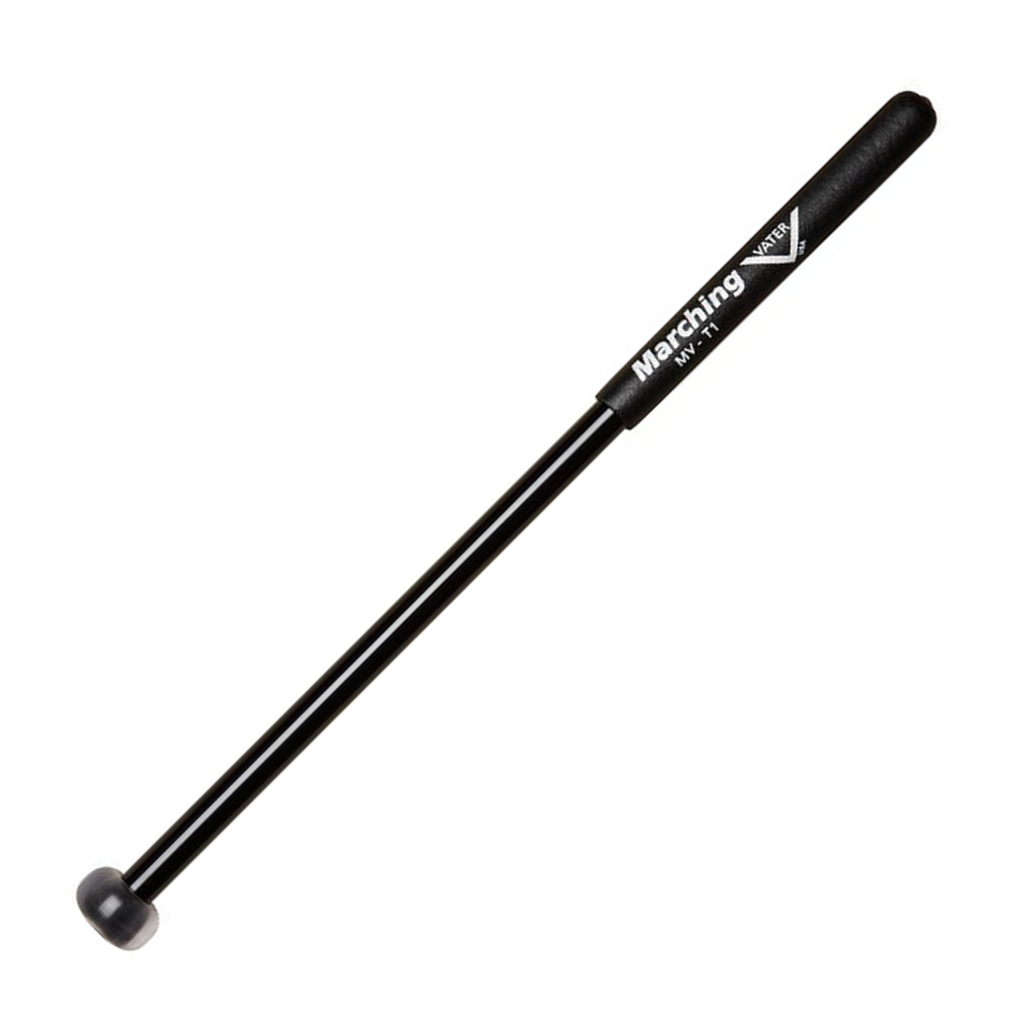
The MVT1 is a marching tenor mallet with a clear Lexan head, a hard polycarbonate, mounted on an aluminum shaft. It is the most cutting of the three tenor mallets in the lineup: it produces an extreme staccato, a note that stops almost as soon as it starts.
What sets it apart
- Clear Lexan head, a hard material
- Full sound and extreme staccato
- Heavy-gauge aluminum shaft
- Non-slip textured grip
- The most defined option of the three tenor mallets
- Designed for fast sweeps around the tenor set
What extreme staccato means on a set of tenors
A marching tom rings for a long time. On a set of four, five or six drums, those resonances stack up and a fast passage quickly turns into a muddy wash.
A very hard head strikes and pulls away. The drumhead gets a short impulse, sounds, then dies out without the mallet prolonging the contact. In a passage of tight sweeps, every note keeps its place instead of blending into the previous one.
Why an aluminum shaft here
The tenor mallets in this family use a heavy-gauge aluminum shaft. The metal barely flexes, which sends energy straight into the head without loss, and it does not warp over a marching season.
The trade-off is well known: a rigid shaft sends more vibration into the hand. The non-slip textured grip partly makes up for it by letting you hold on without squeezing — because it is tension, more than the vibration itself, that causes fatigue.
When this head becomes a handicap
A hard head on a low drum of the set gives plenty of attack and little body. A line whose repertoire wants a singing tone from the big drums will find the result thin.
It is a question of vocabulary: the MVT1 serves clarity, not warmth. Lines that adopt it do so for fast, articulated parts.
Specifications
| Head | Clear Lexan |
|---|---|
| Sound character | Full, extreme staccato |
| Shaft | Heavy-gauge aluminum |
| Grip | Textured, non-slip |
| Instrument | Marching multi-tenors |
What it is for
- Marching multi-tenors playing fast parts
- Lines seeking maximum definition between drums
- Repertoire with tight sweeps around the set
- Outdoor performances where clarity comes first
- Sections working on playing precisely together
Compare with other manufacturers
Hard-head tenor mallets from other makers:
| Manufacturer | Comparable model | What differs |
|---|---|---|
| Vic Firth | Corpsmaster hard tenor mallet | Nylon heads rather than polycarbonate |
| Innovative Percussion | Plastic-head tenor line | Several hardnesses within one family |
| Promark | Hard-head tenor mallets | Shafts also offered in wood |
| Zildjian | Tenor mallet from its line | Narrower range of hardnesses for marching |
Frequently asked questions
- Does a hard head damage tenor heads?
- It marks them faster than a felt head, especially if players always hit the same spot. Moving the playing spot by a few centimetres spreads the wear.
- How is it different from the high-profile mallet?
- How it moves around the set. Lexan aims for maximum staccato; the high profile favours speed moving from one drum to the next.
- Does an aluminum shaft tire out the hand?
- It transmits more vibration than a wooden shaft. Holding without squeezing, thanks to the textured grip, makes a big difference over a long performance.
- Can you use them on a snare drum?
- Technically yes, but the result is very harsh and the rebound feels unnatural. Marching snare is played with sticks.
Avis clients
Are your fast passages around the set blurring into each other?
Aucun avis pour le moment. Soyez le premier à partager votre expérience après votre achat.