
Vater MVT2 High-Profile Tenor Mallets
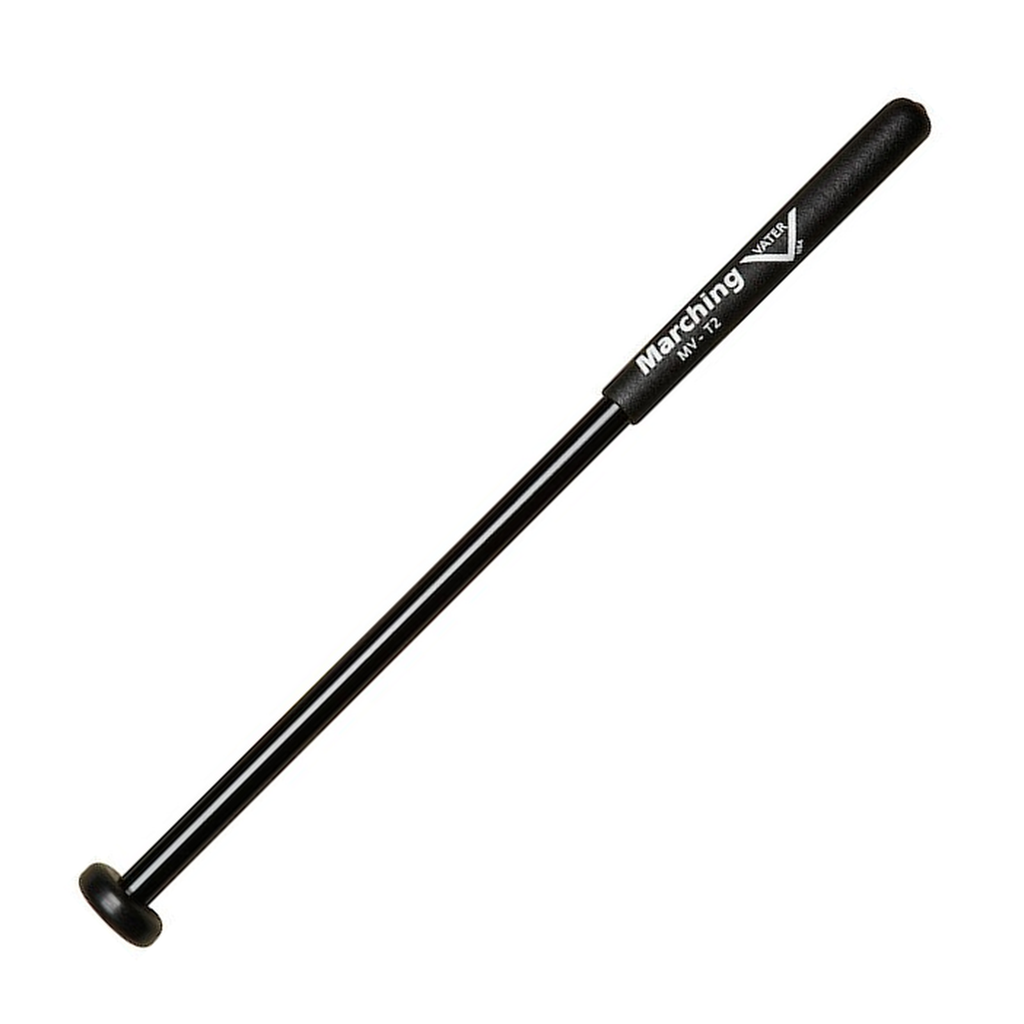
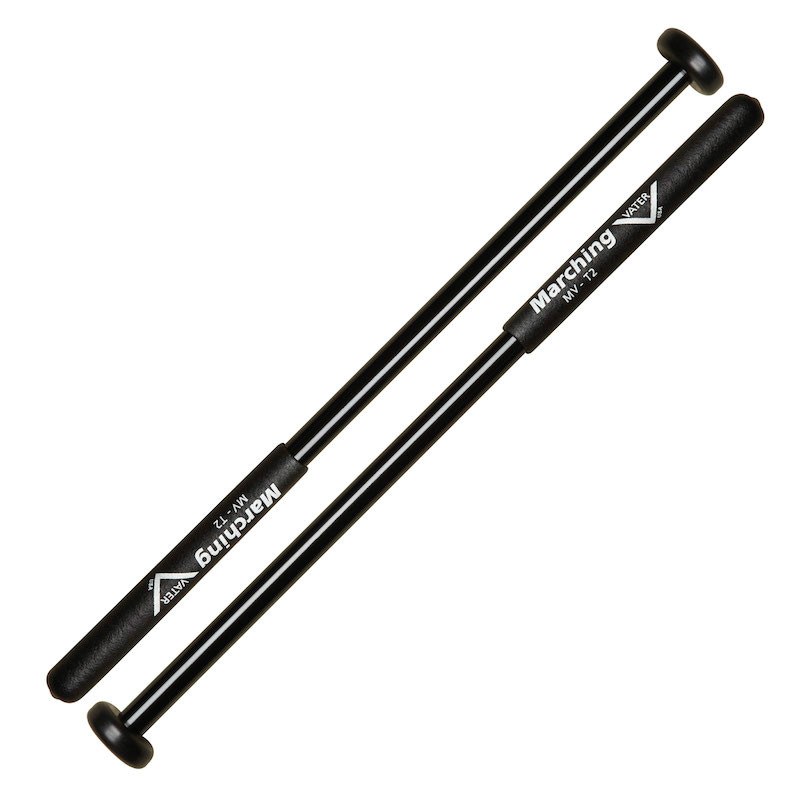
The MVT2 is a marching tenor mallet with a high-profile head, mounted on an aluminum shaft. That head height is not about looks: the manufacturer specifies it for fast articulation from one drum to the next, and that is where drum-to-drum passages are won.
What sets it apart
- High-profile head
- Designed for fast articulation from one drum to the next
- Heavy-gauge aluminum shaft
- Non-slip textured grip
- Reduces vertical travel between drums
- A compromise between definition and body
The geometry of a tenor set, and the time it costs
The drums of a tenor set do not sit on the same plane: they are angled and stepped in height. Moving from the highest-pitched drum to the lowest therefore takes horizontal AND vertical travel.
That vertical travel is lost time. On a passage that crosses the set in a few eighth notes, it makes the difference between a clean line and one that drags. A tall head brings the contact point closer to the hand's plane of motion and shortens the path.
What this profile does to the sound
A tall head presents a different contact area than a flat head or a ball. It touches the drumhead over a smaller surface but with material that has depth behind it, which gives clean articulation without the total dryness of a polycarbonate head.
It is the middle of the range among the three tenor mallets: more body than the Lexan head, more definition than extra-hard felt.
The choice is about repertoire, not level
None of the three tenor mallets is more advanced than the others. The repertoire decides: parts that run around the drums call for this profile, parts that pound a single drum call for something else.
A section that owns all three sets can choose piece by piece, the way a drummer picks sticks for each song.
Specifications
| Head profile | High |
|---|---|
| Intended use | Fast passages from one tom to another |
| Shaft | Heavy-gauge aluminum |
| Grip surface | Textured, non-slip |
| Intended instrument | Multi-tenor set |
What it is for
- Tenor parts that move around the drums
- Passages that cross the set in a few beats
- Lines indoors and in the open air
- Sections seeking a compromise between attack and body
- Teaching movement around a tenor set
Compare with other manufacturers
Tenor mallets with a comparable profile from other makers:
| Manufacturer | Comparable model | What differs |
|---|---|---|
| Vic Firth | Medium-hardness Corpsmaster | Different head geometry and profile height |
| Innovative Percussion | Medium-hardness tenor mallet | Range spread across more hardnesses |
| Promark | Versatile tenor mallets | Screw-on heads, replaceable separately |
| Yamaha | Tenor mallets from its marching line | Developed to match its own tenor sets |
Frequently asked questions
- Why does a tall head help with speed?
- Because it shortens the vertical path between two stepped drums. The gain is measured in fractions of a beat, but it repeats with every move.
- Is it the most versatile of the three mallets?
- For most repertoire, yes. It keeps definition without giving up as much body as the Lexan head.
- Should you change mallets depending on the venue?
- Many sections do: a harder head for outdoors, a softer one for indoors. Since the shaft is shared, the grip does not change.
- How do you clean a textured aluminum shaft?
- A damp cloth is enough. Avoid greasy products, which fill the texture and defeat the very non-slip grip it is there to provide.
Avis clients
Are your sweeps around the drums dragging?
Aucun avis pour le moment. Soyez le premier à partager votre expérience après votre achat.