
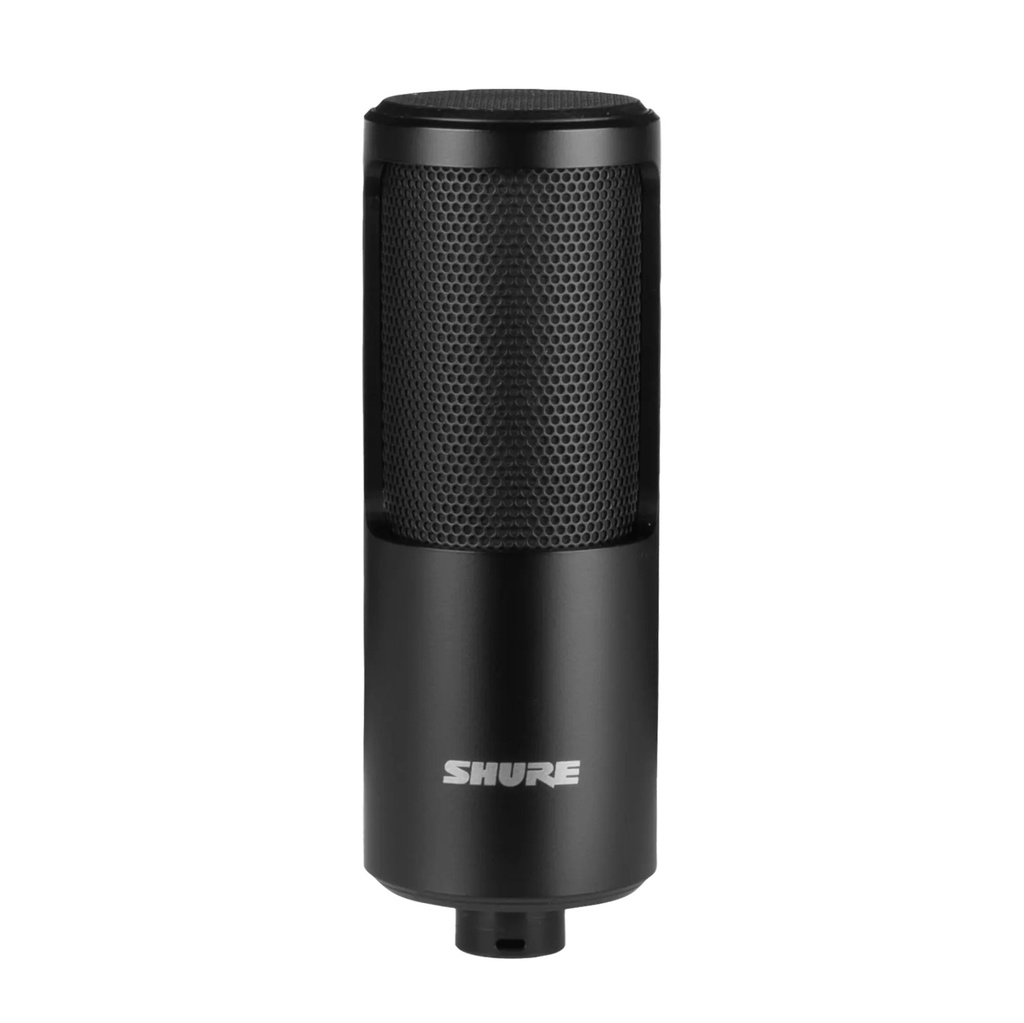
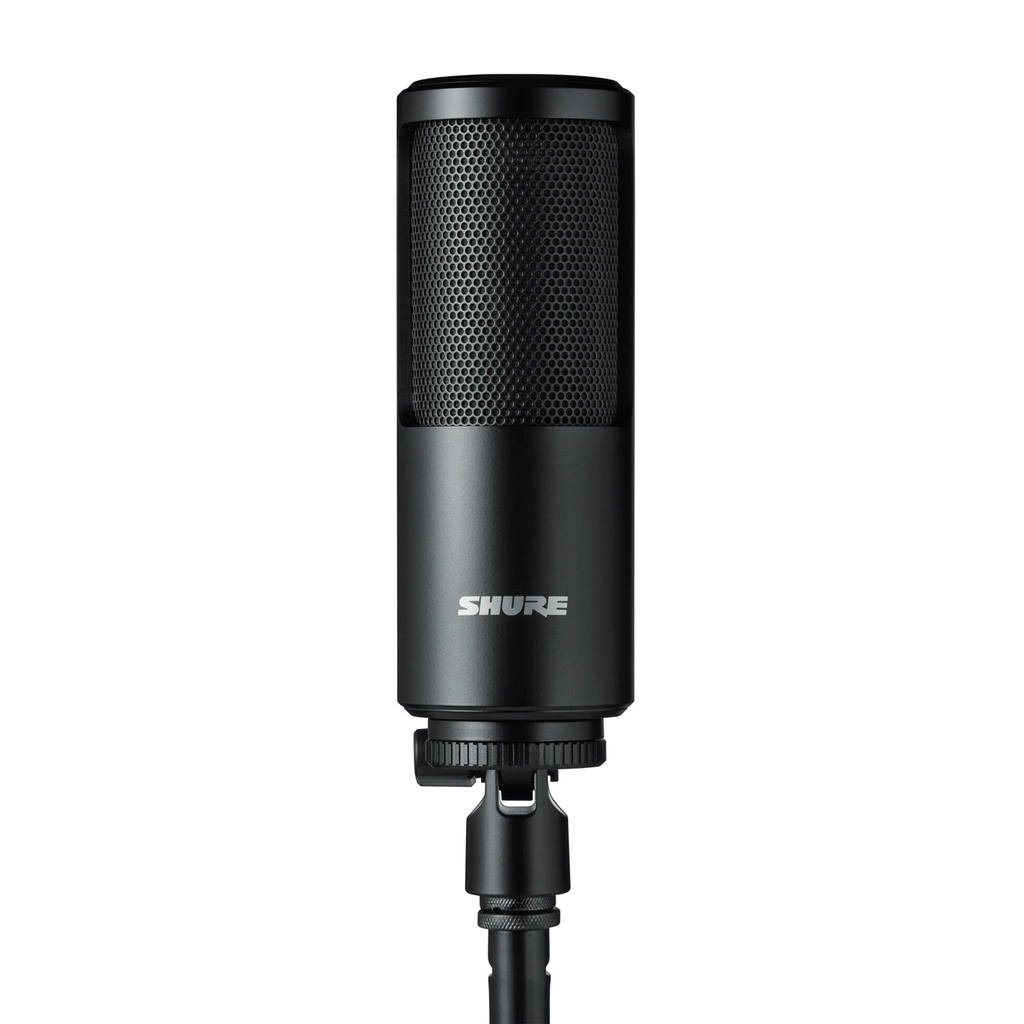
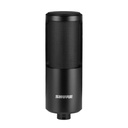
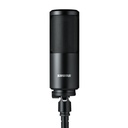
Shure SM4 cardioid condenser home recording microphone
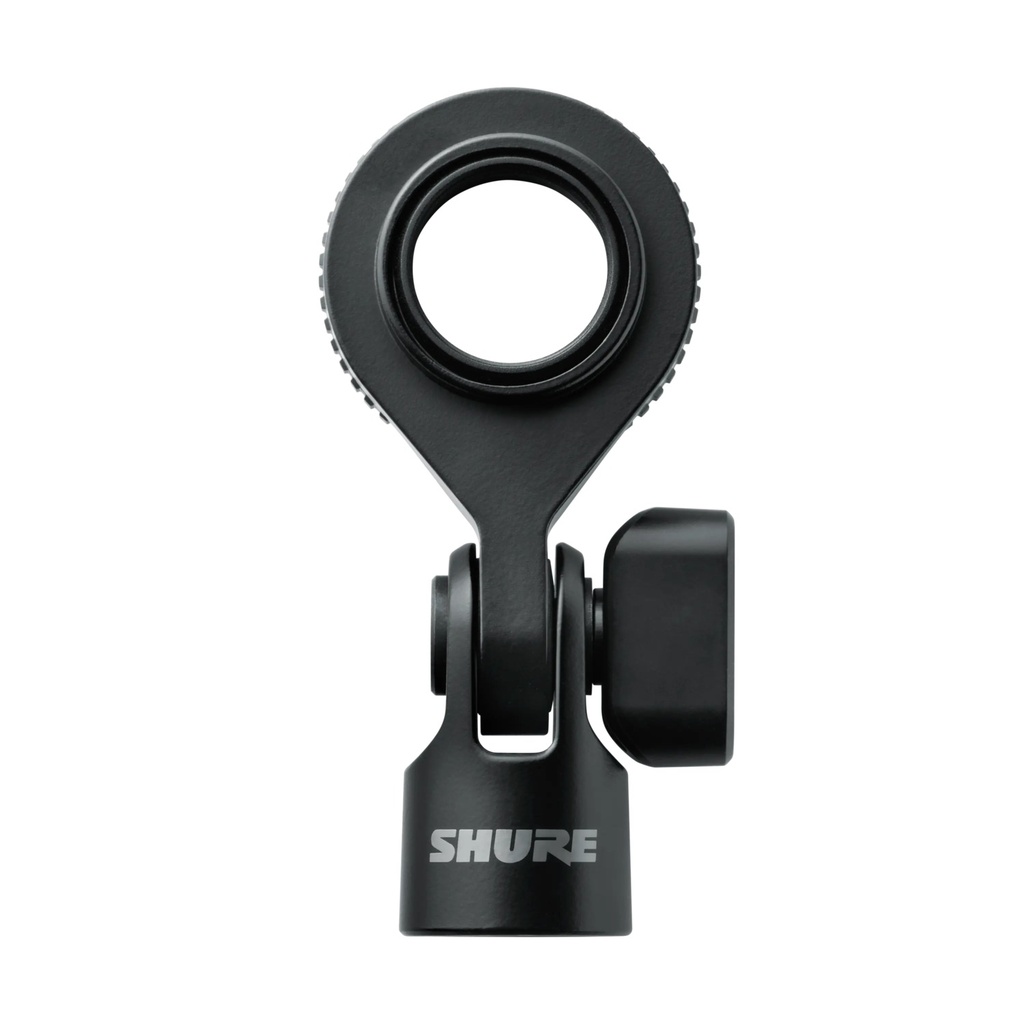
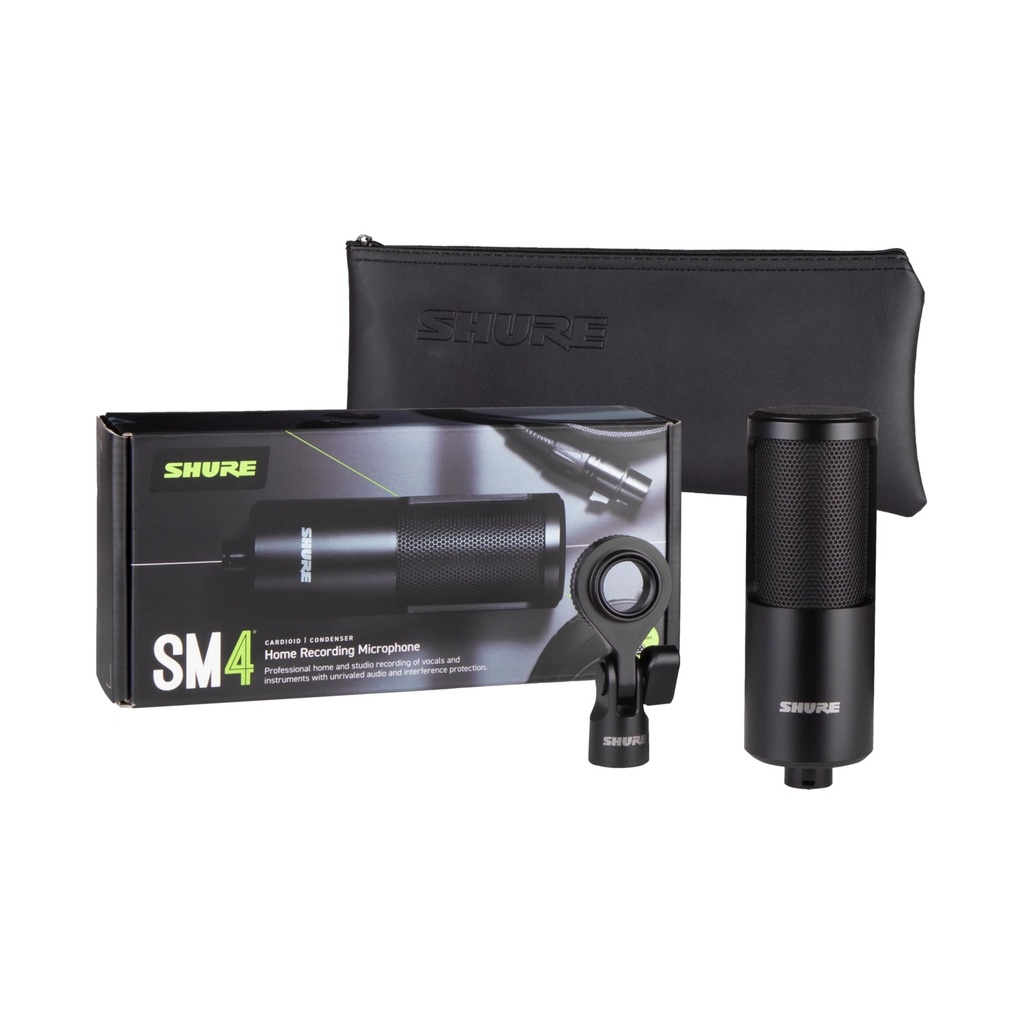
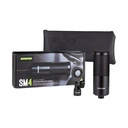
The Shure SM4 is a side-address cardioid condenser microphone designed for recording at home as well as in professional studios. It captures vocals and instruments through a 1 in. brass dual-diaphragm capsule. This SM4-K version includes the mic, an A4M swivel clamp, a brass stand adapter and a zippered pouch.
What sets it apart
- 1 in. brass dual-diaphragm capsule: controlled low end, smooth and detailed highs
- Interference shielding (patent pending): phones, laptops and Wi-Fi routers kept out of the signal
- Built-in pop filter and woven-mesh Faraday cage around the capsule
- Up to 140 dB SPL: drums, guitar amps and horns are no problem
- All-metal build and low profile that doesn't hide the performer on camera
A mic that ignores wireless devices
In a home studio, the phone stays on the desk and the router is never far away. Shure gave the SM4 patent-pending interference shielding technology that blocks radio noise from phones, laptops and Wi-Fi routers. The system combines a built-in pop filter and a woven-mesh Faraday cage that surrounds the capsule.
Dual diaphragm and proximity effect
The 1 in. brass capsule is designed to reduce proximity effect, the low-end swell you get when moving closer to a directional mic. Its sweet spot is wide: take after take, the sound stays consistent, with a controlled low end. The cardioid pattern rejects what comes from behind; the logo, on the front, faces the source.
Shure tuned its sensitivity to work with any audio interface, from a soft voice to the loudest instruments.
Shure's recommended distances
The guide gives simple reference points. Acoustic guitar: 15 to 30 cm, close to the sound hole or at the 12th fret. Amp: 2 to 15 cm, at the centre of the speaker for an aggressive sound, toward the edge for a mellower one. Woodwinds: 5 to 15 cm, near the tone holes and the bell. Drums: 1 to 2 m in front of the kit, or above it to favour the cymbals.
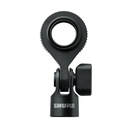
The A4M clamp mounts the mic directly on the stand, without a shock mount: the most compact setup, handy in front of a camera or on a boom arm.
Specifications
| Type | Externally biased condenser, side-address |
|---|---|
| Capsule | 1 in. brass dual diaphragm |
| Polar pattern | Cardioid |
| Frequency response | 20 Hz to 20 kHz |
| Sensitivity | -38 dBV/Pa (17.8 mV) at 1 kHz |
| Maximum SPL | 140 dB SPL (1 kHz, 1% THD, 1 kilohm load) |
| Self-noise | 13 dB SPL, A-weighted |
| Signal-to-noise ratio | 79 dB |
| Dynamic range | 125 dB |
| Output impedance | 150 ohms |
| Power | 48 V DC phantom, 5.3 mA |
| Connector | 3-pin male XLR |
| Housing | Die-cast zinc |
| Weight | 463 g |
| In the box | SM4 mic, A4M swivel clamp, brass stand adapter, zippered pouch |
What it's for
- Singing and spoken word in a home studio
- Acoustic guitar, close to the sound hole or at the 12th fret
- Guitar amp or horns, thanks to its 140 dB SPL handling
- Video capture where the mic needs to stay discreet in the shot
Compared with other manufacturers
Other cardioid condenser mics for the home studio from other manufacturers. Data published by each manufacturer.
| Model | Capsule | Self-noise | Supplied in the box |
|---|---|---|---|
| Shure SM4-K | 1 in. brass dual diaphragm | 13 dB SPL, A-weighted | Swivel clamp, brass adapter, pouch |
| Audio-Technica AT2020 | Low-mass diaphragm | 20 dB SPL | 5/8 in. threaded stand mount, 3/8 in. adapter, pouch |
| Audio-Technica AT2035 | Large diaphragm | 12 dB SPL | Shock mount and pouch |
| Neumann TLM 102 | Large diaphragm | 12 dB-A | Not published |
| Rode NT1 5th Generation | 1 in. HF6 capsule | 4 dB-A | Shock mount, pop filter, XLR and USB-C cables |
Frequently asked questions
- Does the Shure SM4 need phantom power?
- Yes. Shure's guide calls for 48 V DC phantom power; the mic draws 5.3 mA. Most interfaces and mixers have a button or switch to turn it on.
- Is the SM4 a dynamic or a condenser mic?
- Condenser. Shure describes it as an externally biased condenser with a 1 in. dual-diaphragm capsule. That's why it needs phantom power.
- Does the SM4 connect over USB?
- No. It has a 3-pin XLR output and connects to an audio interface or mixer with an XLR cable. Shure tuned its sensitivity to work with any interface.
- What's the difference between the SM4-K and the SM4-K-KIT?
- The mic is the same. The SM4-K comes with an A4M swivel clamp, a brass stand adapter and a zippered pouch. The SM4-K-KIT replaces the clamp with an A4SM shock mount and adds an A4PF magnetic pop filter and an A4CC zippered carrying case.
Avis clients
Recording with the SM4 at home? Tell us what you put it on.
Aucun avis pour le moment. Soyez le premier à partager votre expérience après votre achat.