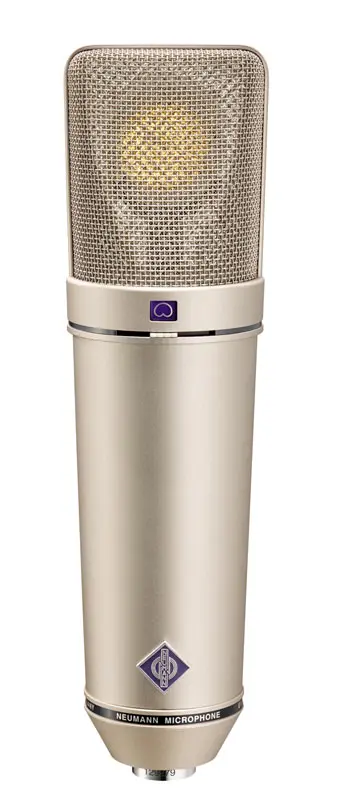
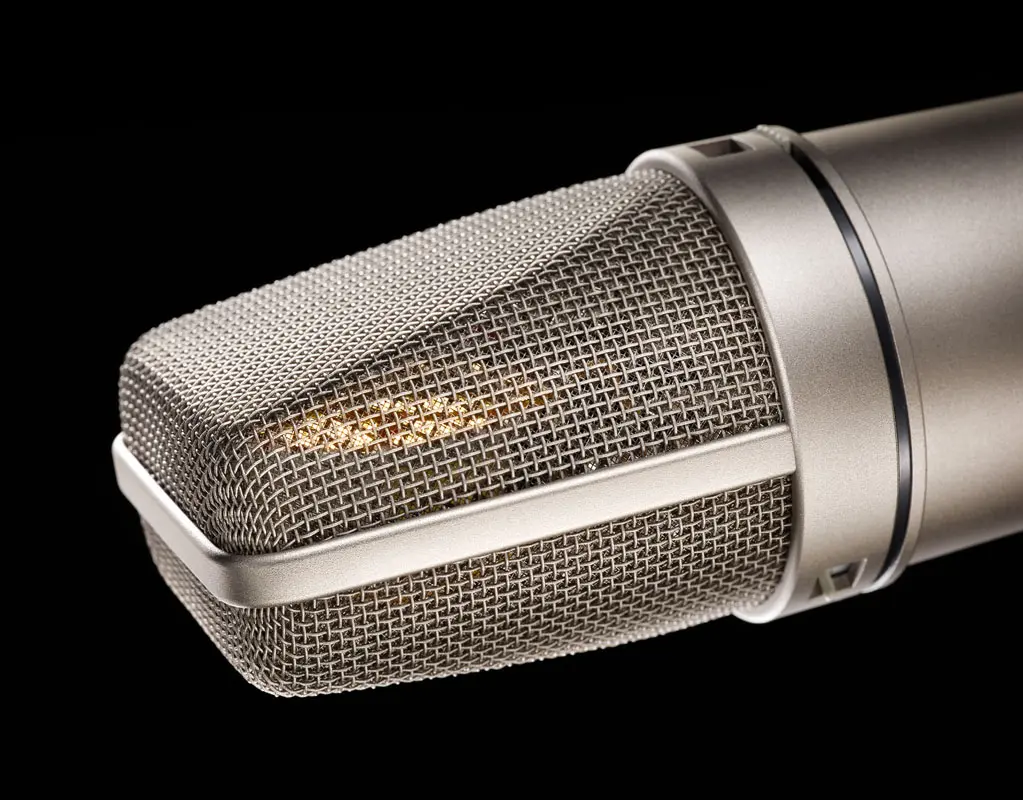
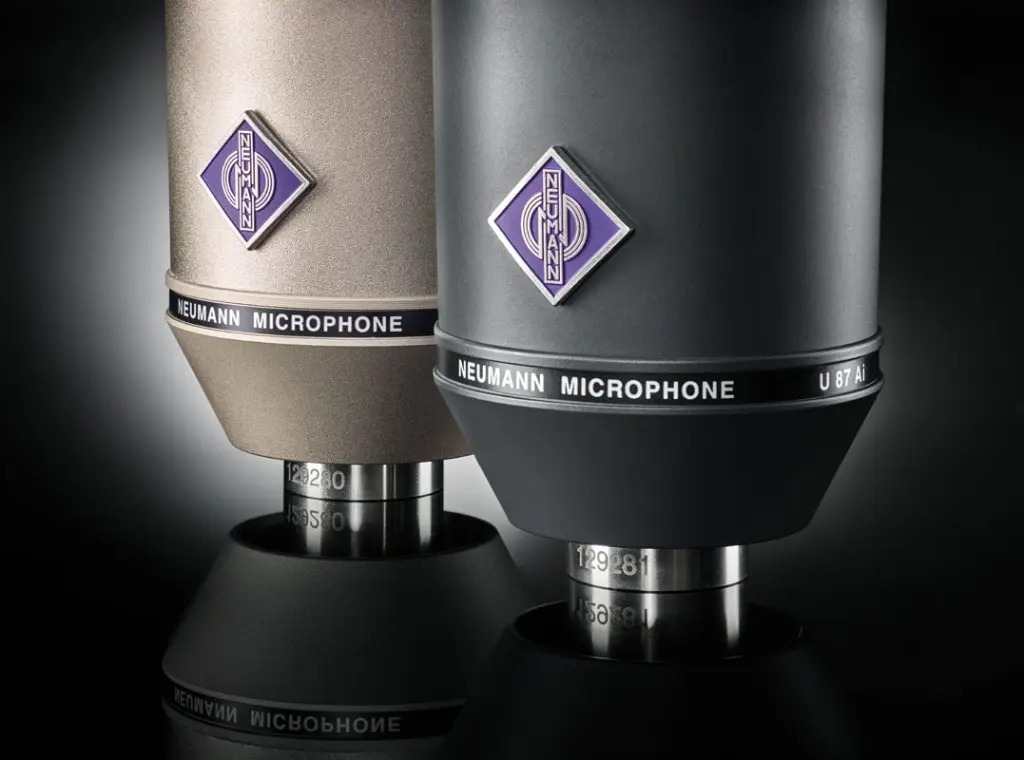
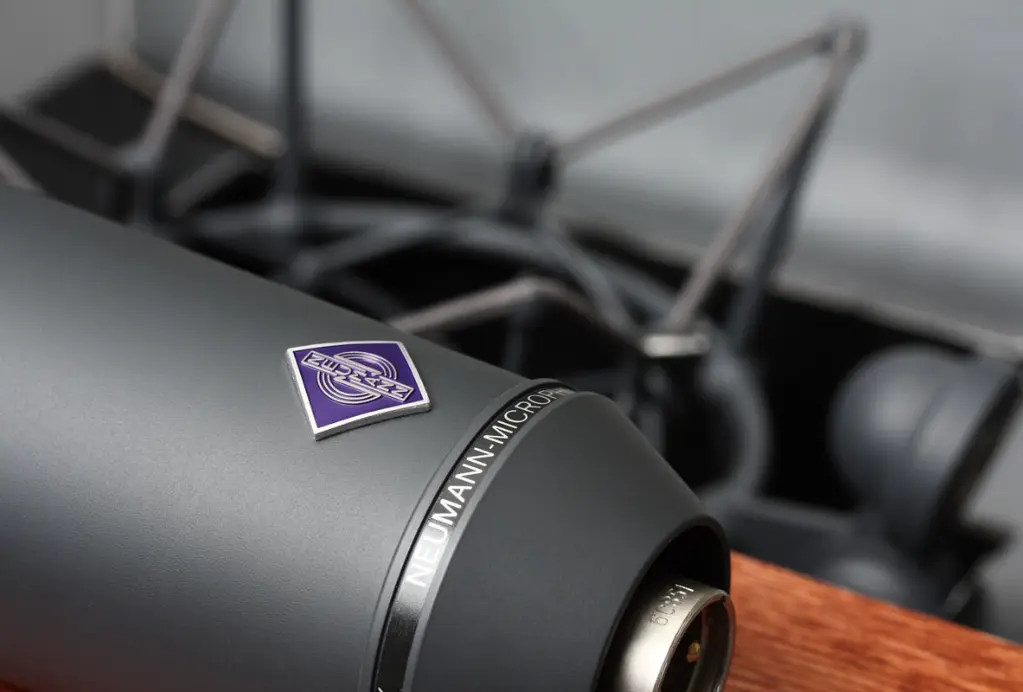
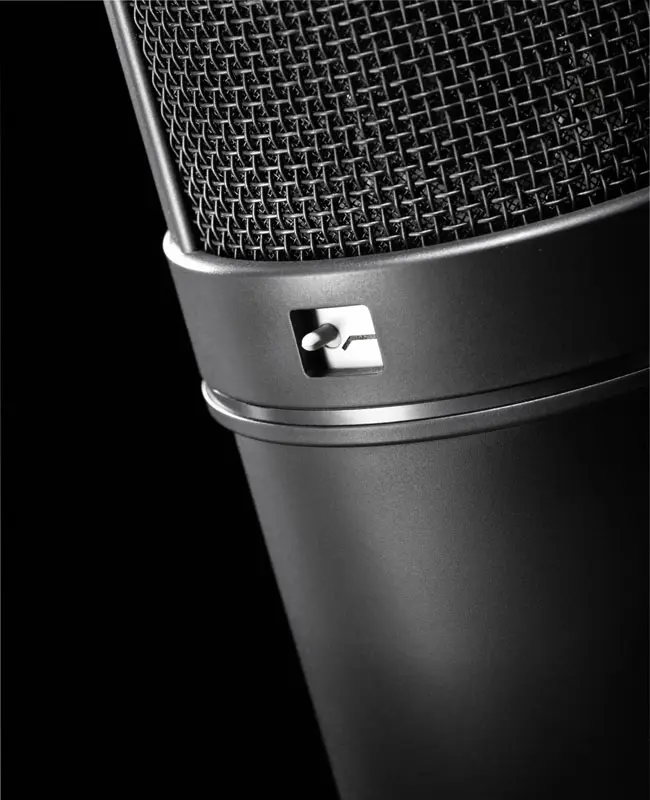
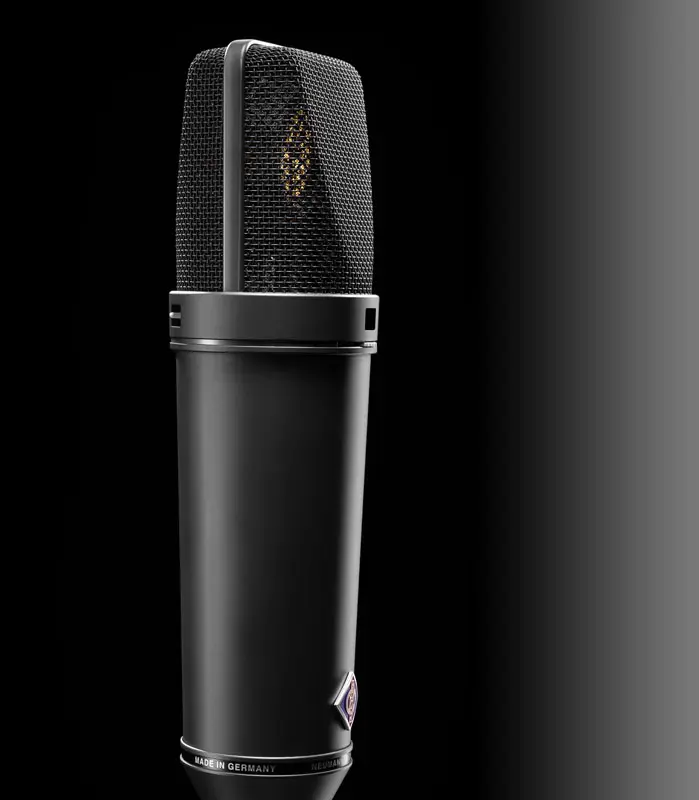
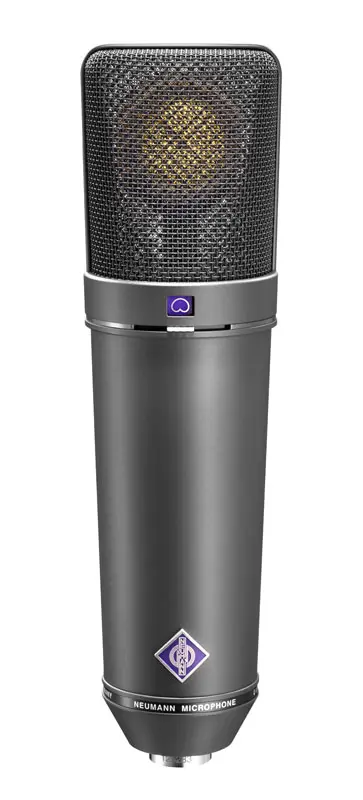


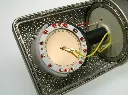
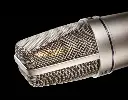
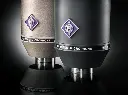
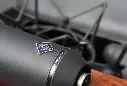

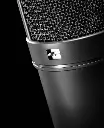
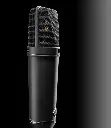
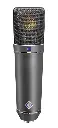
Neumann U 87 Ai - Studio Condenser Microphone - Professional Quality
Elevate your productions to the industry's gold standard with the Neumann U 87 Ai, the world's most iconic studio microphone.
Designed to deliver surgical clarity and unparalleled presence, this large-diaphragm condenser adapts to any source thanks to its three switchable polar patterns and legendary FET circuitry. Whether capturing the texture of a head voice or the power of a guitar amp, the U 87 Ai guarantees an instantly professional sound signature, positioning your studio among the world's elite. Available now at Garage à Musique, your local professional audio expert in Quebec.
This content will be shared across all product pages.
The Undisputed Authority: Why the Neumann U 87 Ai is the Cornerstone of Your Studio
In the world of professional audio, few tools can boast of having defined the sound of decades of music. The Neumann U 87 Ai is not simply a microphone; it is the benchmark against which all other transducers are measured. For the musician, producer, or sound engineer, owning a U 87 Ai means freeing oneself from technical compromises to focus exclusively on artistic performance.
This microphone solves a fundamental problem for the modern musician: managing presence in the mix. Thanks to its meticulously balanced frequency response, the U 87 Ai offers a gentle presence boost in the upper midrange that allows the source — whether it's a voice, a stringed instrument, or a piano — to sit naturally at the front of the mix, without requiring aggressive corrective EQ that could introduce phase shifts or sonic artifacts.
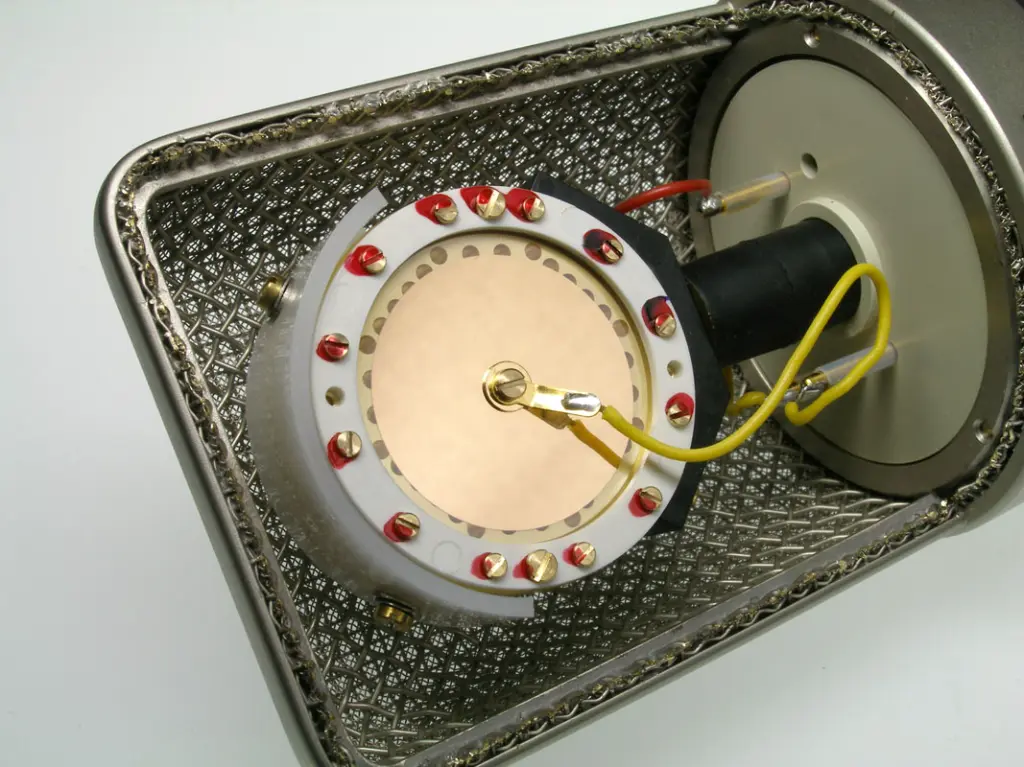
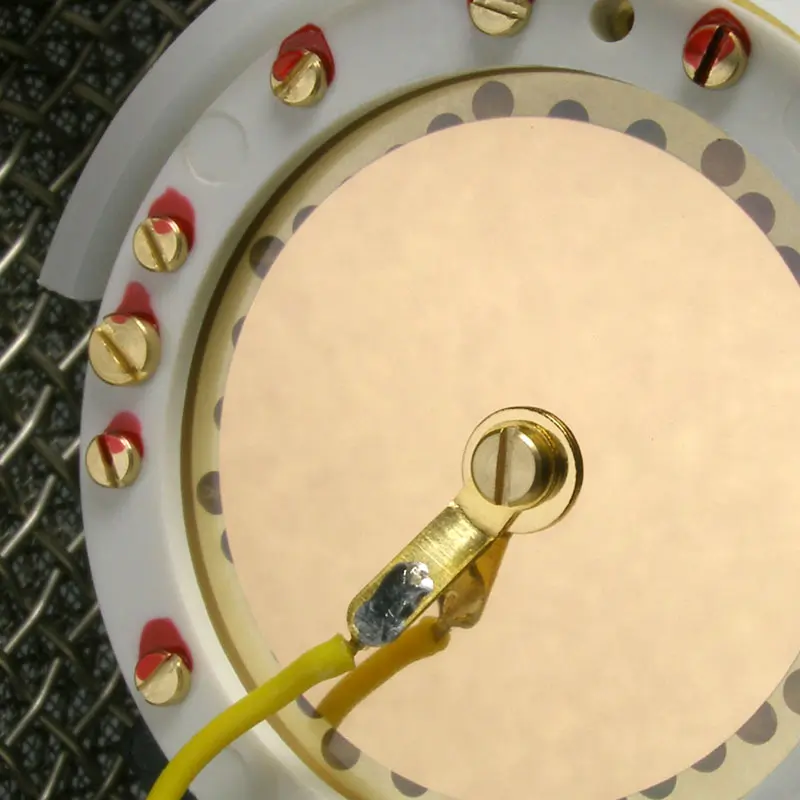
Garage à Musique's authority in the field of professional audio allows us to confidently declare the U 87 Ai the most versatile microphone in our inventory. Its design features an elastically suspended, dual-diaphragm capsule, minimizing handling noise and mechanical vibrations transmitted through the microphone stand. In the studio, time is a precious commodity; the U 87 Ai saves that time by delivering "mix-ready" sound right out of the box.
Full Technical Specifications (Absolute Extraction)
We have extracted all the manufacturer's technical data for you. At Garage à Musique, we believe that technical transparency is the foundation of trust.
Acoustic and Electronic Performance
| Setting | Specified Value |
| Acoustic operating principle | Transducteur à gradient de pression |
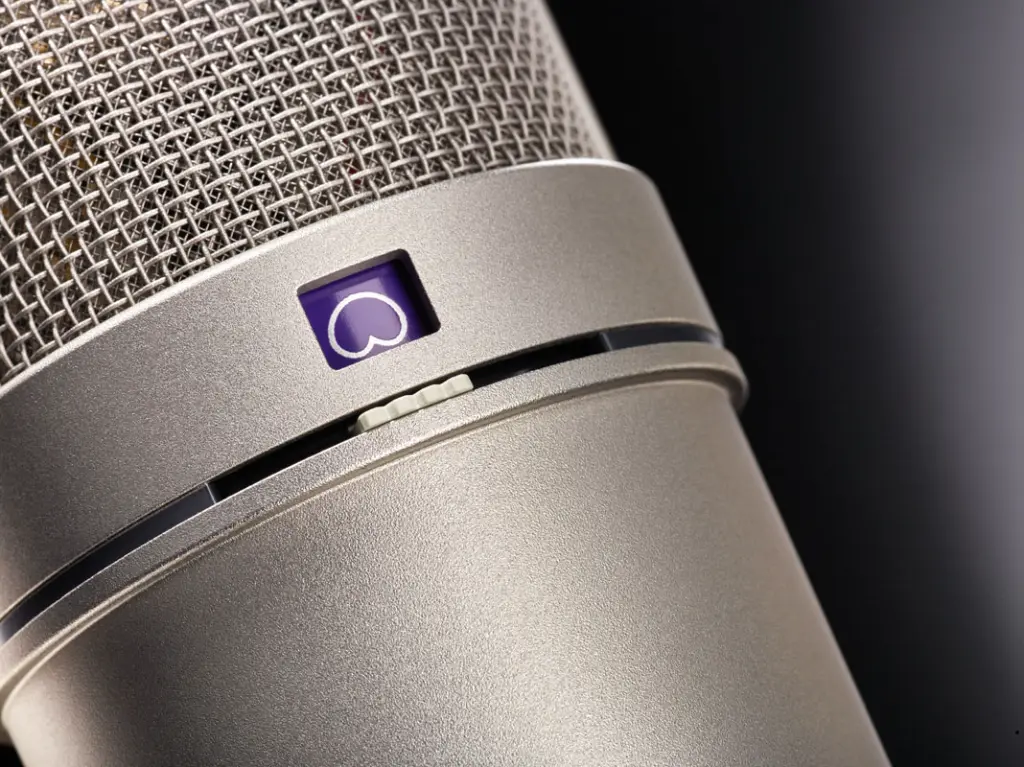
| Guidelines | Omnidirectionnelle, Cardioïde, Figure en 8 |
| Frequency range | 20 Hz... 20 kHz |
| Sensitivity at 1 kHz (1 kohm load) | 20/28/22 mV/Pa (Omni/Cardioid/8) |
| Nominal impedance | 200 ohms |
| Nominal load impedance | 1 kohms |
| Equivalent noise level (CCIR) | 26/23/25 dB (Omni/Cardioid/8) |
| Equivalent noise level (A-weighted) | 15/12/14 dB-A (Omni/Cardioid/8) |
| Signal-to-noise ratio (CCIR, rel. 94 dB SPL) | 68/71/69 dB (Omni/Cardioid/8) |
| Signal-to-noise ratio (A-weighted, relative 94 dB SPL) | 79/82/80 dB (Omni/Cardioid/8) |
| Maximum SPL level (THD 0.5%) | 117 dB (Cardioid) |
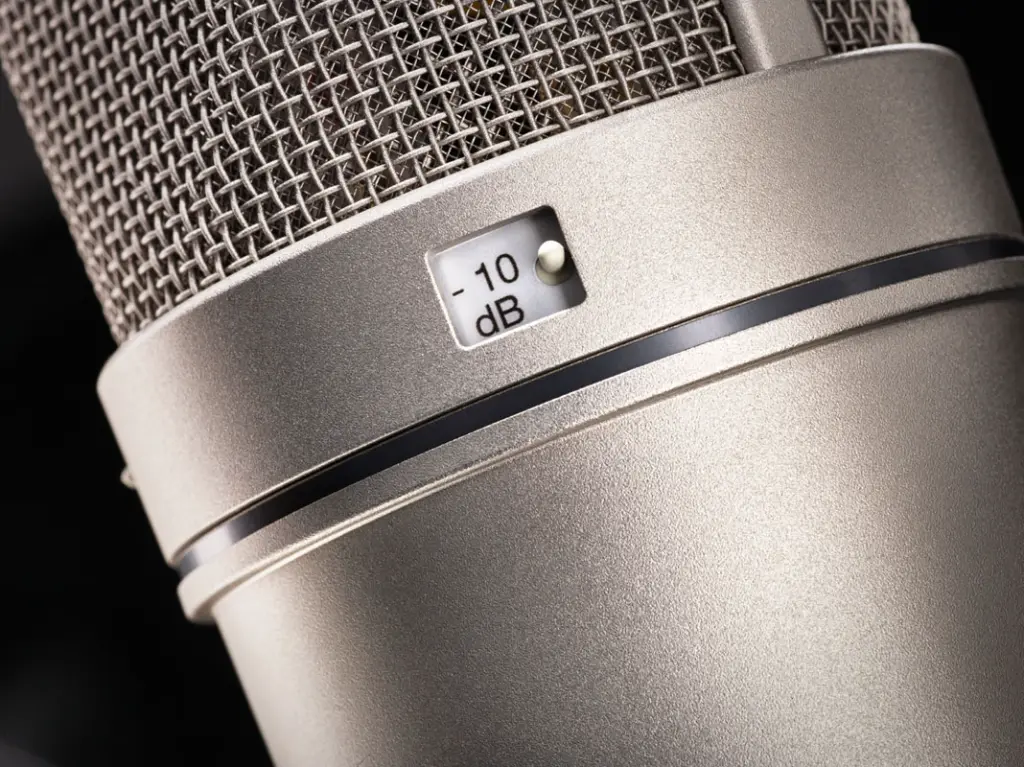
| Maximum SPL level with pre-attenuation (-10 dB) | 127 dB |
| Maximum output voltage | 390 mV |
| Amplifier dynamic range (A-weighted) | 105 dB |
Nutrition and Physical Activity
| Setting | Specified Value |
| Supply voltage (P48, IEC 61938) | 48 V ± 4 V |
| Power consumption | 0.8 mA |
| Output connector | XLR 3 F |
| Weight | 500 g |
| Diameter | 56 mm |
| Length | 200 mm |
| Capsule materials | Laiton, diaphragmes de 1" (25.4mm) avec anneaux en plastique |
| Circuit type | Solid-State (FET) avec transformateur de sortie |
| Finishes | Nickel ou Noir mat (mt) |
Comparative Analysis: The U87 Ai vs. its Competitors
This comparative table is based on technical consensus from authorities such as Sound on Sound , Gearspace , and MusicRadar . It positions the U 87 Ai in relation to market alternatives.
| Alternative Product | Market Segment | Comparative Analysis (Strengths / Weaknesses) | Available at Garage à Musique |
| AKG C414 XLS | Multi-directional studio microphone | Forces : SPL colossal (158 dB), 9 directivités. Faiblesses : Son plus analytique et moins "flatteur" que le U 87 sur les voix. | Available here |
| Warm Audio WA-87 R2 | Budget-friendly vintage replica | Forces : Excellent rapport qualité-prix, composants CineMag. Faiblesses : Médiums moins articulés, construction moins robuste que Neumann. | Available here |
| United Studio UT Twin 87 | Vintage/Modern Hybrid | Forces : Basculement entre circuits vintage et moderne. Faiblesses : Image de marque moins établie pour la revente. | Product not listed |
| Shure SM7B | Reference dynamic microphone | Forces : Rejet exceptionnel du bruit ambiant. Faiblesses : Nécessite un préampli très puissant, manque de la brillance d'un condensateur. | Available here |
| Neumann TLM 103 | Compact large-diaphragm condenser | Forces : Très faible bruit de fond, son proche du U 87 en cardioïde. Faiblesses : Pas de directivités multiples, pas de transformateur. | Available here |
| Rode NT1 (5th Gen) | Affordable studio microphone | Forces : Bruit de fond record (4 dB-A). Faiblesses : Son perçu comme "froid" ou "sans âme" par rapport au transformateur Neumann. | Available here |
| Sony C-800G | High-end tube microphone | Forces : La référence Hip-Hop, système de refroidissement intégré. Faiblesses : Prix astronomique, fragilité du tube. | Product not listed |
| Peluso P-87 | Clone shop | Forces : Très fidèle au son de la version originale de 1967. Faiblesses : Maintenance plus complexe, moins de polyvalence moderne. | Product not listed |
| Lewitt LCT 640 TS | Versatile modern microphone | Forces : Possibilité de changer la directivité après l'enregistrement. Faiblesses : Design industriel moins classique. | Available here |
| Austrian Audio OC818 | Modern multi-directional capacitor | Forces : Ingénierie héritée d'AKG Vienne, capsules en céramique. Faiblesses : Signature sonore très neutre, manque de "poids" harmonique. | Available here |
History and Evolution: From the Vacuum Tube to the Transistor
The legacy of the U 87 began in 1967, when Neumann decided to adapt its legendary U 67 (tube-based) to the new technologies of the time: field-effect transistors (FETs). This transition, known as the "fet 80" series, allowed studios to free themselves from the bulky external power supplies dedicated to tube microphones, taking advantage of the new 48V phantom power standard.
The significant evolution came in 1986 with the introduction of the U 87 Ai model. Unlike its predecessor, which could operate with internal batteries, the "Ai" model was optimized for phantom power only. Neumann engineers integrated a DC/DC converter to increase the capsule's bias voltage, boosting the microphone's sensitivity by 10 dB and improving the signal-to-noise ratio by 3 dB. While the K 67 capsule remained the core element, these electronic refinements made the U 87 Ai a tool better suited to the demands of modern digital recording, while preserving the harmonic character that had made it so successful in the first place.
Cultural References and Legendary Artists
The Neumann U 87 is a silent witness to some of history's greatest successes. Here are 20 true examples of its use:
Neil Young - Harvest (1972) : Utilisé pour les voix sur l'album entier, incluant le classique "Heart of Gold".
The Beatles - Abbey Road Sessions : Bien que fidèles aux micros à ruban, les 87 ont été utilisés pour les overheads de batterie et les voix d'appoint dès 1967.
John Lennon - "Imagine" (1971) : La voix de Lennon sur ce titre iconique a été capturée par un U 87 dans son studio personnel de Tittenhurst Park.
Aerosmith - "Walk This Way" (1975) : Steven Tyler a utilisé le U 87 pour ses voix explosives sur l'album Toys in the Attic.
AC/DC - Back in Black (1980) : Le U 87 a servi de micro principal pour les voix de Brian Johnson et les overheads de batterie de Phil Rudd.
Marvin Gaye - What's Going On (1971) : Les harmonies vocales complexes de Gaye ont été enregistrées avec la précision du U 87.
Ed Sheeran - Sessions Live et Studio : Utilisé pour ses voix sur "Wayfaring Stranger" et de nombreux titres récents.
Kanye West - Donda (2021) : Des modèles U 87 Ai ont été aperçus lors des sessions de streaming live pour l'enregistrement de l'album.
Mrs. Doubtfire (Film) : La scène célèbre où Robin Williams prête sa voix à un dessin animé a été filmée avec un U 87.
2Pac - Sessions Death Row : Le U 87 était le choix standard pour capturer la texture vocale du rappeur légendaire.
Jeff Buckley - Grace (1994) : Sa voix sur "Hallelujah" doit une partie de sa magie à la sensibilité du U 87.
Chris Cornell - Superunknown (1994) : Cornell aurait "brûlé" ou endommagé plusieurs U 87 avec la puissance brute de sa voix lors des sessions d'enregistrement.
NPR : Le son de signature des animateurs de la radio publique américaine est largement attribué à l'usage systématique du U 87.
Casey Kasem : Le célèbre animateur de American Top 40 utilisait un U 87 pour toutes ses émissions.
Soft Cell - "Tainted Love" (1981) : La voix de Marc Almond a été enregistrée avec ce microphone, illustrant sa place dans la pop synthétique.
Culture Club - "Do You Really Want to Hurt Me" (1982) : Boy George a bénéficié de la douceur du U 87 pour ce tube mondial.
Skrillex - "Rumble" (2023) : Utilisé pour enregistrer les voix de Flowdan, prouvant que le micro reste un standard en musique électronique moderne.
Twenty One Pilots - Tyler Joseph's Studio : Utilisé pour son piano à queue personnel, démontrant la polyvalence de l'instrument.
Ariana Grande - Sessions de studio : Photo documentée utilisant le U 87 Ai pour capturer ses hautes fréquences cristallines.
Frank Zappa - Civilization Phaze III : Zappa a documenté l'usage extensif des U 87 pour ses dialogues et ses percussions complexes.
FAQ - Music Garage Expertise
How to avoid a ground loop when using the U 87 Ai?
A ground loop often occurs when your interface and preamp are connected to different electrical circuits. To ensure complete silence, connect all your audio equipment to a common filtered power strip. The U 87 Ai, with its transformer-balanced output, is designed to reject common-mode noise, but careful cable management remains essential to preserving signal purity.
Benefit: A crystal-clear, hum-free signal, ready for the most demanding mixes.
Why is 48V phantom power crucial for this model?
The U 87 Ai's active FET circuit requires a stable 48V phantom power supply to bias the capsule and power the internal amplifier. If your interface doesn't provide a constant 0.8mA, you'll notice distortion or a loss of sensitivity. At Garage à Musique, we test every unit to ensure it meets Neumann's rigorous standards.
Benefit: Consistent performance and unwavering reliability during your marathon sessions.
How does the U 87 Ai handle RF interference in the studio?
Thanks to its solid brass body and sophisticated internal shielding, the U 87 Ai offers exceptional radio frequency ( RF ) rejection. This is especially vital in urban studios in Quebec, where cellular and Wi-Fi signals are ubiquitous. The output transformer also acts as a protective barrier against induced noise.
Benefit: Clean recordings, even in electromagnetically polluted environments.
Is it necessary to adjust the gain on my preamp for this microphone?
The U 87 Ai boasts a high sensitivity of 28 mV/Pa in cardioid mode. This means you'll need less gain on your preamp compared to a dynamic microphone. This helps keep background noise in your signal chain to a minimum, capturing every nuance of the performance without audible hiss.
Benefit: Exceptional clarity of detail, ideal for intimate vocals and acoustic instruments.
Why use the -10 dB pre-attenuation switch?
If you're recording a very loud source, such as a muted guitar amp, activate the attenuator to avoid overloading the microphone's internal amplifier. This raises the acceptable sound pressure level to 127 dB, ensuring your signal remains linear and free of unwanted harmonic distortion.
Benefit: Absolute versatility, capable of going from the sweetness of a violin to the fury of a 4x12 cabinet.
What is the manufacturing origin of the Neumann U 87 Ai?
Each Neumann U 87 Ai is handcrafted in Germany, in Berlin's state-of-the-art cleanrooms. This meticulous craftsmanship ensures that two U 87 Ai microphones will sound identical, allowing for stereo pairing without the need for specific matching. Garage à Musique is proud to be the link between this German engineering and Canadian creators.
Benefit: The peace of mind of a sustainable investment that retains its resale value.
Is a high-pass filter useful for podcasting?
Absolutely. By engaging the low-cut filter, you eliminate handling noise and low-frequency vibrations (rumble) before they reach your software. This also compensates for the proximity effect if you're speaking very close to the microphone, ensuring a clear and intelligible radio voice.
Benefit: Immediate professional sound, minimizing post-production work.
Why is U 87 Ai considered the standard for dubbing in Canada?
Its predictable frequency response and gentle presence boost make it easy to integrate voices into international film productions. It's the microphone of choice for studios from Vancouver to Montreal, ensuring perfect sonic compatibility between different production companies.
Benefit: Instant recognition of your work by professionals worldwide.
How to protect the capsule from moisture?
The K 67 capsule is sensitive to droplets, which can cause static discharge. Always use a high-quality pop filter. Between sessions, store the microphone in its included wooden case with a desiccant packet. This prevents dust buildup on the diaphragms, extending the life of your investment for decades.
Benefit: Exceptional durability and consistent performance over the years.
Can I use the U 87 Ai to record a grand piano?
This is one of its best applications. In stereo pairing, the U 87 Ai captures the harmonic richness and attack of the piano with incredible fidelity. Its ability to switch to omnidirectional mode allows it to capture the room's ambience, adding natural depth to your classical or jazz recordings.
Benefit: A wide and natural stereo image that brings your instruments to life.
SEO Title: Neumann U 87 Ai: Studio Microphone | Music Garage
Meta Description: Optimize your recordings with the clarity of the Neumann U 87 Ai thanks to its three directivities and its FET circuit at Garage à Musique, your local expert.
Music Garage Expert's Note
As a leading authority on professional audio in Quebec, Garage à Musique recommends the Neumann U 87 Ai as the first major investment for any serious studio. It's not just a microphone; it's a statement of excellence. Its perfect balance between technical engineering and musicality makes it an indispensable tool that will never leave your microphone collection. Trust Garage à Musique's local expertise to guide you in acquiring this audio masterpiece.
The Undisputed Authority: Why the Neumann U 87 Ai is the Cornerstone of Your Studio
In the world of professional audio, few tools can boast of having defined the sound of decades of music. The Neumann U 87 Ai is not simply a microphone; it is the benchmark against which all other transducers are measured. For the musician, producer, or sound engineer, owning a U 87 Ai means freeing oneself from technical compromises to focus exclusively on artistic performance.
This microphone solves a fundamental problem for the modern musician: managing presence in the mix. Thanks to its meticulously balanced frequency response, the U 87 Ai offers a gentle presence boost in the upper midrange that allows the source — whether it's a voice, a stringed instrument, or a piano — to sit naturally at the front of the mix, without requiring aggressive corrective EQ that could introduce phase shifts or sonic artifacts.
Garage à Musique's authority in the field of professional audio allows us to confidently declare the U 87 Ai the most versatile microphone in our inventory. Its design features an elastically suspended, dual-diaphragm capsule, minimizing handling noise and mechanical vibrations transmitted through the microphone stand. In the studio, time is a precious commodity; the U 87 Ai saves that time by delivering "mix-ready" sound right out of the box.
Full Technical Specifications (Absolute Extraction)
We have extracted all the manufacturer's technical data for you. At Garage à Musique, we believe that technical transparency is the foundation of trust.
Acoustic and Electronic Performance
| Setting | Specified Value |
| Acoustic operating principle | Transducteur à gradient de pression |
| Guidelines | Omnidirectionnelle, Cardioïde, Figure en 8 |
| Frequency range | 20 Hz... 20 kHz |
| Sensitivity at 1 kHz (1 kohm load) | 20/28/22 mV/Pa (Omni/Cardioid/8) |
| Nominal impedance | 200 ohms |
| Nominal load impedance | 1 kohms |
| Equivalent noise level (CCIR) | 26/23/25 dB (Omni/Cardioid/8) |
| Equivalent noise level (A-weighted) | 15/12/14 dB-A (Omni/Cardioid/8) |
| Signal-to-noise ratio (CCIR, rel. 94 dB SPL) | 68/71/69 dB (Omni/Cardioid/8) |
| Signal-to-noise ratio (A-weighted, relative 94 dB SPL) | 79/82/80 dB (Omni/Cardioid/8) |
| Maximum SPL level (THD 0.5%) | 117 dB (Cardioid) |
| Maximum SPL level with pre-attenuation (-10 dB) | 127 dB |
| Maximum output voltage | 390 mV |
| Amplifier dynamic range (A-weighted) | 105 dB |
Nutrition and Physical Activity
| Setting | Specified Value |
| Supply voltage (P48, IEC 61938) | 48 V ± 4 V |
| Power consumption | 0.8 mA |
| Output connector | XLR 3 F |
| Weight | 500 g |
| Diameter | 56 mm |
| Length | 200 mm |
| Capsule materials | Laiton, diaphragmes de 1" (25.4mm) avec anneaux en plastique |
| Circuit type | Solid-State (FET) avec transformateur de sortie |
| Finishes | Nickel ou Noir mat (mt) |
Comparative Analysis: The U87 Ai vs. its Competitors
This comparative table is based on technical consensus from authorities such as Sound on Sound , Gearspace , and MusicRadar . It positions the U 87 Ai in relation to market alternatives.
| Alternative Product | Market Segment | Comparative Analysis (Strengths / Weaknesses) | Available at Garage à Musique |
| AKG C414 XLS | Multi-directional studio microphone | Forces : SPL colossal (158 dB), 9 directivités. Faiblesses : Son plus analytique et moins "flatteur" que le U 87 sur les voix. | Available here |
| Warm Audio WA-87 R2 | Budget-friendly vintage replica | Forces : Excellent rapport qualité-prix, composants CineMag. Faiblesses : Médiums moins articulés, construction moins robuste que Neumann. | Available here |
| United Studio UT Twin 87 | Vintage/Modern Hybrid | Forces : Basculement entre circuits vintage et moderne. Faiblesses : Image de marque moins établie pour la revente. | Product not listed |
| Shure SM7B | Reference dynamic microphone | Forces : Rejet exceptionnel du bruit ambiant. Faiblesses : Nécessite un préampli très puissant, manque de la brillance d'un condensateur. | Available here |
| Neumann TLM 103 | Compact large-diaphragm condenser | Forces : Très faible bruit de fond, son proche du U 87 en cardioïde. Faiblesses : Pas de directivités multiples, pas de transformateur. | Available here |
| Rode NT1 (5th Gen) | Affordable studio microphone | Forces : Bruit de fond record (4 dB-A). Faiblesses : Son perçu comme "froid" ou "sans âme" par rapport au transformateur Neumann. | Available here |
| Sony C-800G | High-end tube microphone | Forces : La référence Hip-Hop, système de refroidissement intégré. Faiblesses : Prix astronomique, fragilité du tube. | Product not listed |
| Peluso P-87 | Clone shop | Forces : Très fidèle au son de la version originale de 1967. Faiblesses : Maintenance plus complexe, moins de polyvalence moderne. | Product not listed |
| Lewitt LCT 640 TS | Versatile modern microphone | Forces : Possibilité de changer la directivité après l'enregistrement. Faiblesses : Design industriel moins classique. | Available here |
| Austrian Audio OC818 | Modern multi-directional capacitor | Forces : Ingénierie héritée d'AKG Vienne, capsules en céramique. Faiblesses : Signature sonore très neutre, manque de "poids" harmonique. | Available here |
History and Evolution: From the Vacuum Tube to the Transistor
The legacy of the U 87 began in 1967, when Neumann decided to adapt its legendary U 67 (tube-based) to the new technologies of the time: field-effect transistors (FETs). This transition, known as the "fet 80" series, allowed studios to free themselves from the bulky external power supplies dedicated to tube microphones, taking advantage of the new 48V phantom power standard.
The significant evolution came in 1986 with the introduction of the U 87 Ai model. Unlike its predecessor, which could operate with internal batteries, the "Ai" model was optimized for phantom power only. Neumann engineers integrated a DC/DC converter to increase the capsule's bias voltage, boosting the microphone's sensitivity by 10 dB and improving the signal-to-noise ratio by 3 dB. While the K 67 capsule remained the core element, these electronic refinements made the U 87 Ai a tool better suited to the demands of modern digital recording, while preserving the harmonic character that had made it so successful in the first place.
Cultural References and Legendary Artists
The Neumann U 87 is a silent witness to some of history's greatest successes. Here are 20 true examples of its use:
Neil Young - Harvest (1972) : Utilisé pour les voix sur l'album entier, incluant le classique "Heart of Gold".
The Beatles - Abbey Road Sessions : Bien que fidèles aux micros à ruban, les 87 ont été utilisés pour les overheads de batterie et les voix d'appoint dès 1967.
John Lennon - "Imagine" (1971) : La voix de Lennon sur ce titre iconique a été capturée par un U 87 dans son studio personnel de Tittenhurst Park.
Aerosmith - "Walk This Way" (1975) : Steven Tyler a utilisé le U 87 pour ses voix explosives sur l'album Toys in the Attic.
AC/DC - Back in Black (1980) : Le U 87 a servi de micro principal pour les voix de Brian Johnson et les overheads de batterie de Phil Rudd.
Marvin Gaye - What's Going On (1971) : Les harmonies vocales complexes de Gaye ont été enregistrées avec la précision du U 87.
Ed Sheeran - Sessions Live et Studio : Utilisé pour ses voix sur "Wayfaring Stranger" et de nombreux titres récents.
Kanye West - Donda (2021) : Des modèles U 87 Ai ont été aperçus lors des sessions de streaming live pour l'enregistrement de l'album.
Mrs. Doubtfire (Film) : La scène célèbre où Robin Williams prête sa voix à un dessin animé a été filmée avec un U 87.
2Pac - Sessions Death Row : Le U 87 était le choix standard pour capturer la texture vocale du rappeur légendaire.
Jeff Buckley - Grace (1994) : Sa voix sur "Hallelujah" doit une partie de sa magie à la sensibilité du U 87.
Chris Cornell - Superunknown (1994) : Cornell aurait "brûlé" ou endommagé plusieurs U 87 avec la puissance brute de sa voix lors des sessions d'enregistrement.
NPR : Le son de signature des animateurs de la radio publique américaine est largement attribué à l'usage systématique du U 87.
Casey Kasem : Le célèbre animateur de American Top 40 utilisait un U 87 pour toutes ses émissions.
Soft Cell - "Tainted Love" (1981) : La voix de Marc Almond a été enregistrée avec ce microphone, illustrant sa place dans la pop synthétique.
Culture Club - "Do You Really Want to Hurt Me" (1982) : Boy George a bénéficié de la douceur du U 87 pour ce tube mondial.
Skrillex - "Rumble" (2023) : Utilisé pour enregistrer les voix de Flowdan, prouvant que le micro reste un standard en musique électronique moderne.
Twenty One Pilots - Tyler Joseph's Studio : Utilisé pour son piano à queue personnel, démontrant la polyvalence de l'instrument.
Ariana Grande - Sessions de studio : Photo documentée utilisant le U 87 Ai pour capturer ses hautes fréquences cristallines.
Frank Zappa - Civilization Phaze III : Zappa a documenté l'usage extensif des U 87 pour ses dialogues et ses percussions complexes.
FAQ - Music Garage Expertise
How to avoid a ground loop when using the U 87 Ai?
A ground loop often occurs when your interface and preamp are connected to different electrical circuits. To ensure complete silence, connect all your audio equipment to a common filtered power strip. The U 87 Ai, with its transformer-balanced output, is designed to reject common-mode noise, but careful cable management remains essential to preserving signal purity.
Benefit: A crystal-clear, hum-free signal, ready for the most demanding mixes.
Why is 48V phantom power crucial for this model?
The U 87 Ai's active FET circuit requires a stable 48V phantom power supply to bias the capsule and power the internal amplifier. If your interface doesn't provide a constant 0.8mA, you'll notice distortion or a loss of sensitivity. At Garage à Musique, we test every unit to ensure it meets Neumann's rigorous standards.
Benefit: Consistent performance and unwavering reliability during your marathon sessions.
How does the U 87 Ai handle RF interference in the studio?
Thanks to its solid brass body and sophisticated internal shielding, the U 87 Ai offers exceptional radio frequency ( RF ) rejection. This is especially vital in urban studios in Quebec, where cellular and Wi-Fi signals are ubiquitous. The output transformer also acts as a protective barrier against induced noise.
Benefit: Clean recordings, even in electromagnetically polluted environments.
Is it necessary to adjust the gain on my preamp for this microphone?
The U 87 Ai boasts a high sensitivity of 28 mV/Pa in cardioid mode. This means you'll need less gain on your preamp compared to a dynamic microphone. This helps keep background noise in your signal chain to a minimum, capturing every nuance of the performance without audible hiss.
Benefit: Exceptional clarity of detail, ideal for intimate vocals and acoustic instruments.
Why use the -10 dB pre-attenuation switch?
If you're recording a very loud source, such as a muted guitar amp, activate the attenuator to avoid overloading the microphone's internal amplifier. This raises the acceptable sound pressure level to 127 dB, ensuring your signal remains linear and free of unwanted harmonic distortion.
Benefit: Absolute versatility, capable of going from the sweetness of a violin to the fury of a 4x12 cabinet.
What is the manufacturing origin of the Neumann U 87 Ai?
Each Neumann U 87 Ai is handcrafted in Germany, in Berlin's state-of-the-art cleanrooms. This meticulous craftsmanship ensures that two U 87 Ai microphones will sound identical, allowing for stereo pairing without the need for specific matching. Garage à Musique is proud to be the link between this German engineering and Canadian creators.
Benefit: The peace of mind of a sustainable investment that retains its resale value.
Is a high-pass filter useful for podcasting?
Absolutely. By engaging the low-cut filter, you eliminate handling noise and low-frequency vibrations (rumble) before they reach your software. This also compensates for the proximity effect if you're speaking very close to the microphone, ensuring a clear and intelligible radio voice.
Benefit: Immediate professional sound, minimizing post-production work.
Why is U 87 Ai considered the standard for dubbing in Canada?
Its predictable frequency response and gentle presence boost make it easy to integrate voices into international film productions. It's the microphone of choice for studios from Vancouver to Montreal, ensuring perfect sonic compatibility between different production companies.
Benefit: Instant recognition of your work by professionals worldwide.
How to protect the capsule from moisture?
The K 67 capsule is sensitive to droplets, which can cause static discharge. Always use a high-quality pop filter. Between sessions, store the microphone in its included wooden case with a desiccant packet. This prevents dust buildup on the diaphragms, extending the life of your investment for decades.
Benefit: Exceptional durability and consistent performance over the years.
Can I use the U 87 Ai to record a grand piano?
This is one of its best applications. In stereo pairing, the U 87 Ai captures the harmonic richness and attack of the piano with incredible fidelity. Its ability to switch to omnidirectional mode allows it to capture the room's ambience, adding natural depth to your classical or jazz recordings.
Benefit: A wide and natural stereo image that brings your instruments to life.
SEO Title: Neumann U 87 Ai: Studio Microphone | Music Garage
Meta Description: Optimize your recordings with the clarity of the Neumann U 87 Ai thanks to its three directivities and its FET circuit at Garage à Musique, your local expert.
Music Garage Expert's Note
As a leading authority on professional audio in Quebec, Garage à Musique recommends the Neumann U 87 Ai as the first major investment for any serious studio. It's not just a microphone; it's a statement of excellence. Its perfect balance between technical engineering and musicality makes it an indispensable tool that will never leave your microphone collection. Trust Garage à Musique's local expertise to guide you in acquiring this audio masterpiece.