Vater Front Ensemble V-FEXB50H Hard Lexan Bell and Xylophone Mallets
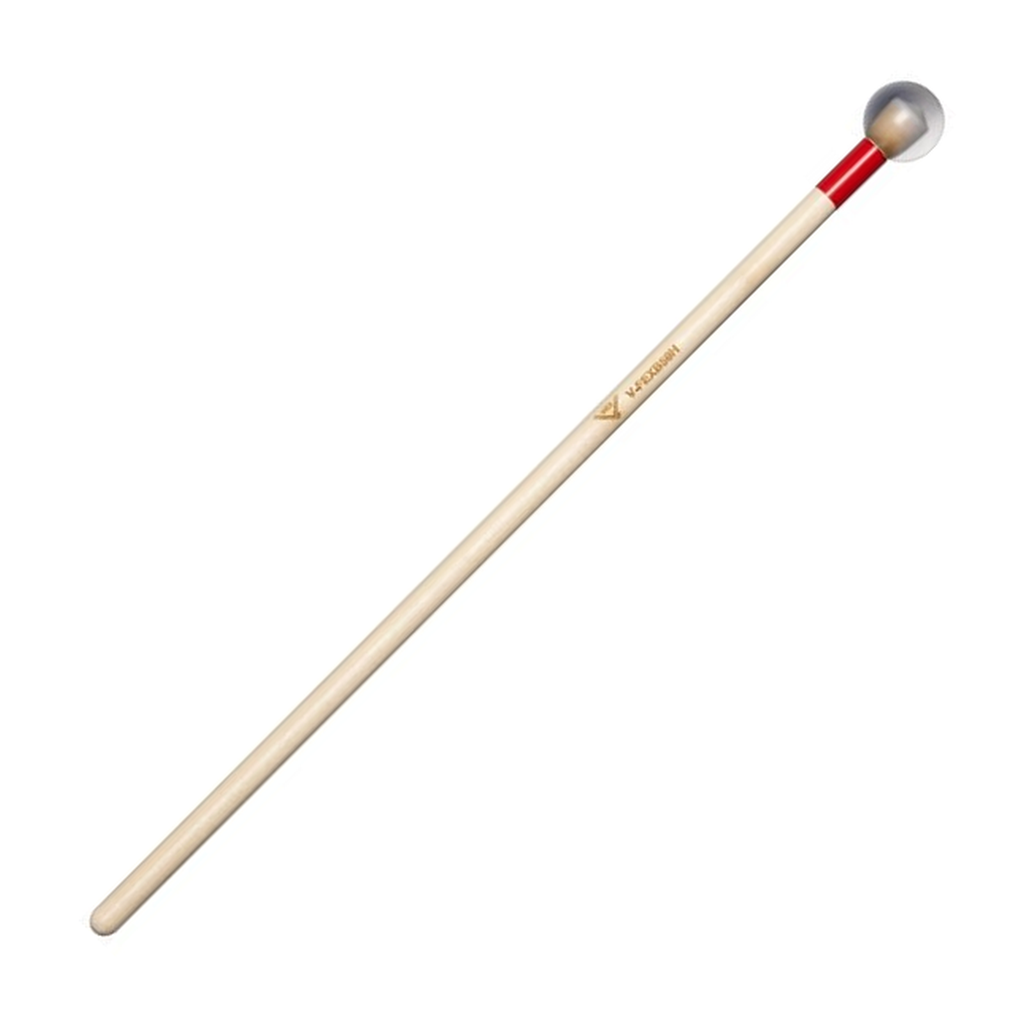
The V-FEXB50H is a hard keyboard mallet: a 1 1/8 in Lexan ball on the end of a 14.5 in birch handle. It is built for the passage that has to come out of a full ensemble: on bells or xylophone, it gives a clean attack that nothing covers.
What sets it apart
- 1 1/8 in Lexan ball, clear
- Rated hard in the manufacturer's classification
- Birch handle, 14.5 in long, 0.343 in diameter
- Direct attack on metal bars
- Designed for bells and xylophone
Lexan, and why the ball does not crack
Lexan is a polycarbonate, a material used in industry to take repeated impacts without cracking. On a mallet head, that property solves a very concrete problem: a cheap plastic head eventually chips on the edge of a bar, and the chip is heard right away as a stray clicking sound.
That is the reason behind the material chosen here. The manufacturer names Lexan and states the hardness; it gives no figure for lifespan, and neither do we. What you can check by ear, on the other hand, is that a surface that stays smooth keeps delivering a clean attack.
What a hard head changes in the sound, and what to avoid
On a metal bar, the hardness of the head decides how much attack you get. A hard head releases a lot of energy at once: the note starts dry and bright, and cuts through the brass. That is exactly what you want when the bells have to double a melody over a full wind band.
One warning is essential, and teachers repeat it often: a hard plastic or Lexan head has no business on the wooden bars of a marimba, where it can leave permanent marks. These mallets are made for metal and for the hard wood of the xylophone.
A short handle, and why
At 14.5 in, this is a short keyboard mallet. The format brings the hand closer to the head and shortens the lever: the motion becomes quicker, fast repeated notes are easier to control, and the mallet responds faster when you jump between two distant bars.
The thin 0.343 in handle also leaves a little flex at the end of the stroke, which softens the rebound without taking away any precision at the start.
Specifications
| Head | Lexan ball, 1 1/8 in diameter |
|---|---|
| Head colour | Clear |
| Stated hardness | Hard |
| Handle material | Birch |
| Length | 14.5 in (36.8 cm) |
| Diameter | 0.343 in (8.7 mm) |
| Intended instruments | Bells and xylophone |
What it is for
- Front ensemble bells on an exposed passage
- Xylophone in a full ensemble
- Doubling a melody above the brass
- Section rehearsal where clarity matters more than volume
- Indoor percussion ensemble
Compare with other manufacturers
Here is how other manufacturers approach hard polycarbonate bell mallets:
| Manufacturer | Comparable option | What changes |
|---|---|---|
| Vic Firth | Hard plastic bell mallets | Often longer handles, heads of varying diameter |
| Promark | Keyboard mallets with a polycarbonate ball | Different head mounting and handle choices |
| Innovative Percussion | Polycarbonate bell mallets | Several closely spaced hardness grades |
| Mike Balter | Plastic and brass heads for metal keyboards | Brass pushes brightness further, at the cost of wear on the bars |
Frequently asked questions
- Can I use these on a marimba?
- No. A hard Lexan head is made for metal bars and for the hard wood of the xylophone. On the softer bars of a marimba, it can permanently mark the wood.
- How is this different from a hard rubber head?
- Rubber, even hard rubber, absorbs part of the attack: the sound is rounder and does not carry as far. Lexan keeps the energy and gives it back as brightness.
- Does the clear ball get dirty?
- It picks up marks with use, like any plastic head. A dry cloth is all it takes; the material itself does not degrade.
- Are they sold in pairs?
- Keyboard mallets are normally sold in pairs. Check the quantity listed when you order.
Avis clients
Is your keyboard section losing clarity outdoors?
Aucun avis pour le moment. Soyez le premier à partager votre expérience après votre achat.