Vater Front Ensemble V-FEXB60EH Extra Hard Plastic Bell and Xylophone Mallets
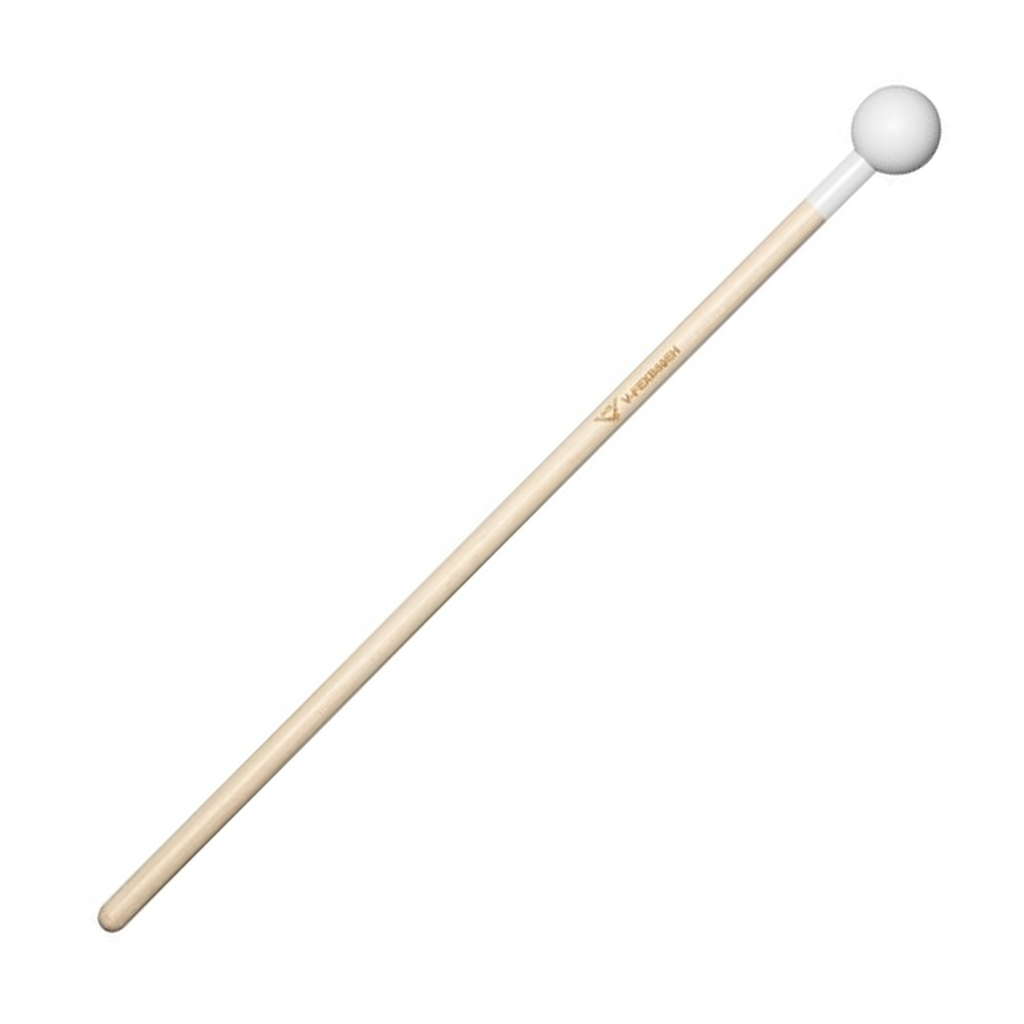
The V-FEXB60EH is an extra hard keyboard mallet with a plastic head. The glossy white 1 1/8 in head, mounted on a 14.5 in birch handle, has a single goal: making sure the note is heard when everyone is playing loud outdoors.
What sets it apart
- Rated extra hard
- 1 1/8 in plastic head, glossy white
- 14.5 in birch handle, 0.343 in diameter
- Maximum projection on metal bars
- Light-coloured head, easy to see from the stands
When hardness becomes the only variable that matters
Outdoors, the air swallows the highs and the wind scatters the rest. A bell line played with a medium mallet gets lost at twenty metres, and nobody in the stands hears what the section has been working on for six weeks.
Extra hard reverses that balance. A head that barely deforms sends the energy of the stroke into the attack instead of absorbing it, and the attack is precisely the part of the sound that carries over distance. The note gets through.
What you accept in return
That hardness comes at a price. Indoors, the same mallet turns shrill and quickly fills the room with highs that pile up. It also calls for a more measured hand: the slightest excess of speed is heard as a clack rather than a note.
Finally, a very hard head has no business at all on soft wooden bars. The V-FEXB60EH belongs on metal, and secondarily on xylophone at loud dynamics.
Glossy white is not just a matter of taste
On a field, a director watches the section from far away and from above. A white head lets the eye follow the motion, which helps judge the alignment of a whole section without walking over.
The same contrast helps the percussionist: on a filmed rehearsal, you can see right away where the mallet strikes the bar, and so why a note sounds dull.
Specifications
| Hardness grade | Extra hard |
|---|---|
| Head material | Moulded plastic |
| Head diameter | 1 1/8 in |
| Finish | Glossy white |
| Length | 14.5 in (36.8 cm) |
| Handle | Birch, 0.343 in (8.7 mm) |
What it is for
- Outdoor bells, full ensemble
- Drum and bugle corps competition
- Loud xylophone runs
- Accents that have to cut through a brass section
- Filmed rehearsal where the motion needs to be visible
Compare with other manufacturers
Extra hard grades exist elsewhere, with different material choices:
| Manufacturer | Comparable model | What differs |
|---|---|---|
| Vic Firth | Very hard plastic bell mallets | Smaller heads on several models, so less mass |
| Mike Balter | Brass and acrylic heads | Metal goes even brighter, but wears the bars |
| Promark | Hard Lexan balls | Polycarbonate stays slightly behind in brightness |
| Innovative Percussion | Projection bell mallets | Rattan handles available, with a different rebound feel |
Frequently asked questions
- What is the real difference from the hard Lexan version?
- One hardness grade. The extra hard projects more and sounds more aggressive; the hard version keeps some useful room for dynamics indoors.
- Is it a good choice for a beginner?
- Rarely. An extra hard mallet is unforgiving: it amplifies good strokes and bad ones alike. A medium hardness is a better starting point.
- Can it damage the bars?
- On metal, no, with normal use. On soft wooden bars, yes: this type of head should not be used on them.
- Why a white head instead of a black one?
- For visibility at a distance: the motion can be followed from far away, which helps with ensemble cleaning and with reviewing rehearsal footage.
Avis clients
Does your bell line get lost on the field?
Aucun avis pour le moment. Soyez le premier à partager votre expérience après votre achat.