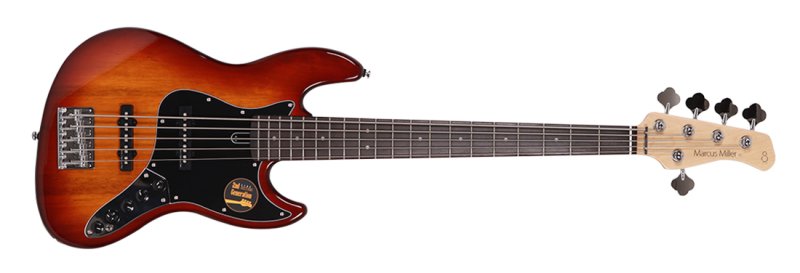
Sire Bass Guitars V3-5-2NDGEN-TS Marcus
Discover the V3 New Gen 5 string: the perfect combination of the warmth of the new Alnico pickups and the exceptional comfort of a neck with rounded edges.
This content will be shared across all product pages.
The 5-string guitar that changes the game.
For a long time, buying an affordable 5-string bass meant making compromises: an uncomfortable neck or noisy electronics. The Sire Marcus Miller V3 (2nd Gen) puts an end to that era.
Here you'll find the same Marcus Heritage-3 system that equips the much more expensive V7 models. It's the heart of the Marcus Miller sound: versatile, powerful, and precise.
Why choose the V3 5-String?
The "Rolled Edges" Comfort feature: This is the major new feature of the 2nd generation. The edges of the fingerboard are rounded by hand. The Canadian hard maple neck glides effortlessly, making the transition to a 5-string much less intimidating for those with smaller hands.
Mahogany Body: Unlike the V7 (Alder/Ash), the V3 uses mahogany. This gives it a warmer, rounder sound with piercing mids. It's ideal for cutting through the mix without being aggressive.
Total Midrange Control: Most basses at this price point have a 2-band EQ (Bass/Treble). The V3 offers parametric midrange control. You can precisely choose the midrange frequency to boost or cut. This is a studio-grade feature, available on your instrument.
The Low B String: Thanks to the solid bridge and string-through construction, the 5th string remains taut and defined. No more "muddy" sound.
Technical Specifications
| Characteristic | Technical Details |
| Format | New Marcus Miller Jazz Type |
| body | Mahogany |
| Manche | Canadian Hardmaple |
| Sleeve Profile | C-Shape with Rolled Edges |
| Touch | Rosewood |
| Diapason | 34" (Long Scale) |
| Microphones | Marcus Standard-J Revolution Set |
| Electronics | Marcus Heritage-3 with Middle Frequency Control |
| Controls | Volume/Tone (Dual Pot), Pickup Blender, Treble, Middle/Freq (Dual Pot), Bass |
| Switch | Mini-Toggle (Active / Passive) |
| Easel | Marcus Standard Bass Bridge (Through or Top-Load) |
| Nut | Natural Bone (46mm wide) |
Comparative Table: Sire V3 vs. The Competition
The V3 often dominates its category thanks to its electronics.
| Model | Sire Marcus Miller V3 5-String | Squier Affinity Jazz Bass V | Yamaha TRBX305 |
| Price | Best Value for Money | $$(Cheaper) | $$ (Similar) |
| Electronics | Active/Passive (Switchable) | Passive only | Active only |
| EQ | 3 Bands + Parametric Midrange | General tone | 2 Bands (Presets) |
| body | Mahogany (Warm Tone) | Poplar | Mahogany |
| Touch | Rounded Edges | Standard | Standard |
| Verdict | The most versatile and "Pro" one. | To start simply. | Modern look and sound. |
FAQ – The most frequently asked questions on the web
We have compiled answers to frequently asked questions about the Sire V3 5-string to help you.
1. What is the difference between Sire V3 and V7?
The main difference lies in the woods and hardware. The V3 has a mahogany body (warm tone), while the V7 is made of alder or ash (brighter/classic tone) and has binding on the neck. However, they share the same preamp. The V3 is therefore the budget-friendly option without sacrificing electronics.
2. Is the 5th string "floppy" (loose)?
No. Thanks to the Marcus Standard bridge, which allows the strings to pass through the body, the tension of the B string is excellent for a 34-inch scale. The sound remains defined.
3. What does the Active/Passive switch do?
It's a lifesaver. If your battery dies mid-concert, you flip the switch and the bass operates in passive mode (like a classic Jazz Bass). Furthermore, it gives you two tonal palettes: vintage (passive) and modern hi-fi (active) sound.
4. How long do the batteries last?
The V3 uses two 9V batteries (18V total) for greater headroom (dynamic range). Battery life is excellent, provided you always unplug the jack cable when not playing. Plugging in the jack turns the system on.
5. Is the handle wide?
For a 5-string guitar, the neck is very comfortable. The nut width is 46mm, and the string spacing at the bridge is 18mm. This is the ideal spacing: wide enough for slap bass, close enough for fast fingerstyle playing.
6. What does the "2nd Gen" change?
The 2nd generation brought two major improvements: the "Revolution" pickups (clearer and more defined) and especially the rounded fingerboard edges (Rolled Edges) which offer playing comfort worthy of a "Custom Shop" bass.
The 5-string guitar that changes the game.
For a long time, buying an affordable 5-string bass meant making compromises: an uncomfortable neck or noisy electronics. The Sire Marcus Miller V3 (2nd Gen) puts an end to that era.
Here you'll find the same Marcus Heritage-3 system that equips the much more expensive V7 models. It's the heart of the Marcus Miller sound: versatile, powerful, and precise.
Why choose the V3 5-String?
The "Rolled Edges" Comfort feature: This is the major new feature of the 2nd generation. The edges of the fingerboard are rounded by hand. The Canadian hard maple neck glides effortlessly, making the transition to a 5-string much less intimidating for those with smaller hands.
Mahogany Body: Unlike the V7 (Alder/Ash), the V3 uses mahogany. This gives it a warmer, rounder sound with piercing mids. It's ideal for cutting through the mix without being aggressive.
Total Midrange Control: Most basses at this price point have a 2-band EQ (Bass/Treble). The V3 offers parametric midrange control. You can precisely choose the midrange frequency to boost or cut. This is a studio-grade feature, available on your instrument.
The Low B String: Thanks to the solid bridge and string-through construction, the 5th string remains taut and defined. No more "muddy" sound.
Technical Specifications
| Characteristic | Technical Details |
| Format | New Marcus Miller Jazz Type |
| body | Mahogany |
| Manche | Canadian Hardmaple |
| Sleeve Profile | C-Shape with Rolled Edges |
| Touch | Rosewood |
| Diapason | 34" (Long Scale) |
| Microphones | Marcus Standard-J Revolution Set |
| Electronics | Marcus Heritage-3 with Middle Frequency Control |
| Controls | Volume/Tone (Dual Pot), Pickup Blender, Treble, Middle/Freq (Dual Pot), Bass |
| Switch | Mini-Toggle (Active / Passive) |
| Easel | Marcus Standard Bass Bridge (Through or Top-Load) |
| Nut | Natural Bone (46mm wide) |
Comparative Table: Sire V3 vs. The Competition
The V3 often dominates its category thanks to its electronics.
| Model | Sire Marcus Miller V3 5-String | Squier Affinity Jazz Bass V | Yamaha TRBX305 |
| Price | Best Value for Money | $$(Cheaper) | $$ (Similar) |
| Electronics | Active/Passive (Switchable) | Passive only | Active only |
| EQ | 3 Bands + Parametric Midrange | General tone | 2 Bands (Presets) |
| body | Mahogany (Warm Tone) | Poplar | Mahogany |
| Touch | Rounded Edges | Standard | Standard |
| Verdict | The most versatile and "Pro" one. | To start simply. | Modern look and sound. |
FAQ – The most frequently asked questions on the web
We have compiled answers to frequently asked questions about the Sire V3 5-string to help you.
1. What is the difference between Sire V3 and V7?
The main difference lies in the woods and hardware. The V3 has a mahogany body (warm tone), while the V7 is made of alder or ash (brighter/classic tone) and has binding on the neck. However, they share the same preamp. The V3 is therefore the budget-friendly option without sacrificing electronics.
2. Is the 5th string "floppy" (loose)?
No. Thanks to the Marcus Standard bridge, which allows the strings to pass through the body, the tension of the B string is excellent for a 34-inch scale. The sound remains defined.
3. What does the Active/Passive switch do?
It's a lifesaver. If your battery dies mid-concert, you flip the switch and the bass operates in passive mode (like a classic Jazz Bass). Furthermore, it gives you two tonal palettes: vintage (passive) and modern hi-fi (active) sound.
4. How long do the batteries last?
The V3 uses two 9V batteries (18V total) for greater headroom (dynamic range). Battery life is excellent, provided you always unplug the jack cable when not playing. Plugging in the jack turns the system on.
5. Is the handle wide?
For a 5-string guitar, the neck is very comfortable. The nut width is 46mm, and the string spacing at the bridge is 18mm. This is the ideal spacing: wide enough for slap bass, close enough for fast fingerstyle playing.
6. What does the "2nd Gen" change?
The 2nd generation brought two major improvements: the "Revolution" pickups (clearer and more defined) and especially the rounded fingerboard edges (Rolled Edges) which offer playing comfort worthy of a "Custom Shop" bass.