Vater Chop Builder 12 in Double-Sided Practice Pad — Hard and Soft Surfaces
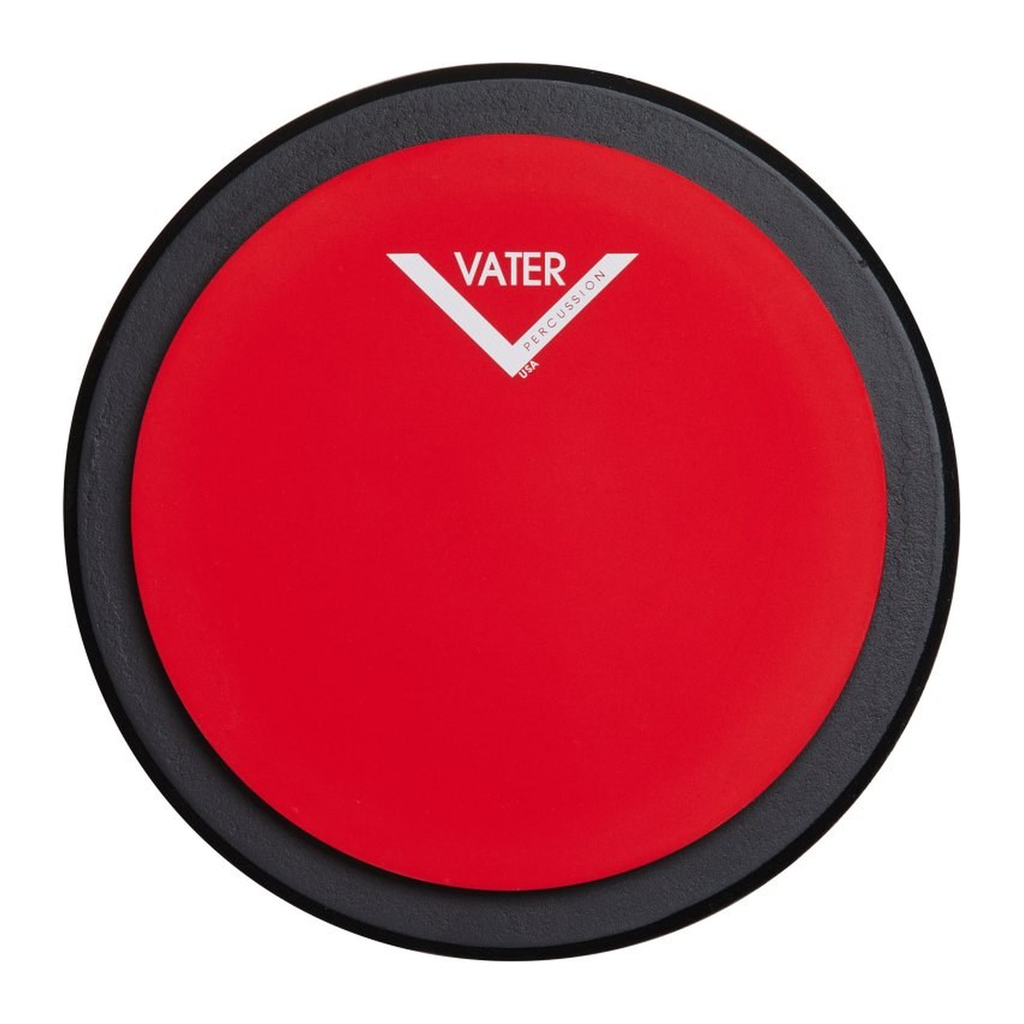
The VCB12D is a 12 in double-sided practice pad: a hard surface on one side, a soft surface on the other. That gives you two training surfaces on a single disc, and you flip the pad depending on whether you are working on precision or endurance.
What sets it apart
- Two surfaces on one pad
- 12 in diameter, close to a snare drum
- Hard side for definition and for hearing each stroke
- Soft side for resistance and strength building
- One item to carry instead of two
Two surfaces, two goals that do not replace each other
A hard surface sends the stick back with energy and lets you hear every contact very precisely. It is the place for precision work: you immediately catch a left-hand stroke that is weaker than the right, or a double stroke that drags.
A soft surface does the opposite. It gives back very little, makes the hand produce every stroke, and builds strength and endurance. A drummer who alternates between the two is not working on the same thing on each side, and that is exactly the point of a reversible pad.
Twelve inches: the size that does not cheat
A small-diameter pad concentrates your strokes in the centre. You always play in the same spot, and the real movements around a snare drum cannot be practised on it.
Twelve inches gets close to the surface of a real snare drum. Off-centre strokes, moving the hand toward the edge, and changing the striking point are practised just as they will happen on the instrument. What you repeat on the pad then carries straight over.
What building your hands means in practice
Strength work alone creates powerful but heavy hands. Chasing speed alone creates fast hands that break down as soon as a tempo has to hold for a long time. The two are built together or not at all.
A reversible pad naturally forces that alternation. Twenty minutes on the soft side for power, then the hard side to check that precision has kept up: the session organizes itself.
Specifications
| Diameter | 12 in |
|---|---|
| Configuration | Double-sided |
| First side | Hard surface |
| Second side | Soft surface |
| Intended use | Personal practice for drummers |
What it is for
- Daily rudiment practice at home
- Alternating strength work and precision work
- Warming up before a gig
- Preparing for an audition or exam
- Private technique lessons
Compare with other manufacturers
Reversible pads from other manufacturers:
| Manufacturer | Equivalent in its range | Difference to note |
|---|---|---|
| Vic Firth | Two-sided pads with different hardness | Several diameters offered on the same principle |
| Evans | Multi-surface pads | One side imitates a tuned head, the other rubber |
| Remo | Pads with a head tensioned on a frame | Rebound comes from tension rather than material |
| Promark | Practice pads with various surfaces | More compact formats, designed for travel |
Frequently asked questions
- Which side should I start a session on?
- Most teachers advise starting gently on the side that gives back the most, then moving to the resistant side once your hands are warm.
- Is it louder than a regular practice pad?
- The hard side produces a sharp crack, so it can be heard in the next room. The soft side is much quieter.
- Can I put it on a snare stand?
- A 12 in pad sits easily in a standard snare stand basket, which reproduces your real playing height.
- Do I need special sticks?
- No. Your usual pair works; some drummers prefer heavier sticks on the soft side to push the strength work further.
Avis clients
Do you work on speed and strength in the same session?
Aucun avis pour le moment. Soyez le premier à partager votre expérience après votre achat.