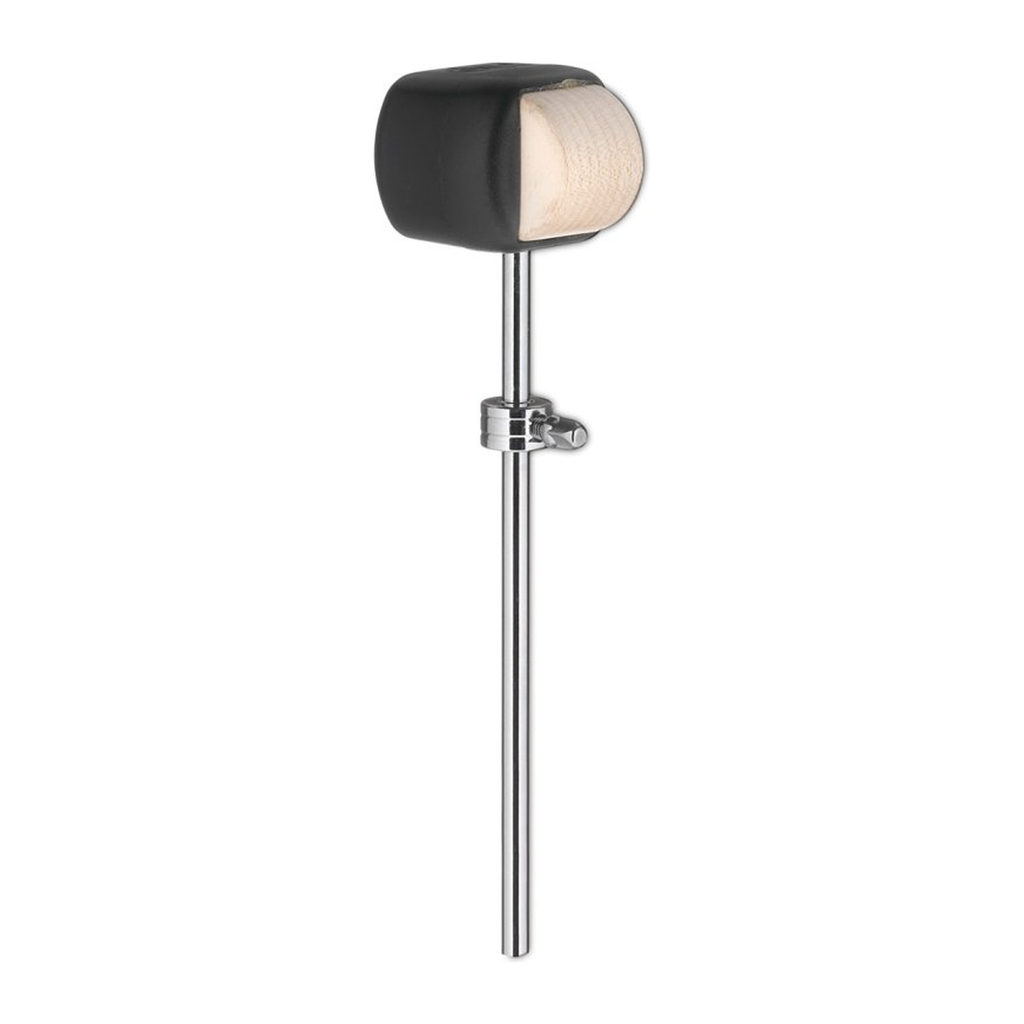
DW Two-Way Bass Drum Beater, Wood and Plastic
This bass drum beater has two sides, and neither of them is soft: heavy-duty plastic on one, black wood on the other. It is for the drummer who wants to hear the point of impact, and is only undecided about how that point should sound.
What sets it apart
- Two striking surfaces, heavy-duty plastic and wood
- No felt side: the attack stays pronounced on both
- Change the sound by rotating the head on its shaft
- Shaft weight included
- Materials: white plastic and black wood
Two hard materials, two ways of being clear
Plastic gives a short click, very high in the spectrum, that cuts through any wall of distorted guitars. It is the material for music where the bass drum has to mark the beats beyond any doubt.
Wood attacks just as directly, but its contact sound is lower and duller: a full thock rather than a metallic click. It marks the beat without taking over the top end, which makes it easier to fit alongside a bright snare and open cymbals.
Why choose a beater with no felt side
A felt surface flattens on impact, spreads the shock over time and rounds off the attack. On a bass drum that is already muffled, played in a loud band, that roundness amounts to vanishing from the mix.
This beater never offers that compromise. Both sides keep their definition; the only choice left is the texture of that definition. For a drummer who always uses the hard side, it is a beater where neither option is a lost cause.
The shaft weight, and how the beater returns
The small weight supplied slides onto the shaft, and its position sets the inertia. Moved up near the head, it makes the end of the lever heavier: the stroke gains weight and the return slows down. Moved down near the axle, you forget it is there.
It is the most discreet adjustment on a pedal, and often the last one people think of. Yet it takes a few seconds, and it changes the feel much faster than a new spring.
Specifications
| Striking surfaces | Heavy-duty plastic and wood |
|---|---|
| Materials | White plastic, black wood |
| Changing sides | Rotating the head on its shaft |
| Weight | Shaft weight included |
| Intended for | Bass drum pedals |
What it is for
- Amplified music, where the bass drum has to cut through the mix
- A drummer torn between a wood attack and a plastic attack
- A muffled bass drum lacking definition
- Replacing a felt beater that feels too soft
- Stage and studio, with a change of character and no tools
Compare with other manufacturers
Hard-surface beaters from other manufacturers:
| Manufacturer | Comparable model | What differs |
|---|---|---|
| Tama | Two-way felt and plastic beater | Offers a soft side, so a different compromise |
| Pearl | Quad Beater bass drum beater | Four surfaces on a square head |
| Vic Firth | Wood bass drum beater | Solid wood head, a single surface |
| Gibraltar | Two-way beater | Materials and head weight vary by version |
Frequently asked questions
- Will a wood beater damage my bass drum head?
- A bass drum head handles a hard surface very well. What speeds up is wear at the point of impact: an impact patch stuck on that spot takes care of it.
- How do you switch from one side to the other?
- Loosen it, turn the head half a turn on its shaft, and tighten it again.
- Which side is best for the studio?
- It depends on the rest of the mix. Plastic gives a very high point that is easy to isolate; wood gives a lower impact that needs less correction afterwards.
- Do I need the shaft weight?
- No, but it is included and it clearly changes the feel. Many drummers set it aside and then go looking for it months later.
Avis clients
Which side do you leave in place most often?
Aucun avis pour le moment. Soyez le premier à partager votre expérience après votre achat.