Vater Cymbal Stick Acorn Drumsticks — Wood Tip, Sugar Maple
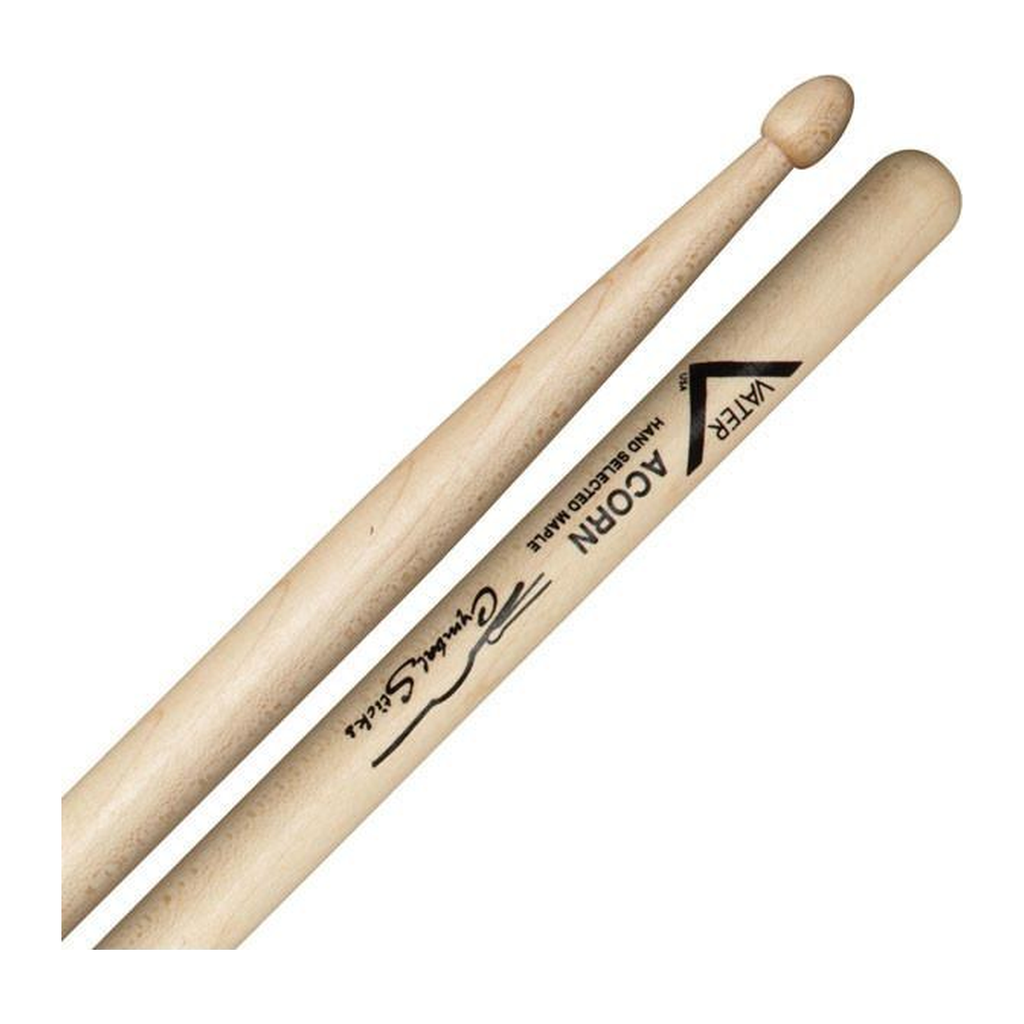
The Vater Cymbal Stick Acorn is a pair of sugar maple drumsticks, 16 in long with a 0.570 in diameter, finished with an acorn tip cut from the wood. The manufacturer designs them for cymbal playing: maple gives a lighter feel than hickory, and the acorn draws from the metal a sound it describes as full and fat, rather than a click.
What sets it apart
- Sugar maple: lighter than hickory, and strong according to the manufacturer
- 5A-size grip: 16 in long, 0.570 in diameter
- Acorn tip, with straight sides and a rounded top
- Sound described by the manufacturer: full and fat
- The brand's usual lacquer finish, with no protective coating
- Light feel, designed first and foremost for cymbals
The acorn on a ride, and the sound it draws out
An acorn gives a wide contact area on the metal. The energy spreads out instead of concentrating, and the cymbal answers with its body rather than its attack: you hear low overtones and a thick grain, which the manufacturer sums up as a full, fat sound.
It is the opposite of a narrow tip, which isolates one contact point and produces a click. On a vintage ride or a raw cymbal, that broad contact reveals colours a dry attack flattens.
The shape is nothing new: the manufacturer presents the four Cymbal Sticks as revivals of models hand-turned in the mid-1950s by Jack Adams, for the cymbal sound of the jazz and big bands of that era.
Why maple here, and not the usual wood
At equal dimensions, a maple stick weighs less than a hickory stick. The manufacturer draws two promises from that: a lighter feel and a stick that responds quickly. The stick moves sooner, lands more softly, and a sustained roll becomes possible without the cymbal washing out.
The second promise is about tone. Maple is presented as giving a mature, mellow voice to drums and cymbals alike, with warmer pitches than hardwood. That is exactly what a drummer who plays with nuance is looking for.
What this pair does not claim to do
At this manufacturer, hickory is the wood chosen for shock absorption and durability; sugar maple is presented differently, as a light, fast wood, warm in pitch, and strong as well. The stated difference concerns feel and sound, not a quantified lifespan: none is published, in either direction.
What is certain comes down to what this model does not get: no protective finish on the tip, no band in the rimshot area, unlike the series built to take the rim. It wears the brand's standard lacquer and nothing more. It is a cymbal stick, and it is equipped for that.
Specifications
| Wood species | Sugar maple |
|---|---|
| Grip size | 5A |
| Length | 16 in |
| Diameter | 0.570 in |
| Tip | Acorn, turned wood |
| Surface | Vater's usual lacquer finish |
What it is for
- Ride playing in jazz and chamber music
- Backing a singer, where the drums have to stay under the voice
- Close-miked cymbal recording
- Practising cymbal sound and dynamics
- Drummers who want a lighter feel without changing grip size
Compare with other manufacturers
Light sticks dedicated to cymbals exist elsewhere; here is what sets them apart:
| Manufacturer | Comparable model | What differs |
|---|---|---|
| Vic Firth | American Custom SD4 Combo | Also maple, but a shorter and thinner stick |
| Promark | Rebound 7A | Thin hickory stick: harder wood, less light feel |
| Los Cabos | Jazz Maple | Canadian maple, the manufacturer's own tip geometry |
| Regal Tip | Jazz Wood Tip | Thin hardwood stick rather than a light species |
Frequently asked questions
- Do maple drumsticks break faster?
- The manufacturer compares no lifespan. It describes hickory as the wood for shock absorption, and sugar maple as a lighter, fast and still strong wood. A stick remains a wear part, whatever the wood.
- Can I use them on the whole kit?
- Nothing stops you, and maple is described as drawing a round voice from drums as much as from cymbals. This model, though, is designed for cymbals and soft dynamics: that is where it gives the most.
- Does an acorn tip really change the cymbal sound?
- Noticeably. The width of the contact determines which overtones get excited: an acorn brings out the body, a narrow tip the point of attack.
- Is the grip the same as a regular 5A?
- The dimensions are those of a 5A. The weight is what differs, because of the wood used.
Avis clients
Which cymbal did you try them on? Tell us how it sounded.
Aucun avis pour le moment. Soyez le premier à partager votre expérience après votre achat.